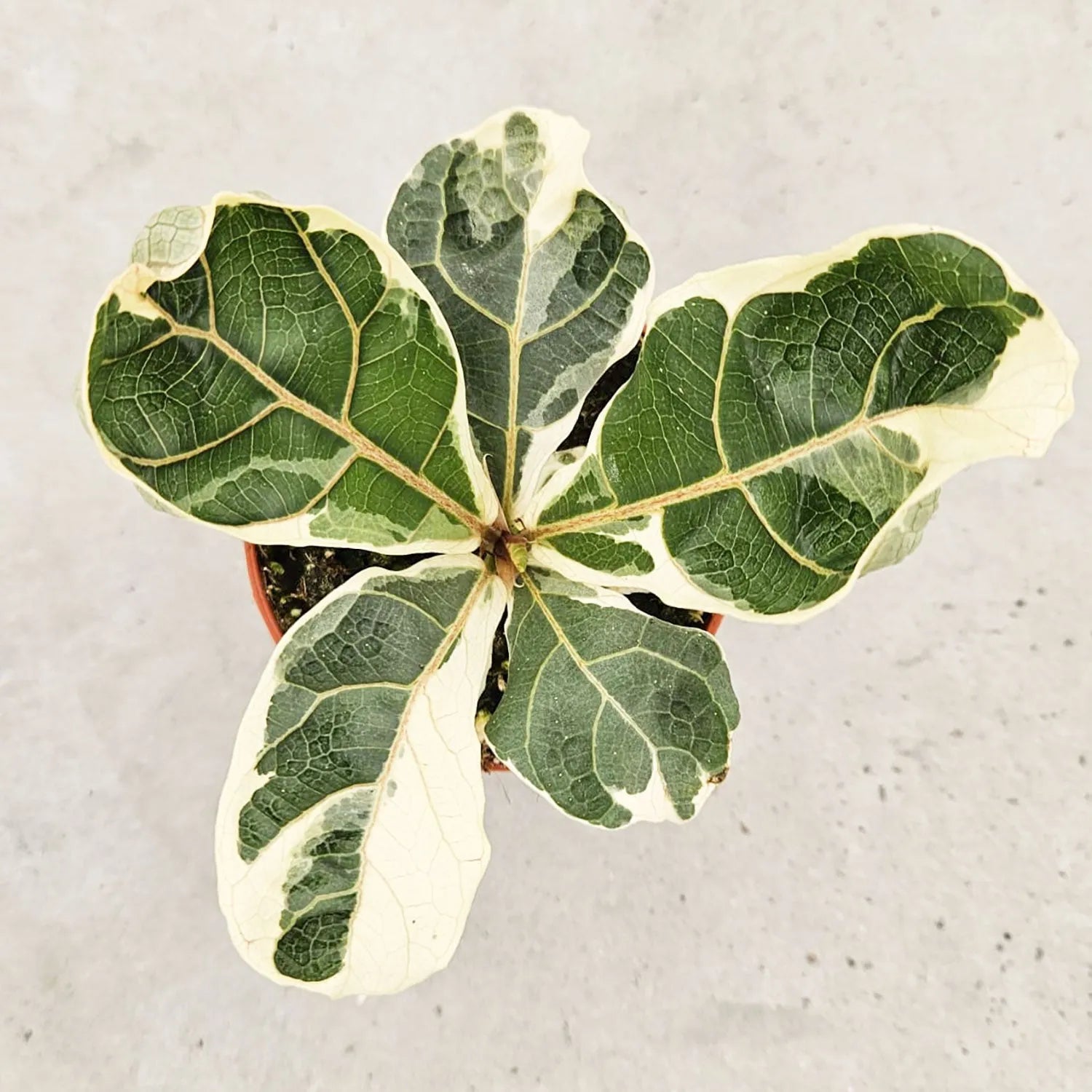
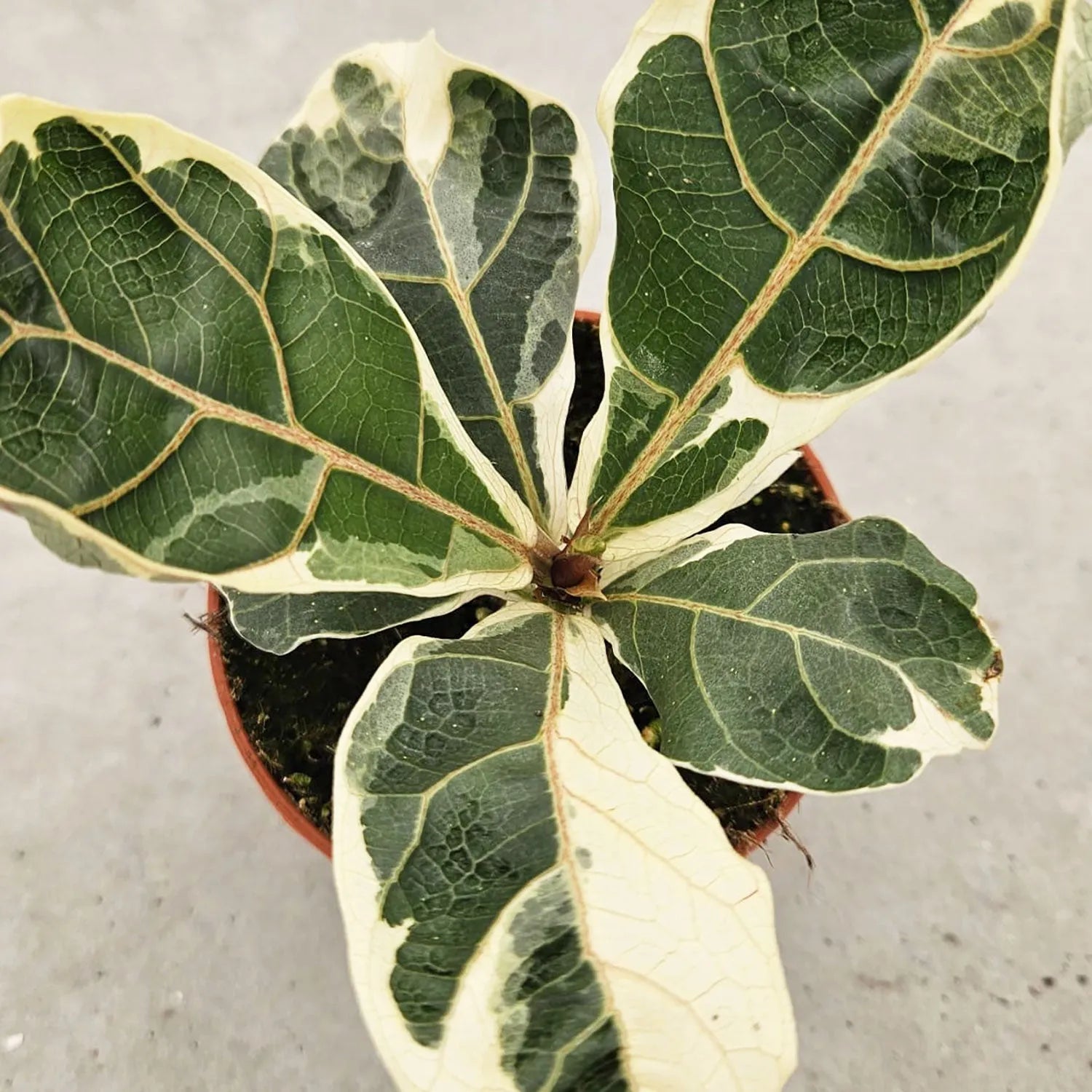
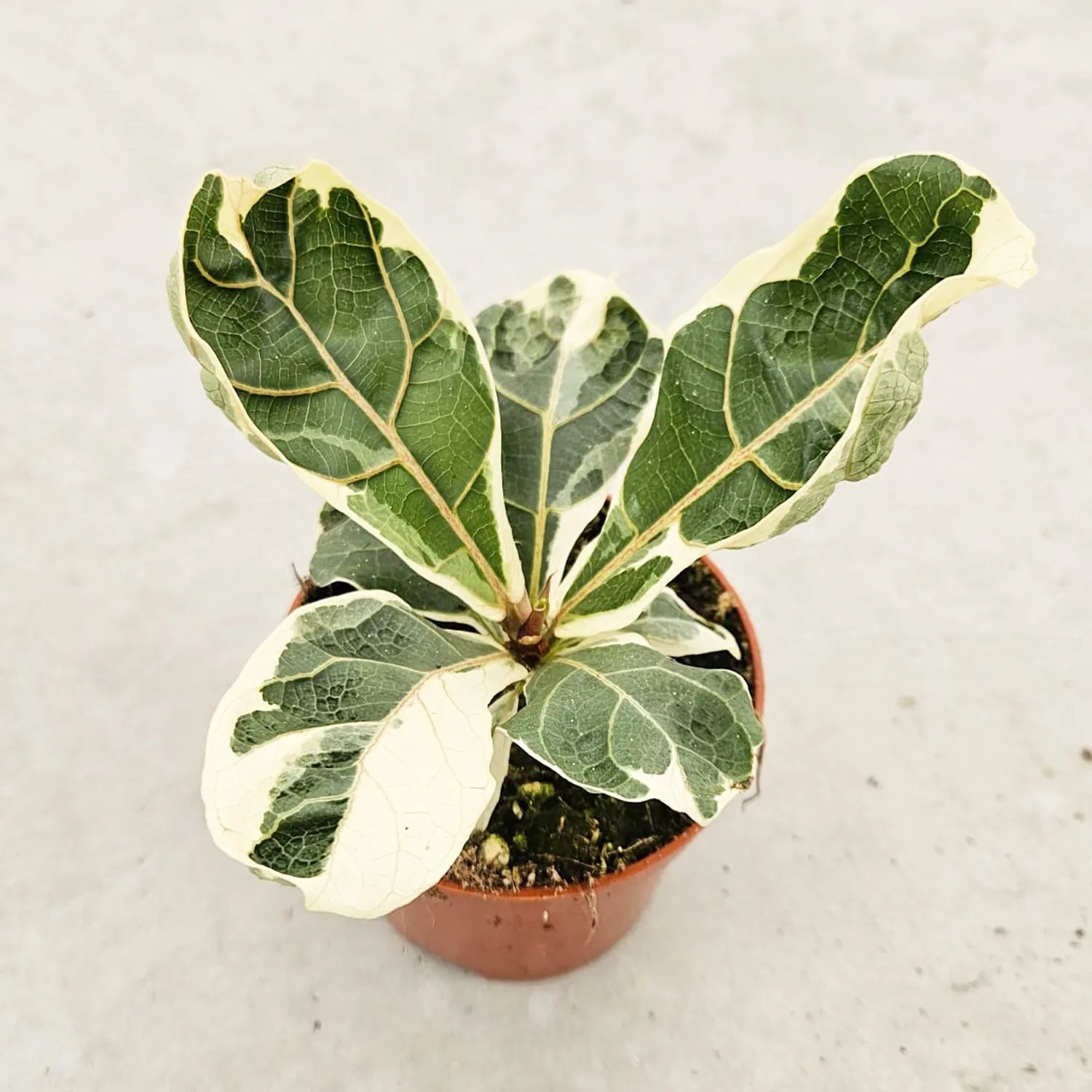
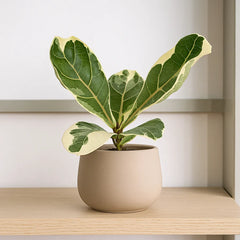
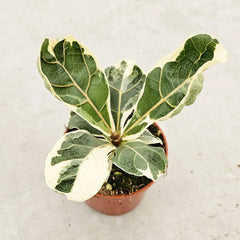
Ficus lyrata variegata, commonly known as the Variegated Fiddle Leaf Fig, is a rare and striking cultivar of the popular Ficus lyrata. Native to the tropical rainforests of West Africa, this plant is renowned for its large, violin-shaped leaves and upright, tree-like habit.
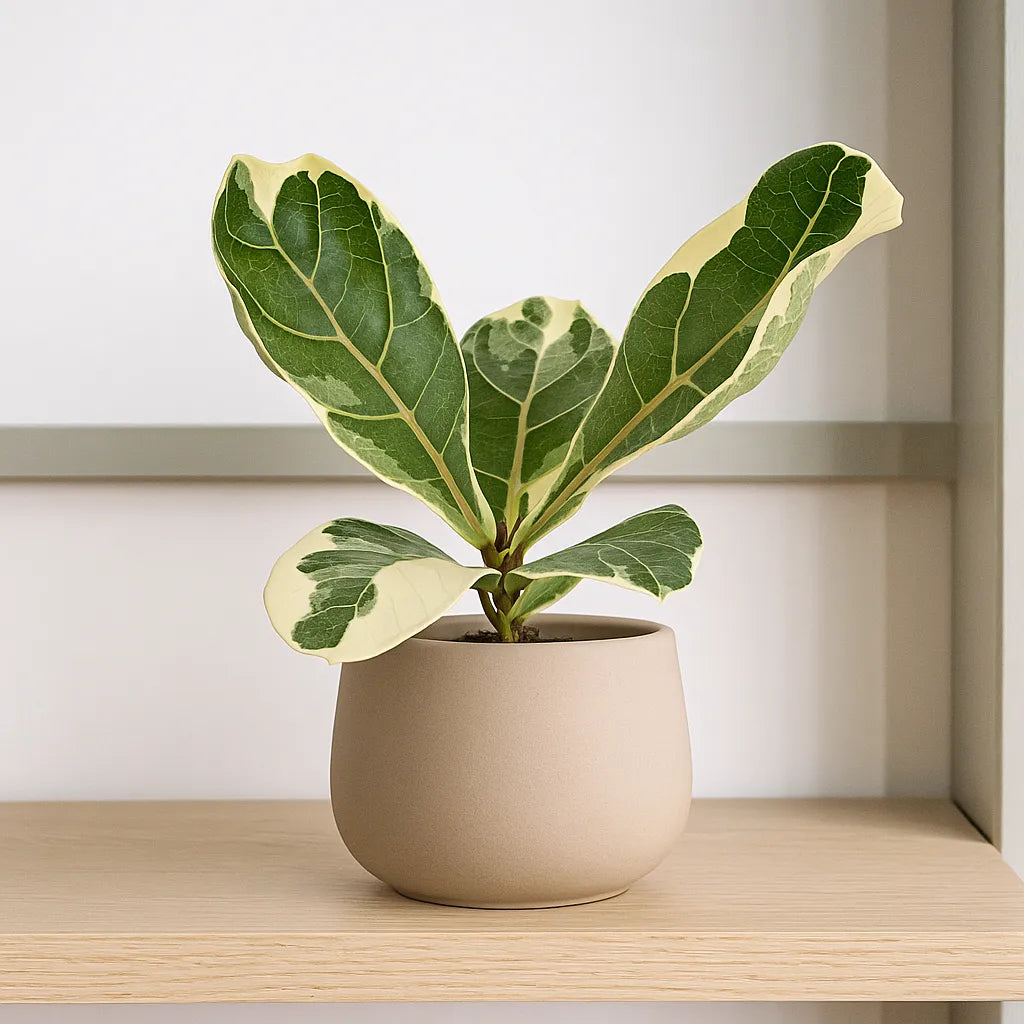
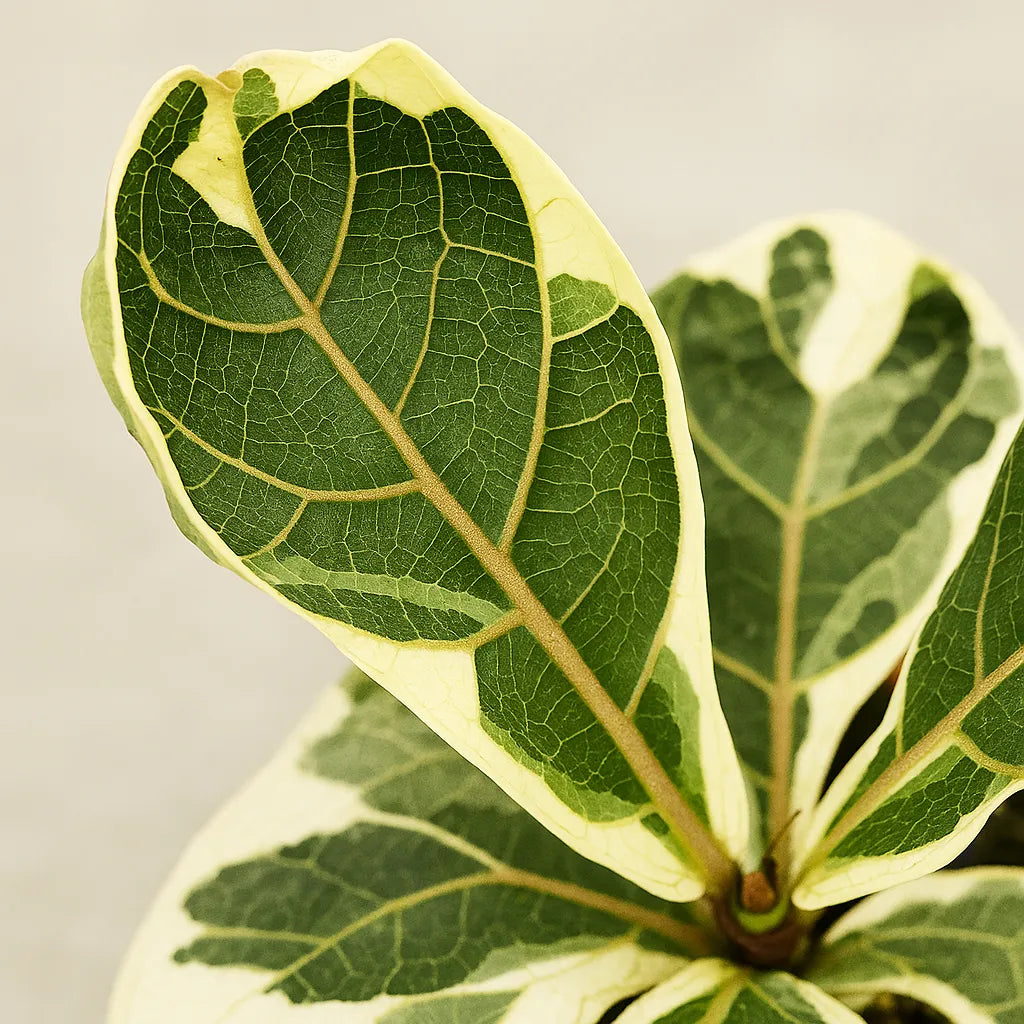
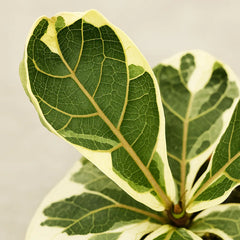
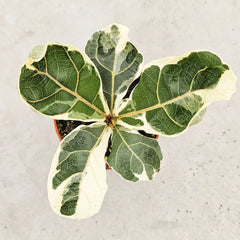
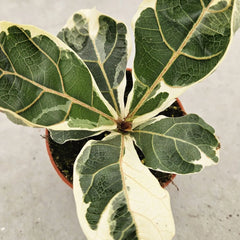
The variegated form is especially prized for its dramatic foliage. Each glossy leaf is patterned with splashes, streaks, or margins of creamy white, pale yellow, or minty green, contrasting beautifully against the rich emerald base. Some leaves are boldly sectoral (half green, half cream), while others are delicately marbled, ensuring every plant is unique.
Indoors, the Variegated Fiddle Leaf Fig can grow 1.5–2.5 metres tall, making it an ideal statement plant for bright, spacious interiors. With its combination of bold shape and rare variegation, it is considered a true collector’s specimen.
Variegated Ficus lyrata – Care Guide
Light
Requires bright, indirect light to maintain variegation. Too little light will cause the creamy tones to fade, while harsh direct sun may scorch pale sections.
Watering
Water when the top 3–5 cm of soil feels dry. Ensure the soil drains freely and never allow the plant to sit in standing water. Overwatering can cause leaf drop and root rot.
Temperature and Humidity
Soil and Potting
Use a rich, free-draining peat-free compost with added perlite or orchid bark. Repot every 1–2 years in spring to refresh the soil and provide space for root development.
Feeding
Feed every 4 weeks in spring and summer with a balanced liquid fertiliser. Reduce feeding in autumn and winter.
Pruning and Maintenance
Prune lightly to maintain shape and encourage branching. Rotate regularly to ensure even growth towards the light. Clean leaves gently with a damp cloth to keep their variegation vibrant.
Growth and Maturity
A slow to moderate grower. Indoors, it generally reaches 1.5–2.5 m tall. With proper care, it develops a strong central trunk and a lush canopy of variegated foliage.
Common Issues
-
Leaf drop: Often caused by overwatering, low light, or environmental stress.
-
Brown edges: Low humidity or inconsistent watering.
-
Loss of variegation: Insufficient light.
-
Pests: Can be prone to scale, mealybugs, or spider mites.
Background and Benefits
The Variegated Fiddle Leaf Fig is a rare form of one of the most iconic houseplants of the last decade. Its unique leaf patterns and upright form make it both a designer’s choice and a collector’s dream. Like other ficus species, it also helps purify indoor air.
✅ Quick Care Summary
-
Light: Bright, indirect; avoid harsh sun
-
Water: Allow topsoil to dry; never waterlog
-
Temperature: 18–28°C; avoid draughts
-
Humidity: Moderate to high; mist if dry
-
Soil: Rich, well-draining with perlite/bark
-
Feed: Monthly in spring/summer
-
Growth: Upright tree, 1.5–2.5 m; violin-shaped green leaves with creamy-white variegation