




Amazing quality
"Superb packaging and quality plants"


At Plants for all Seasons, we stand behind the quality and vitality of every plant we deliver, which is why we proudly offer a Live Delivery Guarantee. This commitment means that we guarantee your plants will arrive at your doorstep in healthy, thriving condition. We understand the importance of receiving your plants in the best possible state, ready to enhance your space from the moment they arrive. With Plants for all Seasons's Live Delivery Guarantee, you can shop with complete peace of mind, knowing that your green investments are protected from our nursery to your doorstep.

Due to the sensitive and breakable nature of our products, it's understandable that damages may occur despite our meticulous packaging methods. If you find that your plant or pot has arrived in a less than satisfactory condition, please reach out to us at hello@plantsforallseasons.co.uk within a month of your delivery date. When contacting us, please provide your order reference, alongside a photo clearly showing the damaged item and its packaging, including the delivery label. We are committed to resolving such issues by offering a refund or a replacement, depending on the availability of the item in question.
We are unable to accept returns that are not related to damage because plants are inherently perishable and delicate. It's also worth noting that the plant you receive may slightly differ from the images displayed on our website. This variation is natural, given that each plant is unique and subject to seasonal growth changes.

At Plants for all Seasons, we recognise the critical role our courier partners play in ensuring the safe and secure delivery of your plants. We collaborate exclusively with leading courier services, renowned for their reliability and exceptional handling practices, to ensure your plants arrive in perfect condition. Our partners are carefully selected based on their commitment to timely deliveries and their proven track record in transporting delicate items with the utmost care.

At Plants for all Seasons, our commitment to the environment extends to every aspect of our operations, especially in how we deliver your plants. We take pride in our bespoke, eco-friendly packaging, meticulously designed for the safe transport of live plants. Our innovative packaging solutions are crafted from sustainable materials, ensuring that your plants are not only secure but also that their journey from our nursery to your home treads lightly on the earth. This thoughtful approach minimises stress on the plants and reduces waste, aligning with our mission to promote a greener, more sustainable future.
 Ask Leafy.AI
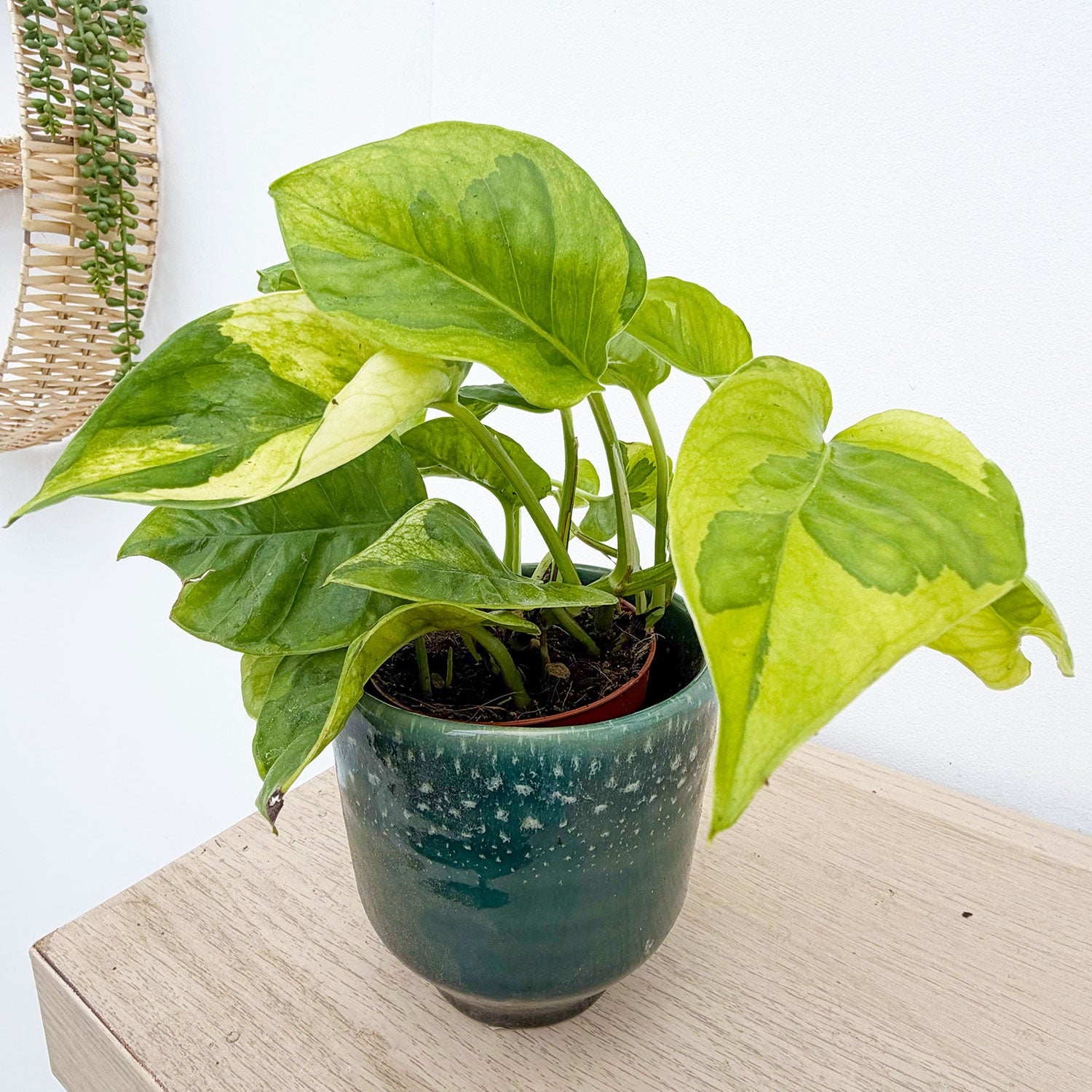
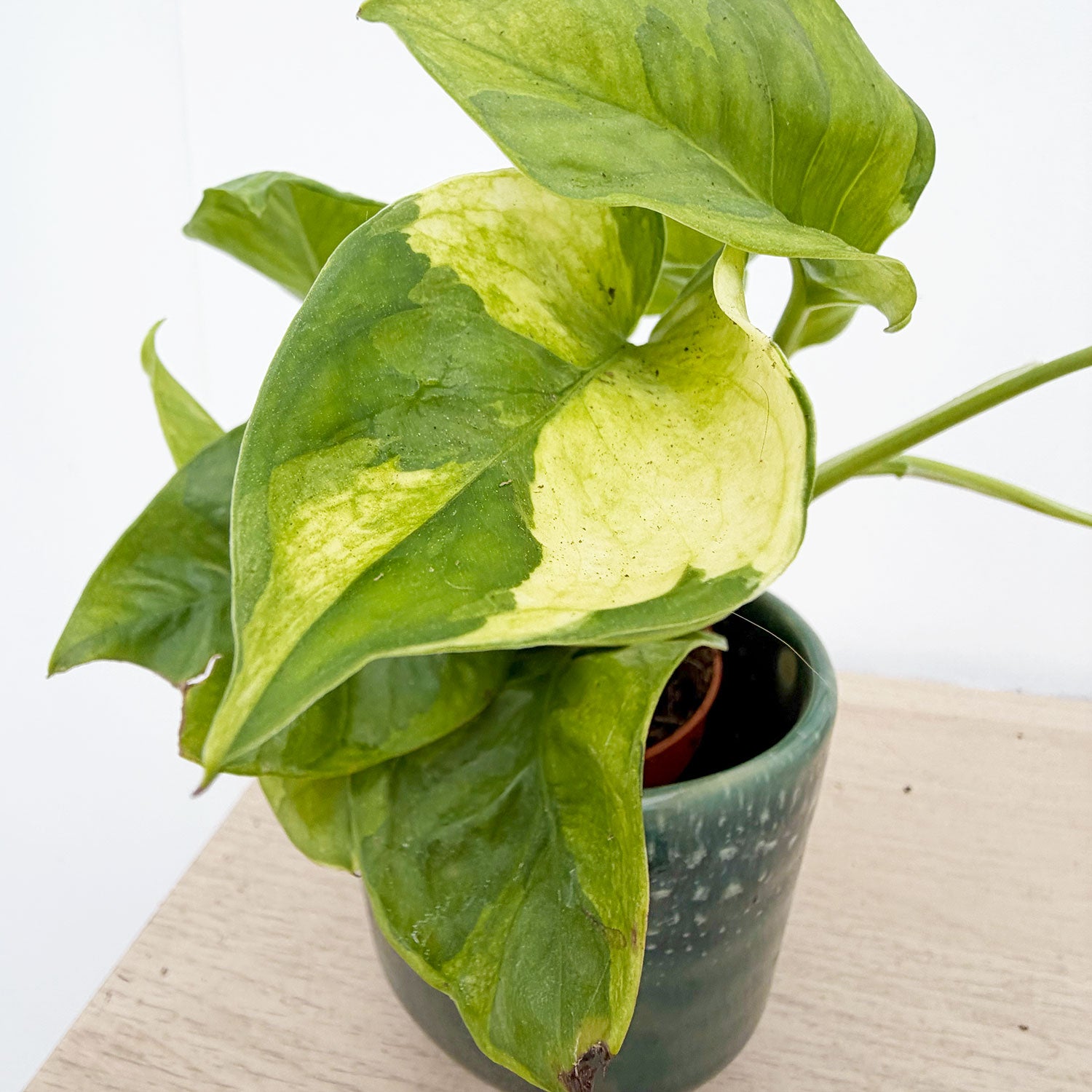
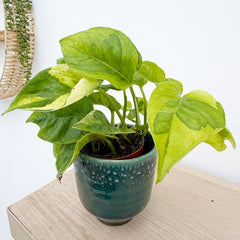
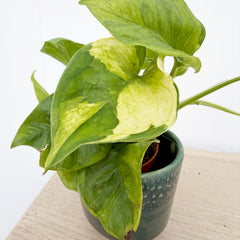
Epipremnum ‘Lemon Joy’ is a striking tropical houseplant grown for its fresh green foliage and distinctive cream-to-lemon variegation. Combining the easy-going nature of Epipremnum with bright, eye-catching colouring, it makes an excellent choice for adding contrast to a houseplant collection.
The leaves develop an attractive mixture of green, pale lime, creamy yellow and lemon-toned variegation, with every leaf displaying its own individual pattern. New growth can appear particularly bright before gradually developing richer colouring as the leaves mature.
Like other Epipremnum, Lemon Joy has a naturally climbing and trailing growth habit. Left unsupported, its stems will cascade from the pot, making it ideal for shelves, hanging planters and bookcases. Alternatively, it can be trained upwards using a moss pole, coir pole or other support.
Providing a climbing support can encourage stronger growth and, as the plant matures, progressively larger leaves. This gives you considerable flexibility in how the plant is displayed: keep it compact and trailing or allow it to develop into a larger climbing specimen.
Its relatively straightforward care requirements also make Lemon Joy suitable for both newer plant owners and experienced collectors looking for an unusual Epipremnum variety.
Epipremnum Lemon Joy grows best in bright, indirect light.
Good light is particularly important for variegated plants because the lighter portions of their leaves contain less chlorophyll than the green sections.
Position the plant somewhere it receives plenty of natural light without prolonged exposure to intense direct sunshine.
An east- or west-facing window can work particularly well. Near a south-facing window, position the plant slightly further back or filter strong sunlight through a sheer curtain.
Some gentle morning or late-afternoon sunshine is normally tolerated.
In lower light, Lemon Joy may continue to grow, but growth can become slower and new leaves may display less pronounced variegation.
Too much intense direct sunlight, however, can scorch the paler areas of the leaves.
Ideal: Plenty of bright, indirect light.
Allow the upper few centimetres of compost to dry before watering Epipremnum Lemon Joy again.
When the plant requires water, thoroughly soak the compost until excess water begins to drain from the bottom of the pot.
Always allow excess water to escape and avoid leaving the plant standing permanently in water.
During spring and summer, the plant will generally require more frequent watering as temperatures increase and active growth accelerates.
During autumn and winter, growth usually slows and the compost takes longer to dry, so watering should normally be reduced.
Avoid watering according to a fixed weekly schedule. How quickly the compost dries depends on:
Check the compost before watering.
Epipremnum are relatively forgiving if they become slightly dry, whereas consistently saturated compost can lead to root rot.
Epipremnum Lemon Joy appreciates moderate to higher humidity, although it usually adapts well to normal household conditions.
Humidity somewhere around 50–70% can encourage healthy growth, particularly when combined with warm temperatures and good light.
Naturally humid rooms such as bright bathrooms and kitchens can work well.
During winter, centrally heated homes can become considerably drier. Avoid positioning the plant directly beside radiators or other sources of hot, dry air.
Brown or crispy leaf edges can sometimes be associated with extremely dry conditions, although inconsistent watering and root problems should also be considered.
Good airflow is important, particularly in environments with consistently high humidity.
Epipremnum Lemon Joy prefers warm indoor temperatures.
An ideal range is approximately 18–27°C.
Protect the plant from prolonged temperatures below approximately 12–15°C.
Avoid:
Normal household temperatures are generally ideal.
Epipremnum Lemon Joy grows best in a light, airy and free-draining growing medium.
The roots appreciate some moisture but should also receive plenty of oxygen.
A suitable mixture could contain:
A specialist aroid mixture can also work particularly well.
Avoid dense, compacted compost that remains saturated for extended periods.
Always use a pot with adequate drainage holes.
Feed during the active growing season, generally from spring through to early autumn.
A balanced liquid houseplant fertiliser can be applied approximately once every 2–4 weeks, depending on the strength of the fertiliser and the manufacturer's instructions.
Avoid excessive feeding.
Too much fertiliser can cause mineral salts to accumulate within the compost, potentially resulting in damaged roots or brown leaf tips.
Feeding can normally be reduced significantly or stopped during winter when growth slows.
One of the advantages of Epipremnum Lemon Joy is that it can be grown in several different ways.
Allow the stems to grow naturally over the edge of the pot for an attractive cascading plant.
This works particularly well in:
Occasional pruning can encourage additional branching and create a fuller appearance.
For larger, more mature growth, provide a moss pole, coir pole, plank or similar vertical support.
Epipremnum are natural climbers and produce aerial roots along their stems.
When these are allowed to attach to a suitable support, the plant can begin producing progressively stronger growth and larger leaves.
Keeping a moss pole slightly moist can help encourage aerial roots to attach, although the main potting medium should still be allowed to partially dry between waterings.
Epipremnum Lemon Joy responds well to pruning.
Trim long or sparse vines using clean, sharp scissors or secateurs.
Cutting stems just above a node can encourage new shoots to develop, helping create a bushier plant.
Pruning can also be used to:
If you prefer a fuller trailing plant, regularly trimming the longest vines can be particularly effective.
Epipremnum Lemon Joy is relatively straightforward to propagate from stem cuttings.
The most important part of the cutting is the node. A leaf without a node cannot develop into a complete new plant.
Take a healthy section of stem containing at least one node and preferably one or two leaves.
Cut just below the node using clean scissors.
The cutting can then be rooted in:
For water propagation, place the node beneath the water while keeping the leaf above the surface.
Position the cutting somewhere warm with bright, indirect light.
Once a healthy root system has developed, the cutting can be transferred into an appropriate potting mix.
Several rooted cuttings can be planted together to create a fuller plant.
Epipremnum Lemon Joy generally requires repotting approximately every 1–2 years, although vigorous plants may require it sooner.
Signs that repotting may be necessary include:
Choose a container only slightly larger than the current pot.
Moving into an excessively large container can result in the compost remaining wet for too long, increasing the risk of root rot.
Spring and early summer are generally excellent times to repot.
Occasional older yellow leaves are normal.
However, several leaves turning yellow simultaneously can indicate:
If the compost remains wet for long periods, allow it to dry and review the plant's drainage and watering routine.
Brown or crispy areas can result from:
Check the overall growing conditions rather than simply increasing watering.
The lighter areas of variegated leaves can sometimes brown more easily than the green portions.
Possible causes include:
Bright but indirect light is particularly important for maintaining attractive variegated foliage without scorching it.
If new leaves become increasingly green, insufficient light may be contributing.
Move the plant gradually into a brighter position with plenty of indirect light.
Remember that individual leaves naturally vary, so one greener leaf does not necessarily indicate a problem.
Judge the plant based on several consecutive leaves rather than a single piece of growth.
Small leaves can occur when the plant:
If you want to encourage larger leaves, provide bright indirect light and allow the plant to climb a suitable vertical support.
Long sections of stem between leaves, sometimes described as leggy growth, are often associated with insufficient light.
Move the plant into a brighter position and consider pruning excessively long vines to encourage new branching.
Temporary drooping can occur when the plant becomes too dry.
Check the compost before watering.
If the soil is already wet and the plant continues to droop, inspect the roots, as overwatering and root damage can produce similar symptoms.
Epipremnum Lemon Joy is generally resilient but can occasionally attract common houseplant pests, including:
Regularly inspect both sides of the leaves, stems and areas where leaves join the main vine.
If pests are discovered, isolate the affected plant from the rest of your collection while treatment is carried out.
Epipremnum contains calcium oxalate crystals and should not be eaten.
Keep the plant away from pets and young children who may chew the foliage.
Ingestion can cause irritation of the mouth and digestive system, and the sap may also irritate sensitive skin.
Epipremnum Lemon Joy is generally an easy-care houseplant and is suitable for a wide range of indoor environments.
Its variegation means it benefits from slightly brighter conditions than an entirely green Epipremnum, but its overall requirements remain straightforward.
The most important things are to provide plenty of bright indirect light, avoid permanently saturated compost and protect the plant from cold temperatures.
Given suitable conditions, Lemon Joy can grow quickly and produce increasingly long vines.
Epipremnum Lemon Joy works particularly well:
For a compact, cascading appearance, allow the vines to trail and prune them periodically.
For larger leaves and more mature growth, train the plant vertically and give its aerial roots something to attach to.
Light: Bright, indirect light
Water: Allow the upper few centimetres of compost to dry between waterings
Humidity: Average to moderately high; approximately 50–70% is ideal
Temperature: Ideally 18–27°C
Soil: Airy, moisture-retentive but free-draining aroid mix
Feeding: Every 2–4 weeks during spring and summer
Repotting: Approximately every 1–2 years
Growth Habit: Climbing or trailing
Pruning: Trim vines to control size and encourage branching
Propagation: Stem cuttings containing at least one node
Support: Moss or coir pole can encourage larger, more mature growth
Toxicity: Toxic if ingested
Difficulty: Easy
Overall rating: 4.3333335 / 5 from 6 reviews.
Review topics: [].
"Superb packaging and quality plants"
"Beautiful leaves and looked good when it arrived, but after 2 weeks of noticing the new buds weren’t growing depite spring, decided to check out the roots. It was ALL ROT. I’m going to try to salvage the plant but very disappointed as my other purchases from here have all been perfect."
"This plant looks way better in real life than in the photos. I received a lovely healthy specimen. Very happy, thank you!"
"Very well priced for the size received. Around 2 good sized stems with long vines. And is growing pretty fast too."
"The plant arrived quickly, healthy and looking just like the picture. Very happy customer, again!"
"The small plant came in a very big box, but it did arrive safely. Dispatch note not received until after the plant arrived. Plant is in mostly good condition apart from one cutting popped in the soil, the rest seems well rooted. I was a little disappointed that is was quite dark for a moonlight and not very silvery like the photo/other moonlights I have."
ONLY
30
LEFT
🌱 FREE WITH ORDERS OVER £50

By Plants for all Seasons
A plant care expert that gives clear, friendly advice for all your houseplants and garden plants – tailored to UK conditions. Perfect for beginners and seasoned growers alike.
Terms of Use