





Amazing quality
"Superb packaging and quality plants"


At Plants for all Seasons, we stand behind the quality and vitality of every plant we deliver, which is why we proudly offer a Live Delivery Guarantee. This commitment means that we guarantee your plants will arrive at your doorstep in healthy, thriving condition. We understand the importance of receiving your plants in the best possible state, ready to enhance your space from the moment they arrive. With Plants for all Seasons's Live Delivery Guarantee, you can shop with complete peace of mind, knowing that your green investments are protected from our nursery to your doorstep.

Due to the sensitive and breakable nature of our products, it's understandable that damages may occur despite our meticulous packaging methods. If you find that your plant or pot has arrived in a less than satisfactory condition, please reach out to us at hello@plantsforallseasons.co.uk within a month of your delivery date. When contacting us, please provide your order reference, alongside a photo clearly showing the damaged item and its packaging, including the delivery label. We are committed to resolving such issues by offering a refund or a replacement, depending on the availability of the item in question.
We are unable to accept returns that are not related to damage because plants are inherently perishable and delicate. It's also worth noting that the plant you receive may slightly differ from the images displayed on our website. This variation is natural, given that each plant is unique and subject to seasonal growth changes.

At Plants for all Seasons, we recognise the critical role our courier partners play in ensuring the safe and secure delivery of your plants. We collaborate exclusively with leading courier services, renowned for their reliability and exceptional handling practices, to ensure your plants arrive in perfect condition. Our partners are carefully selected based on their commitment to timely deliveries and their proven track record in transporting delicate items with the utmost care.

At Plants for all Seasons, our commitment to the environment extends to every aspect of our operations, especially in how we deliver your plants. We take pride in our bespoke, eco-friendly packaging, meticulously designed for the safe transport of live plants. Our innovative packaging solutions are crafted from sustainable materials, ensuring that your plants are not only secure but also that their journey from our nursery to your home treads lightly on the earth. This thoughtful approach minimises stress on the plants and reduces waste, aligning with our mission to promote a greener, more sustainable future.
 Ask Leafy.AI
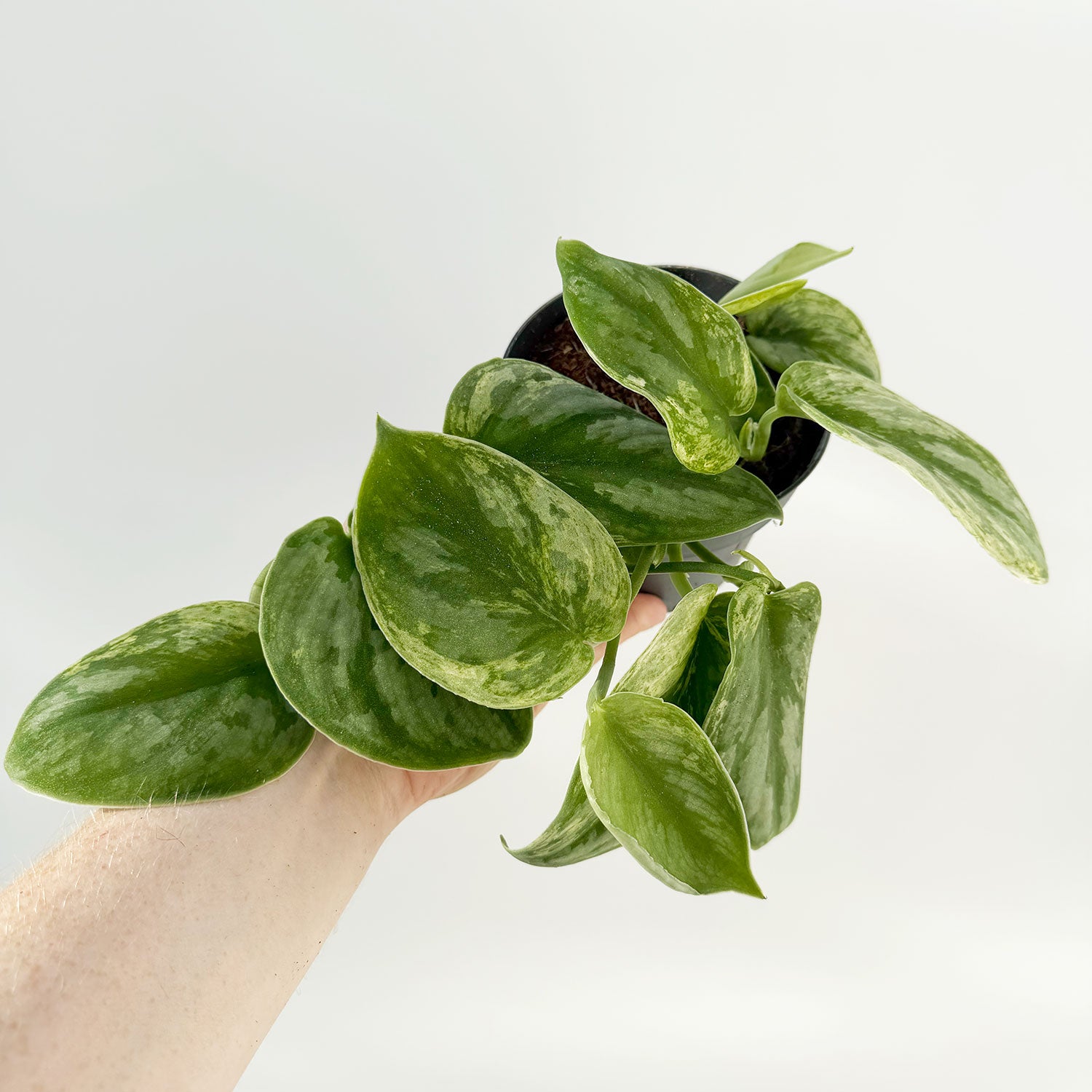
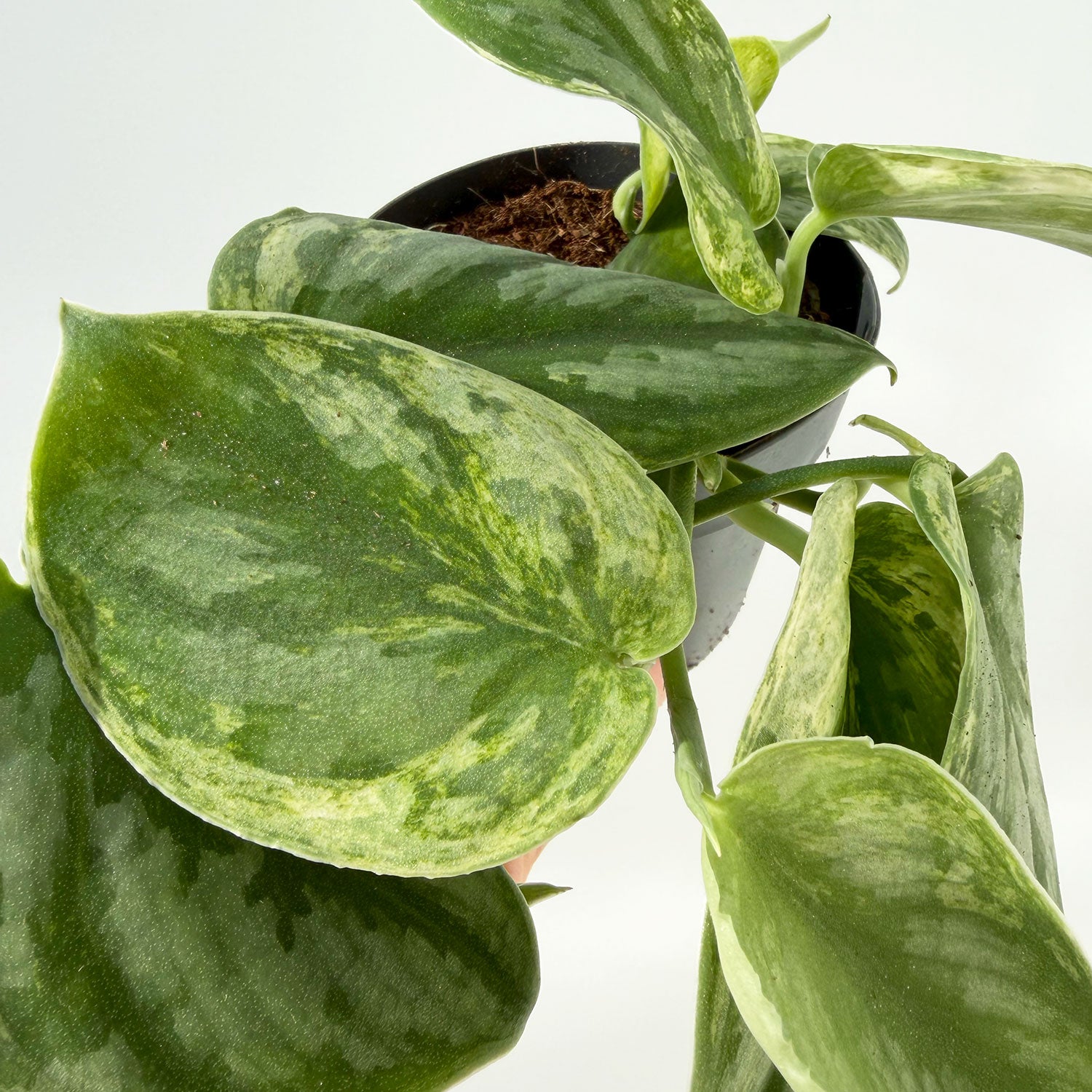
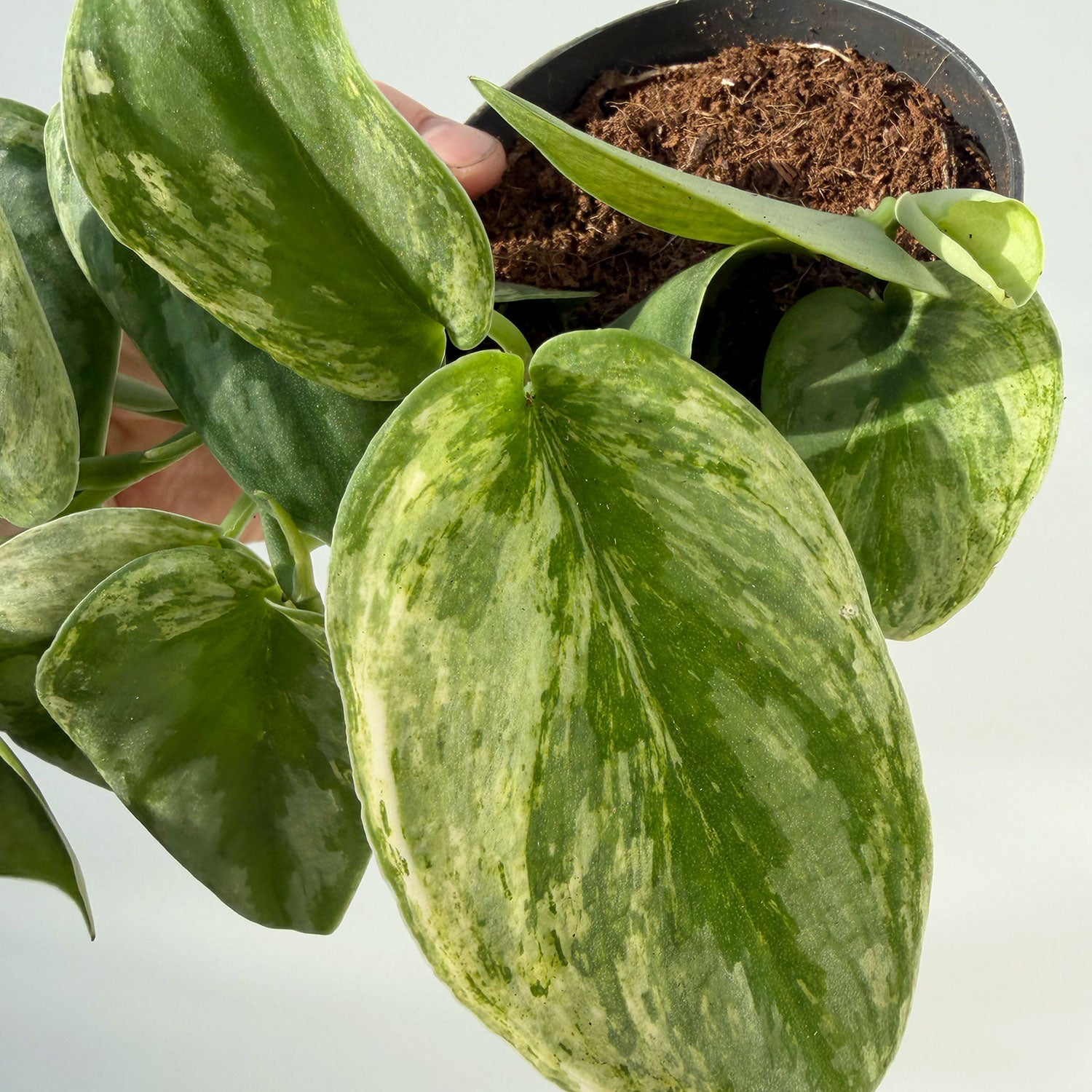
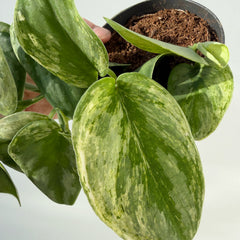
The Scindapsus Peasun is a beautiful collector's Scindapsus prized for its distinctive silvery foliage and elegant climbing growth. Its leaves combine cool shades of green with an attractive metallic sheen, creating the characteristic satin-like appearance that makes Scindapsus such popular foliage plants.
Each leaf develops its own pattern and intensity of silver, with the surface taking on different tones depending on the angle and lighting. The combination of soft green, silvery-grey and metallic markings gives Peasun a wonderfully textured appearance without the high-contrast variegation found on some other collector's plants.
Young plants produce relatively compact leaves along slender vines, but Peasun really begins to show its potential when allowed to mature. Like other climbing Scindapsus, it naturally wants to grow upwards and attach itself to trees and other surfaces using aerial roots.
Indoors, providing a moss pole or other vertical support encourages this natural growth habit. Once established and climbing successfully, the plant can begin producing progressively larger and more impressive leaves.
Alternatively, Scindapsus Peasun can be allowed to trail from a shelf or hanging planter. Its cascading vines and silver-toned foliage make it particularly attractive displayed this way, although the leaves will generally remain smaller than those of a well-established climbing plant.
Despite its collector's appeal, Peasun doesn't require an especially complicated care routine. Bright indirect light, an airy growing medium, warmth and sensible watering will provide the foundations for healthy growth.
Its combination of unusual colouring, manageable care requirements and potential for increasingly impressive mature foliage makes Scindapsus Peasun a fantastic choice for both established aroid collections and anyone looking to explore some of the less commonly available Scindapsus varieties.
Please note: Scindapsus foliage naturally varies between individual plants and leaves. Silver coverage, colouring, leaf shape and pattern may therefore differ slightly from the plant pictured.
Provide your Scindapsus Peasun with bright, indirect light for the strongest growth and best foliage.
A position close to a bright window is ideal, provided the plant is protected from prolonged harsh midday sunlight. Gentle morning or evening sun is usually well tolerated.
Peasun can adapt to somewhat lower light levels, but growth is likely to become slower and the spaces between leaves may increase.
During the darker UK winter months, moving the plant closer to a window or supplementing natural light with a grow light can help maintain more consistent growth.
Allow the upper 3–5cm of the growing medium to dry before watering again.
When the plant needs water, thoroughly soak the growing medium until excess water drains freely from the bottom of the pot. Allow it to drain completely before returning it to its decorative pot or saucer.
Avoid keeping the compost permanently wet. Scindapsus appreciate some moisture but need plenty of oxygen around their roots.
Signs of overwatering can include:
Signs that the plant may need water include:
Always check the growing medium rather than watering according to a fixed weekly schedule.
Scindapsus Peasun appreciates moderate to high humidity, with approximately 50–70% providing excellent conditions.
It can adapt to normal household humidity, particularly once established, but higher humidity can encourage healthy foliage and smoother development of new leaves.
A humidifier can be useful during winter when central heating makes indoor air particularly dry.
Good airflow should accompany higher humidity to prevent the foliage from remaining permanently damp.
Peasun prefers the warm conditions typical of tropical houseplants.
Aim for approximately 18–27°C and protect the plant from prolonged temperatures below around 15°C.
Avoid positioning it immediately beside:
Stable temperatures will encourage more consistent growth.
Use a chunky, airy and free-draining aroid mix.
A suitable mixture can contain:
The aim is to retain enough moisture for the roots without creating a dense, saturated environment.
Always use a container with adequate drainage holes.
Although Peasun can be grown as a trailing plant, allowing it to climb is recommended if you want to encourage larger mature foliage.
Provide a:
Gently position the vine against the support and encourage aerial roots towards it.
A moisture-retentive moss pole can be particularly effective because the aerial roots can grow into the moss, helping the plant establish itself as it climbs.
As the plant matures and establishes itself vertically, subsequent leaves have the potential to become progressively larger.
You don't have to grow Peasun upwards.
Allowing the vines to cascade from a hanging planter, shelf or tall cabinet creates an attractive trailing display and requires less maintenance than maintaining a moss pole.
Bear in mind that trailing Scindapsus generally maintain smaller foliage than specimens allowed to climb and mature.
Feed approximately every 4–6 weeks during spring and summer using a balanced liquid houseplant fertiliser.
Always follow the manufacturer's recommended dilution rate.
Reduce or stop feeding during autumn and winter if the plant's growth slows considerably.
Avoid overfeeding, as excessive fertiliser can cause salts to accumulate around the roots and potentially result in brown leaf tips or root damage.
Under good conditions, Scindapsus Peasun is a moderate grower.
The plant produces extending vines with new leaves developing from individual nodes. Small aerial roots may also appear as the plant searches for something to climb.
Growth is generally fastest when the plant receives:
Don't be concerned if growth slows significantly during a UK winter. Reduced daylight and cooler temperatures naturally reduce the plant's growth rate.
Repot when the root system has clearly filled its existing container rather than automatically repotting every year.
Signs that repotting may be necessary include:
Move up by one sensible pot size at a time.
An excessively large pot contains considerably more growing medium, which can remain wet for too long and increase the risk of overwatering.
Spring and early summer are usually the best times to repot.
Pruning isn't essential, but it can be useful for controlling the plant's shape.
If you're growing Peasun as a trailing plant, cutting back excessively long vines can encourage a fuller appearance.
Use clean scissors or secateurs and make your cut close to a node.
Don't discard healthy sections – they can be used for propagation.
Scindapsus Peasun can be propagated using stem cuttings containing at least one viable node.
Cut a healthy section of vine and root it in:
Keep the cutting warm and provide bright, indirect light.
Once a healthy root system has developed, the cutting can be transferred into an appropriate aroid growing medium.
Dust can reduce the beautiful metallic appearance of Scindapsus foliage.
Occasionally clean the leaves gently using a soft, slightly damp cloth. Support the foliage from underneath while cleaning to prevent unnecessary damage.
Avoid commercial leaf-shine products.
Yellowing leaves
Frequently associated with excessive watering. Check whether the growing medium is remaining wet for too long.
Curling leaves
Often indicates that the plant is becoming too dry, although low humidity or environmental stress can also contribute.
Brown or crispy edges
Can result from inconsistent watering, very dry air or excessive fertiliser salts.
Long vines with large gaps between leaves
Usually indicates insufficient light. Move the plant somewhere brighter while avoiding harsh direct sun.
Small new leaves
Review light levels, feeding and climbing support. Providing a suitable support is particularly important if your aim is to produce larger mature foliage.
Growth has stopped
Growth naturally slows during cooler and darker periods. If it occurs during the growing season, check light levels, temperature and root health.
Regularly check your Scindapsus for common houseplant pests, including:
Pay particular attention to new growth, the undersides of leaves and the points where leaves meet the vine.
Catching an infestation early makes treatment considerably easier.
Scindapsus Peasun is not considered pet-safe and should not be eaten.
Scindapsus contain calcium oxalate crystals that can cause irritation if the plant is chewed or ingested.
Keep it somewhere inaccessible to pets and young children who may chew plants.
Common name: Scindapsus Peasun
Light: Bright, indirect light
Water: Allow the upper 3–5cm of the growing medium to dry
Humidity: Moderate to high; ideally 50–70%
Temperature: Ideally 18–27°C
Soil: Chunky, airy and free-draining aroid mix
Feeding: Every 4–6 weeks during active growth
Growth habit: Climbing or trailing
Support: Moss pole recommended for larger mature foliage
Growth rate: Moderate
Difficulty: Easy to intermediate
Pet safe: No
Special feature: Distinctive metallic silver-toned foliage
Overall rating: 4.3333335 / 5 from 6 reviews.
Review topics: [].
"Superb packaging and quality plants"
"Beautiful leaves and looked good when it arrived, but after 2 weeks of noticing the new buds weren’t growing depite spring, decided to check out the roots. It was ALL ROT. I’m going to try to salvage the plant but very disappointed as my other purchases from here have all been perfect."
"This plant looks way better in real life than in the photos. I received a lovely healthy specimen. Very happy, thank you!"
"Very well priced for the size received. Around 2 good sized stems with long vines. And is growing pretty fast too."
"The plant arrived quickly, healthy and looking just like the picture. Very happy customer, again!"
"The small plant came in a very big box, but it did arrive safely. Dispatch note not received until after the plant arrived. Plant is in mostly good condition apart from one cutting popped in the soil, the rest seems well rooted. I was a little disappointed that is was quite dark for a moonlight and not very silvery like the photo/other moonlights I have."
ONLY
69
LEFT
🌱 FREE WITH ORDERS OVER £50

By Plants for all Seasons
A plant care expert that gives clear, friendly advice for all your houseplants and garden plants – tailored to UK conditions. Perfect for beginners and seasoned growers alike.
Terms of Use