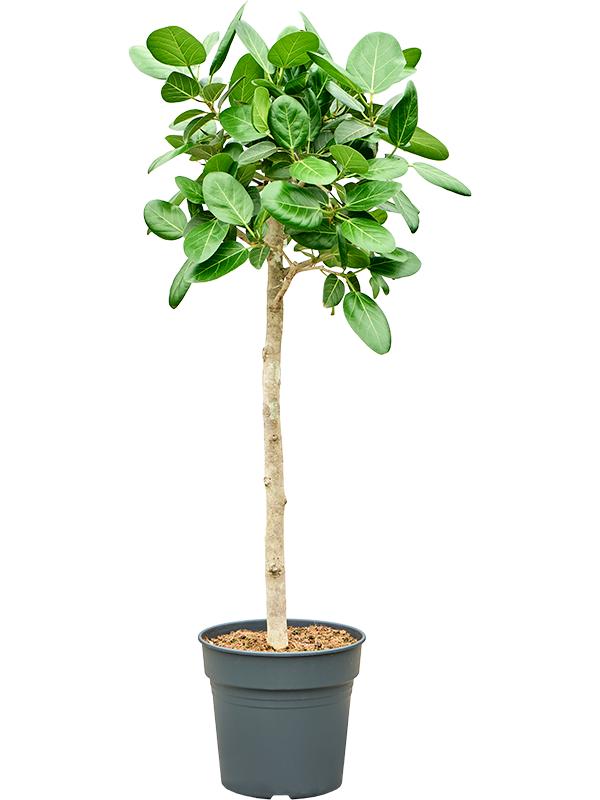
Ficus benghalensis 'Audrey' (Banyan Fig)
Ficus benghalensis 'Audrey', commonly known as the Banyan Fig or Ficus Audrey, is an elegant and highly sought-after houseplant admired for its soft, velvety foliage and graceful tree-like form. Native to India and Pakistan, where it is the national tree of India, this impressive species can grow into enormous banyan trees in the wild. Indoors, however, it remains a manageable and stylish statement plant, making it a popular choice for contemporary homes and offices.
Unlike the glossy leaves of the Fiddle Leaf Fig, Ficus Audrey produces smooth, matte green leaves with pale, prominent veins and a soft, velvety texture. Its clean, architectural appearance complements both modern and traditional interiors, while its upright growth habit makes it perfect for filling bright corners or creating a natural focal point.
Ficus Audrey is generally considered easier to care for than many other Ficus varieties, including the Fiddle Leaf Fig, making it an excellent choice for both experienced plant enthusiasts and those looking to grow their first indoor tree.
Indoors, it typically reaches 1.5–3 metres in height, depending on the size of the pot and growing conditions, with steady growth throughout the warmer months.
Ficus benghalensis 'Audrey' Care Guide
Light
Ficus Audrey thrives in bright, indirect light but can also tolerate a few hours of gentle morning or late afternoon sunshine.
Place it near an east or west-facing window, or slightly back from a bright south-facing window. Plenty of light encourages healthy growth and helps maintain its compact shape.
Avoid prolonged exposure to intense midday sun, which may scorch the leaves.
Watering
Water when the top 3–5cm of compost feels dry.
Thoroughly soak the compost until water drains from the bottom of the pot, then allow excess water to drain away completely before returning it to its decorative pot.
Ficus Audrey is more tolerant of slight underwatering than overwatering, so it's better to let the soil dry slightly between waterings than to keep it constantly wet.
Reduce watering during autumn and winter when growth slows.
Humidity
Average household humidity is usually sufficient, although Ficus Audrey appreciates moderate humidity for optimum growth.
If your home is particularly dry, occasional misting or using a humidifier can help keep the foliage looking its best.
Temperature
Maintain temperatures between 18°C and 27°C.
Avoid temperatures below 15°C and protect the plant from cold draughts, radiators and sudden temperature fluctuations.
Like most Ficus species, Audrey prefers a consistent environment and may drop leaves if moved frequently.
Soil
Use a free-draining, nutrient-rich houseplant compost.
A mix containing compost, perlite and fine bark provides excellent drainage while retaining enough moisture for healthy root development.
Always plant in a pot with drainage holes.
Feeding
Feed every 2–4 weeks during spring and summer using a balanced liquid houseplant fertiliser.
Reduce feeding during autumn and stop feeding during winter while the plant is semi-dormant.
Repotting
Repot every 2–3 years, or when roots begin growing through the drainage holes.
Choose a pot only one size larger than the current container and repot during spring for the best results.
Growth Rate
Ficus Audrey has a moderate growth rate in bright, warm conditions.
Expected indoor size:
-
Height: 1.5–3m
-
Spread: 60–120cm
With regular pruning, it can easily be maintained as a smaller indoor tree.
Pruning
Prune during spring or early summer to control height and encourage bushier growth.
Remove any damaged or yellowing leaves as required.
The plant produces a milky white sap when cut, so wearing gloves is recommended.
Toxicity
Ficus benghalensis 'Audrey' is toxic if ingested and should be kept away from pets and young children.
Its milky sap may also cause skin irritation in sensitive individuals.
Common Problems
Yellow Leaves
Yellow leaves are usually caused by overwatering or poor drainage.
Allow the compost to partially dry before watering again and ensure excess water drains away freely.
Leaf Drop
Leaf drop can occur after:
Maintaining consistent care will usually encourage fresh growth.
Brown Leaf Edges
Brown edges are often caused by:
-
Dry air
-
Inconsistent watering
-
Low humidity
Keeping watering consistent and increasing humidity can help prevent this.
Slow Growth
Slow growth is usually due to insufficient light or lack of nutrients.
Move the plant to a brighter position and feed regularly during the growing season.
Pests
Occasionally affected by:
-
Spider mites
-
Scale insects
-
Mealybugs
Inspect the leaves regularly and treat any infestations promptly using an appropriate houseplant insecticide or insecticidal soap.
Frequently Asked Questions
Is Ficus Audrey easier to care for than a Fiddle Leaf Fig?
Yes. Ficus Audrey is generally considered more forgiving and adaptable than the Fiddle Leaf Fig, making it an excellent choice for beginners.
How often should I water Ficus Audrey?
Water when the top few centimetres of compost feel dry. Avoid keeping the soil constantly wet.
Can Ficus Audrey tolerate lower light?
It will survive in moderate light but grows best in bright, indirect light. Lower light levels may slow growth and reduce leaf production.
Why is my Ficus Audrey dropping leaves?
Leaf drop is commonly caused by sudden environmental changes, inconsistent watering or cold temperatures. Once conditions stabilise, the plant will usually recover.
How tall does Ficus Audrey grow indoors?
With good care, Ficus Audrey can reach between 1.5 and 3 metres indoors, although regular pruning can keep it much smaller.
Why You'll Love Ficus benghalensis 'Audrey'
With its soft, velvety leaves, elegant branching and impressive tree-like form, Ficus benghalensis 'Audrey' is one of the most sophisticated indoor trees available. Easier to care for than many other Ficus varieties and beautifully suited to modern homes, it brings timeless style, lush greenery and a calming natural presence to any bright interior.