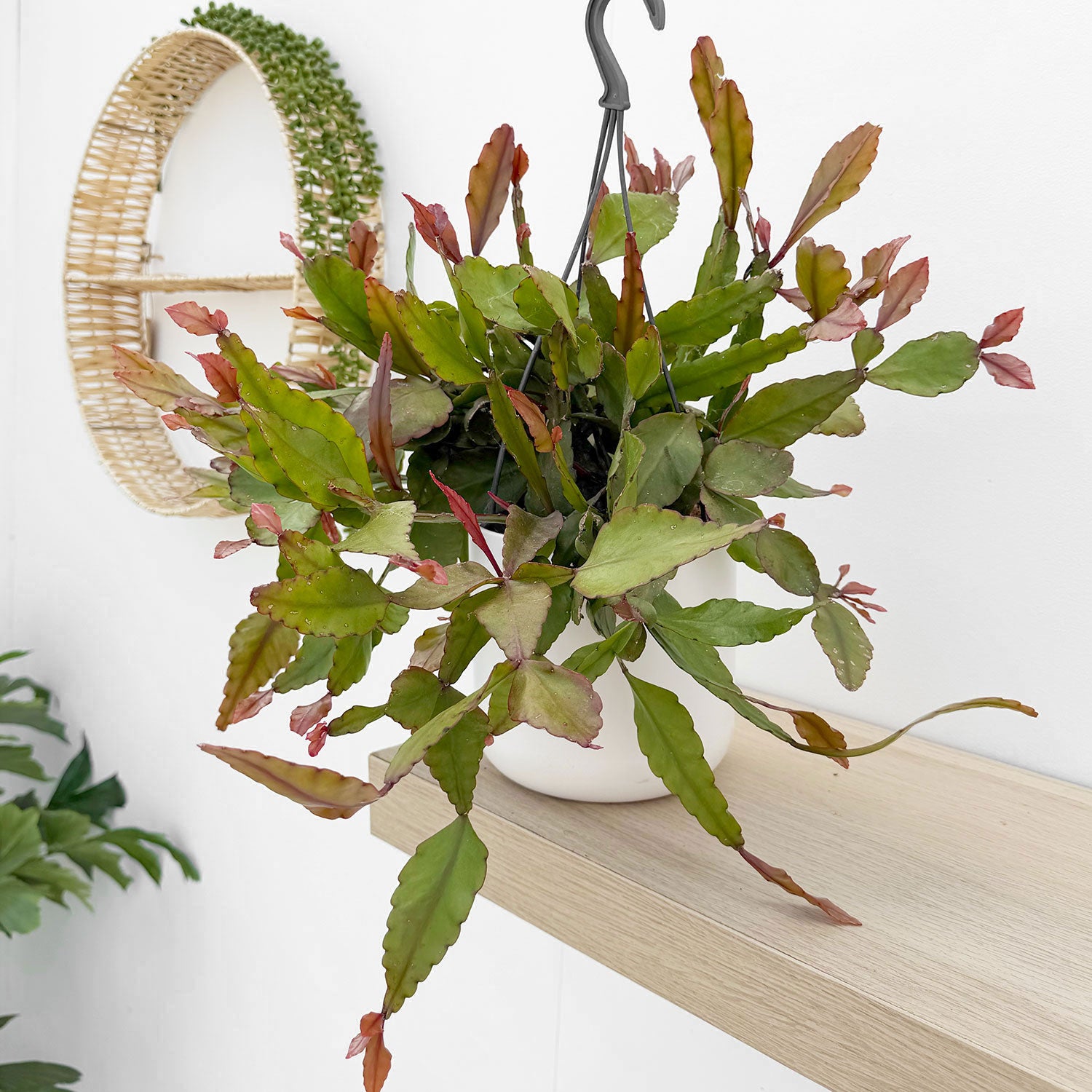
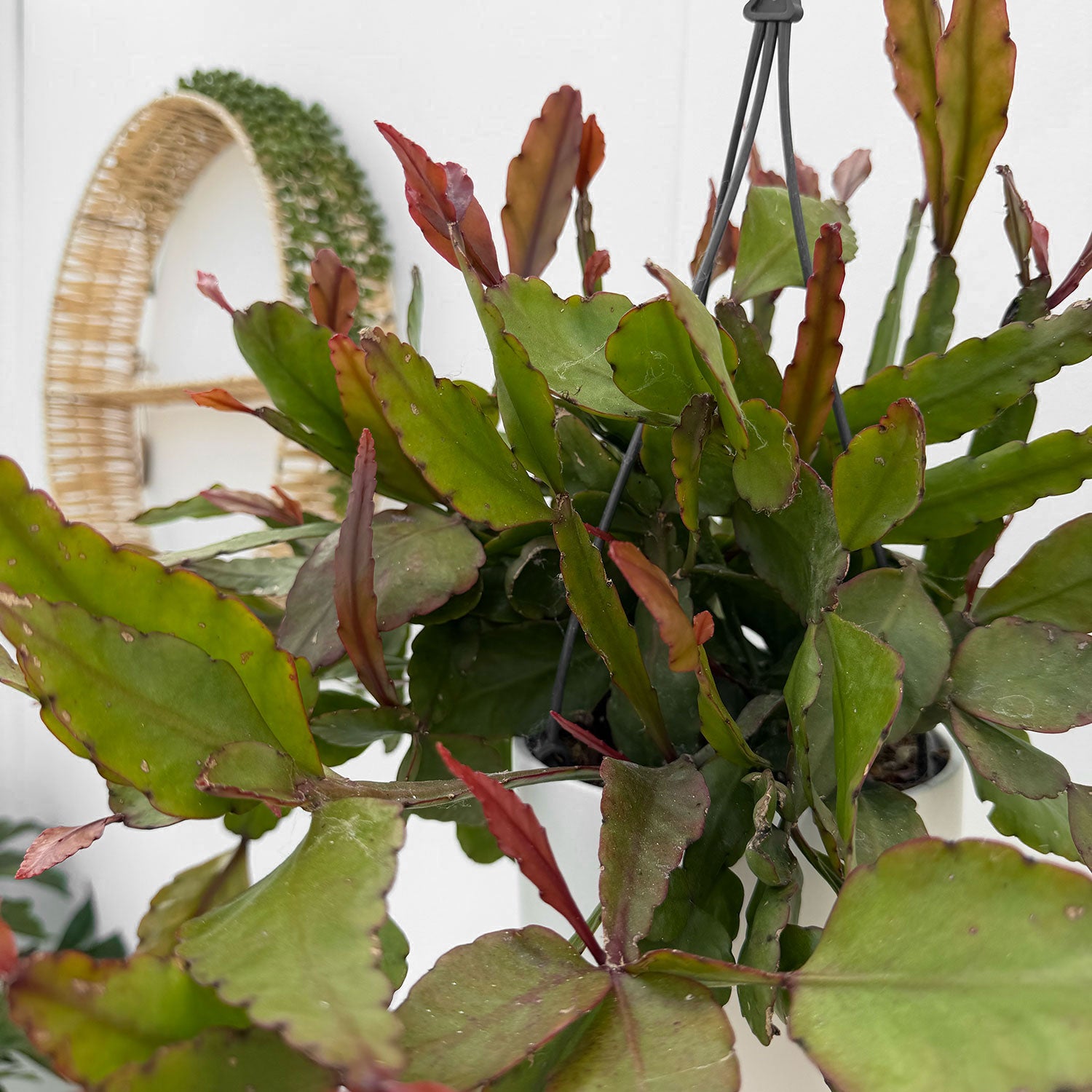
Rhipsalis elliptica is a distinctive trailing epiphytic cactus prized for its flattened, oval-shaped stems and cascading growth habit. Unlike desert cacti, Rhipsalis species naturally grow in the tropical rainforests of South America, where they cling to trees beneath the forest canopy. This makes them exceptionally well suited to indoor environments, thriving in bright, indirect light and higher humidity.
Its lush, segmented stems create a soft, elegant display that looks particularly striking in hanging baskets, shelves or elevated planters where the foliage can cascade freely. Mature plants may also produce small creamy-white flowers followed by decorative white berries under the right conditions.
Easy to care for and relatively drought tolerant, Rhipsalis elliptica is an excellent choice for both beginners and experienced houseplant collectors looking for something a little different.
Rhipsalis elliptica Care Guide
Light
Rhipsalis elliptica naturally grows beneath the rainforest canopy and prefers filtered light.
- Bright, indirect light is ideal.
- Tolerates medium light well.
- Can cope with lower light, although growth may slow.
- Avoid prolonged direct afternoon sun, which can scorch the stems.
An east or north-facing window is often ideal, while south-facing windows should be filtered with a sheer curtain.
Watering
Although it is a cactus, Rhipsalis elliptica requires more regular watering than desert cacti.
Allow the top 2–5cm of compost to dry before watering thoroughly.
During spring and summer:
- Water approximately every 7–10 days, depending on temperature and light.
During autumn and winter:
- Reduce watering to every 2–3 weeks.
- Never allow the compost to remain constantly wet.
Always ensure excess water drains away completely.
Signs of overwatering
- Yellowing stems
- Soft or mushy growth
- Root rot
- Stem drop
Signs of underwatering
- Wrinkled or shrivelled stems
- Thin, limp growth
- Slower growth
Humidity
As a tropical epiphytic cactus, Rhipsalis appreciates moderate to high humidity.
Ideal humidity:
It adapts well to average household conditions but will thrive with additional humidity.
To increase humidity:
- Group with other houseplants.
- Use a pebble tray.
- Run a humidifier during particularly dry periods.
Temperature
Ideal temperatures range between:
18°C–26°C
Avoid temperatures below:
10°C
Protect from:
- Cold draughts
- Frost
- Sudden temperature changes
- Hot air from radiators
Soil
Rhipsalis requires a very free-draining growing medium.
A suitable mix includes:
- Houseplant compost
- Orchid bark
- Perlite or pumice
- Coco coir
An orchid or epiphytic cactus mix also works well.
Excellent drainage is essential to prevent root rot.
Feeding
Feed during the growing season:
- Every 4–6 weeks in spring and summer.
- Use a diluted balanced liquid houseplant fertiliser or cactus fertiliser.
- Do not feed during winter.
Repotting
Rhipsalis prefers being slightly root bound.
Repot:
- Every 2–3 years.
- When roots fill the pot.
- If the compost has broken down and no longer drains well.
Only increase the pot size slightly each time.
Pruning
Minimal pruning is required.
You can:
- Remove damaged stems.
- Trim long growth to maintain shape.
- Prune to encourage bushier growth.
Healthy cuttings can be propagated easily.
Cleaning
Unlike broad-leaved houseplants, Rhipsalis requires very little cleaning.
Occasionally:
- Gently rinse stems with lukewarm water.
- Remove any dead segments.
Avoid using leaf shine products.
Propagation
Rhipsalis elliptica is one of the easiest tropical cacti to propagate.
Simply:
- Take healthy stem cuttings.
- Allow the cut end to dry for 24 hours.
- Plant into lightly moist, well-draining compost.
- Keep warm in bright, indirect light.
Roots usually develop within several weeks.
Common Problems
Soft or Mushy Stems
Usually caused by:
- Overwatering
- Poor drainage
- Root rot
Reduce watering and check the root system if this occurs.
Wrinkled Stems
Usually indicate:
- Underwatering
- Extended dry periods
Water thoroughly and allow excess water to drain.
Yellowing Growth
Often caused by:
- Waterlogged compost
- Poor drainage
- Excessive direct sunlight
Slow Growth
Can result from:
- Low light
- Cold temperatures
- Lack of nutrients during the growing season
Pests
Although generally trouble-free, Rhipsalis may occasionally attract:
- Mealybugs
- Spider mites
- Scale insects
- Fungus gnats if kept too wet
Inspect stems regularly and treat infestations promptly with insecticidal soap or neem oil.
Is Rhipsalis elliptica Pet Friendly?
Yes.
Rhipsalis species, including Rhipsalis elliptica, are generally considered non-toxic to cats and dogs, making them a safer choice for households with pets. However, it is still best to discourage pets from chewing the stems, as ingesting any houseplant may cause mild stomach upset.
Flowering
With the right care, mature Rhipsalis elliptica may produce:
- Small creamy-white flowers during spring or summer.
- Decorative white berries after flowering.
Flowering is encouraged by:
- Bright, indirect light.
- Consistent watering during the growing season.
- A slightly cooler, drier winter rest.
Growth Habit
Rhipsalis elliptica develops long, flattened stems that gradually cascade over the edges of pots and hanging baskets.
It is ideal for:
- Hanging baskets
- Shelves
- Plant stands
- Conservatories
- Bathrooms with good natural light
Given enough time, stems can trail well over a metre in length.
Why Choose Rhipsalis elliptica?
Rhipsalis elliptica offers a unique alternative to traditional trailing houseplants. Its unusual flattened stems, elegant cascading habit and easy-care nature make it an excellent addition to any indoor plant collection. Adapted to rainforest conditions rather than deserts, it thrives in the same bright, indirect light and moderate humidity found in most homes, rewarding growers with lush evergreen growth and, occasionally, delicate flowers and ornamental berries. Whether displayed alone or as part of a tropical indoor jungle, Rhipsalis elliptica provides year-round texture and architectural interest with very little maintenance.