





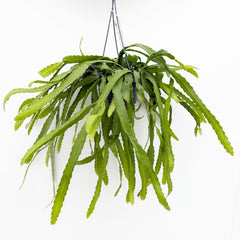
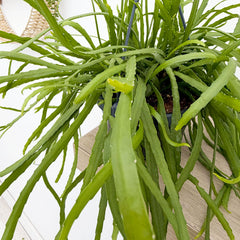
30 - 35cm Rhipsalis Monacantha in Hanging Pot 14cm Pot House Plant
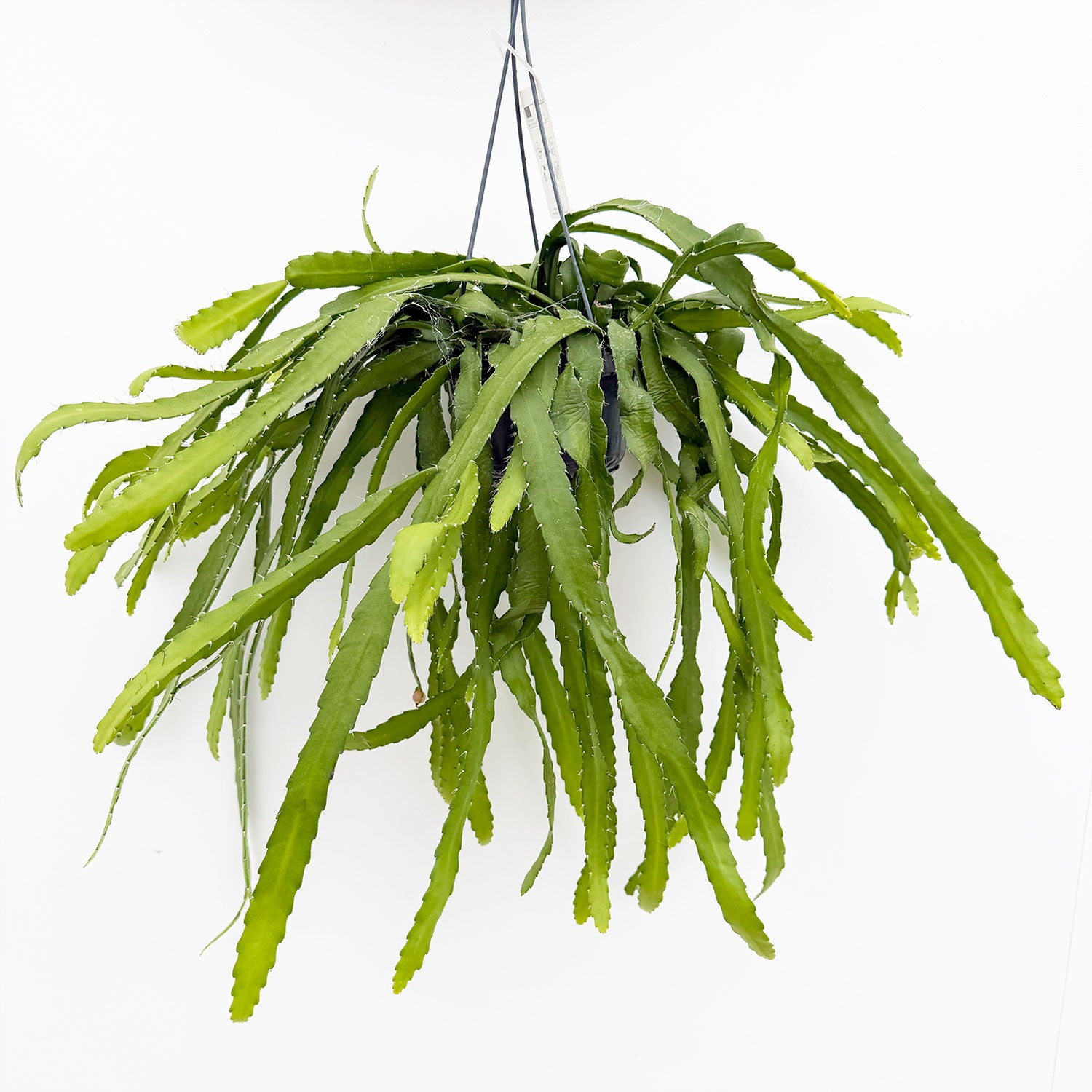
Rhipsalis monacantha is an unusual tropical cactus prized for its cascading, branching stems and wonderfully wild growth habit. Unlike the upright, desert-loving cacti most people are familiar with, Rhipsalis are epiphytic cacti that naturally grow in warm, humid forests, often...
- £34.99
£44.99- £34.99
- Unit price
- per

Live Delivery Guarantee
At Plants for all Seasons, we stand behind the quality and vitality of every plant we deliver, which is why we proudly offer a Live Delivery Guarantee. This commitment means that we guarantee your plants will arrive at your doorstep in healthy, thriving condition. We understand the importance of receiving your plants in the best possible state, ready to enhance your space from the moment they arrive. With Plants for all Seasons's Live Delivery Guarantee, you can shop with complete peace of mind, knowing that your green investments are protected from our nursery to your doorstep.

30 Days Returns
Due to the sensitive and breakable nature of our products, it's understandable that damages may occur despite our meticulous packaging methods. If you find that your plant or pot has arrived in a less than satisfactory condition, please reach out to us at hello@plantsforallseasons.co.uk within a month of your delivery date. When contacting us, please provide your order reference, alongside a photo clearly showing the damaged item and its packaging, including the delivery label. We are committed to resolving such issues by offering a refund or a replacement, depending on the availability of the item in question.
We are unable to accept returns that are not related to damage because plants are inherently perishable and delicate. It's also worth noting that the plant you receive may slightly differ from the images displayed on our website. This variation is natural, given that each plant is unique and subject to seasonal growth changes.

Safe and Secure Delivery
At Plants for all Seasons, we recognise the critical role our courier partners play in ensuring the safe and secure delivery of your plants. We collaborate exclusively with leading courier services, renowned for their reliability and exceptional handling practices, to ensure your plants arrive in perfect condition. Our partners are carefully selected based on their commitment to timely deliveries and their proven track record in transporting delicate items with the utmost care.

Bespoke Eco Packaging
At Plants for all Seasons, our commitment to the environment extends to every aspect of our operations, especially in how we deliver your plants. We take pride in our bespoke, eco-friendly packaging, meticulously designed for the safe transport of live plants. Our innovative packaging solutions are crafted from sustainable materials, ensuring that your plants are not only secure but also that their journey from our nursery to your home treads lightly on the earth. This thoughtful approach minimises stress on the plants and reduces waste, aligning with our mission to promote a greener, more sustainable future.
🚚 Delivered in 2–3 working days
£6.99 delivery — add as many plants as you like for one delivery fee.

 Ask Leafy.AI
Rhipsalis monacantha is an unusual tropical cactus prized for its cascading, branching stems and wonderfully wild growth habit. Unlike the upright, desert-loving cacti most people are familiar with, Rhipsalis are epiphytic cacti that naturally grow in warm, humid forests, often using trees and rocky surfaces for support rather than rooting into dry desert ground.
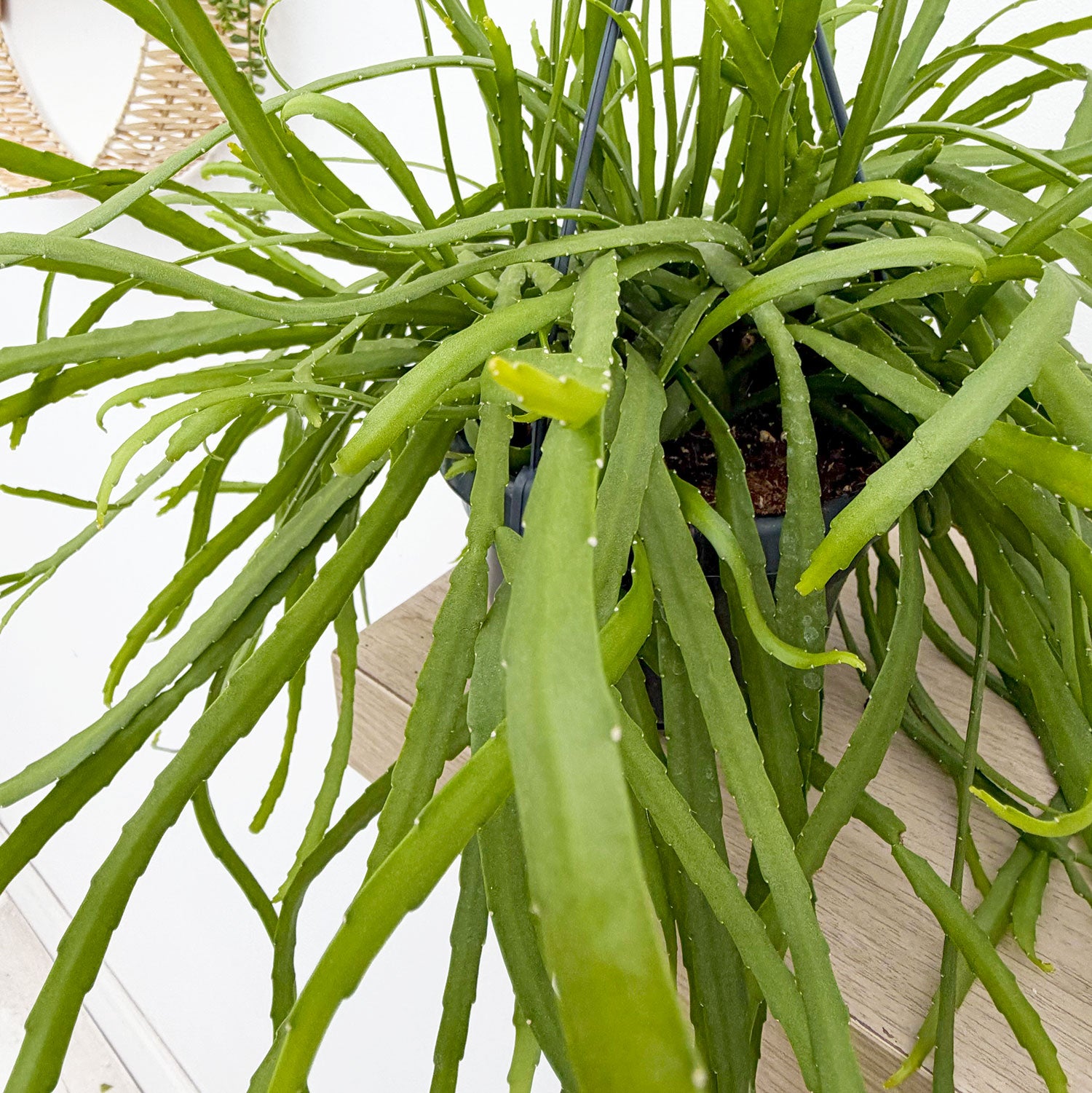
Rhipsalis monacantha produces slender, segmented green stems that branch freely as the plant matures, gradually creating a soft, trailing shape. The stems can develop a slightly angular or flattened appearance, with tiny areoles along their edges. These may carry very fine bristles, giving the plant a subtly textured appearance without the intimidating spines associated with many traditional cacti.
As the stems lengthen, they begin to spill over the edge of the pot, making Rhipsalis monacantha particularly effective in hanging pots, tall planters or positioned on shelves where its growth can cascade naturally.
Mature, well-established plants may also produce small flowers along their stems, followed by decorative berry-like fruits under favourable growing conditions. While the flowers are relatively understated, they add another interesting feature to an already distinctive plant.
Its combination of unusual cactus characteristics and tropical foliage makes Rhipsalis monacantha an excellent choice for anyone looking for something a little different. It is particularly well suited to collections containing trailing plants, jungle cacti and other epiphytic species.
Key Features
- Unusual tropical epiphytic cactus
- Long, branching and trailing stems
- Excellent for hanging pots and shelves
- Can produce small flowers and berry-like fruits when mature
- More tolerant of humidity than traditional desert cacti
- Distinctive architectural appearance
- Relatively easy to care for once its watering requirements are understood
Rhipsalis monacantha Care Guide
Light
Rhipsalis monacantha prefers bright, indirect light.
In its natural habitat, it grows beneath the canopy of larger plants and trees, so it is accustomed to receiving plenty of filtered light rather than prolonged, intense sunshine.
A position close to an east- or west-facing window can work particularly well. A bright room with the plant positioned slightly back from a south-facing window is also suitable.
Some gentle morning or late-afternoon sunshine is normally tolerated, but strong midday and afternoon sun can scorch the stems, particularly when the plant has not been gradually acclimatised to brighter conditions.
In lower light, Rhipsalis can survive but growth may become slower and thinner, and the plant will be less likely to flower.
Ideal: Bright, filtered or indirect light.
Watering
Rhipsalis monacantha requires a slightly different watering approach from a typical desert cactus.
Allow the upper portion of the compost to dry before watering again, but avoid leaving the plant completely dry for extended periods.
When watering, thoroughly soak the compost until excess water begins to drain from the bottom of the pot. Always allow this excess water to escape rather than allowing the plant to remain standing in water.
During spring and summer, when the plant is actively growing, it will usually require more frequent watering. During autumn and winter, growth slows and watering should generally be reduced.
The exact frequency will depend on factors including:
- Light levels
- Temperature
- Pot size
- Compost type
- Humidity
- Time of year
Rather than watering according to a fixed weekly schedule, check the moisture level of the compost first.
Overwatering and permanently wet compost can cause the roots and lower stems to rot. However, allowing the plant to remain extremely dry for too long may cause the stems to become thin, wrinkled or dehydrated.
Humidity
Unlike many desert cacti, Rhipsalis monacantha appreciates moderate to higher humidity.
Average household humidity is normally sufficient, but the plant can benefit from slightly more humid conditions, particularly in centrally heated homes where the air can become very dry during winter.
Bathrooms and kitchens with good natural light can provide suitable environments.
Good airflow is still important. High humidity combined with permanently wet compost and poor air circulation can encourage fungal problems and rot.
Temperature
Rhipsalis monacantha prefers warm, relatively stable temperatures.
An ideal indoor temperature range is approximately 18–27°C.
Avoid exposing the plant to cold draughts, sudden temperature changes or prolonged temperatures below approximately 10–12°C.
Keep it away from frequently opened external doors during winter and avoid positioning it directly next to radiators or other strong heat sources.
Soil
Rhipsalis monacantha grows best in a light, airy and free-draining growing medium.
Although it is a cactus, a very dry, mineral-heavy desert cactus compost is not always ideal because Rhipsalis naturally grows in environments containing organic material while still benefiting from excellent drainage and airflow around the roots.
A suitable mixture could contain:
- Houseplant compost
- Orchid bark
- Perlite or pumice
- Coco coir
- Fine horticultural bark
The aim is to create a mixture that retains a little moisture while allowing excess water to drain freely.
Compacted, heavy compost should be avoided.
Feeding
Feed during the active growing season, generally from spring through to early autumn.
A balanced liquid houseplant or cactus fertiliser can be used at a diluted strength approximately once every 3–4 weeks, depending on the product instructions and growing conditions.
Avoid overfeeding. Rhipsalis does not require particularly heavy fertilisation.
Feeding can normally be reduced significantly or stopped during winter when growth naturally slows.
Repotting
Rhipsalis monacantha does not need frequent repotting and can tolerate being slightly root-bound.
Consider repotting approximately every 2–3 years, or when:
- Roots have filled the existing pot
- Water passes through the compost unusually quickly
- The compost has significantly degraded
- Growth has slowed despite otherwise suitable conditions
- Roots are emerging heavily from the drainage holes
Choose a pot only slightly larger than the existing container.
Using an excessively large pot increases the amount of compost surrounding the roots and can cause the growing medium to remain wet for too long.
Spring is usually the best time to repot.
Pruning
Pruning is not essential, but Rhipsalis monacantha responds well to occasional trimming.
Long, damaged or untidy stems can be removed using clean, sharp scissors or secateurs. Pruning can also encourage additional branching and help maintain a fuller appearance.
Cut stems can often be used for propagation.
Propagation
Rhipsalis monacantha is relatively straightforward to propagate from stem cuttings.
Take a healthy section of stem and allow the cut end to dry for approximately 24–48 hours. This allows the wound to begin sealing before the cutting is planted.
Place the cutting into a small pot containing a lightly moist, free-draining growing medium.
Keep the cutting somewhere warm with bright, indirect light.
Avoid saturating the compost while the cutting establishes. Once roots have developed and new growth becomes visible, gradually begin caring for it as you would an established plant.
Common Problems
Wrinkled or Shrunken Stems
Wrinkled stems can indicate dehydration, particularly if the compost has been completely dry for an extended period.
Check the compost and water thoroughly if necessary.
However, wrinkling can occasionally occur when roots have been damaged by excessive watering and can no longer absorb moisture correctly. Always check the condition of the compost and roots before automatically increasing watering.
Yellowing Stems
Yellowing can be associated with:
- Excessive watering
- Poor drainage
- Insufficient light
- Natural ageing of older growth
- Sudden environmental changes
If several stems begin yellowing at once, inspect the roots and growing medium for signs of excess moisture.
Soft or Mushy Stems
Soft, dark or mushy sections are often a sign of rot.
Remove affected areas using sterile cutting tools and check whether the compost is remaining wet for too long.
If root rot is present, remove damaged roots and repot the remaining healthy plant into fresh, free-draining compost.
Brown or Bleached Patches
Dry, pale or brown areas can develop following exposure to excessive direct sunlight.
Move the plant away from intense midday or afternoon sunlight and provide bright but filtered light instead.
Lack of Growth
Growth naturally slows during winter.
During the growing season, slow growth may indicate insufficient light, low temperatures, exhausted compost, damaged roots or a lack of nutrients.
Flowering
Mature Rhipsalis monacantha plants can produce small flowers from points along their stems.
Flowering is more likely when the plant receives:
- Plenty of bright, indirect light
- Appropriate seasonal watering
- Regular light feeding during the growing season
- Stable temperatures
- A slight reduction in watering during the cooler months
Flowers can subsequently develop into small berry-like fruits.
Flowering indoors cannot be guaranteed and should be considered an added bonus rather than the main reason for growing the plant.
Is Rhipsalis monacantha Easy to Care For?
Rhipsalis monacantha is generally considered easy to moderately easy to grow indoors.
The most important thing to remember is that it should not be treated exactly like a desert cactus. It appreciates more regular moisture and higher humidity, while still requiring excellent drainage.
Provide bright indirect light, allow the compost to partially dry between waterings and avoid permanently saturated soil, and it can develop into an impressive cascading specimen over time.
Best Position in the Home
Rhipsalis monacantha works particularly well:
- In a hanging planter
- On a high shelf
- On top of a cabinet or bookcase
- Close to a bright east- or west-facing window
- In a bright bathroom
- As part of a tropical or jungle-style plant display
As the stems mature and lengthen, giving the plant room to trail will show off its natural growth habit to its full potential.
Care Summary
Light: Bright, indirect light
Water: Allow the upper compost to partially dry between waterings
Humidity: Average to moderately high
Temperature: Ideally 18–27°C
Soil: Airy, moisture-retentive but free-draining mix
Feeding: Every 3–4 weeks during spring and summer
Repotting: Approximately every 2–3 years
Growth Habit: Branching and trailing
Difficulty: Easy to moderate
At Plants for all Seasons, we take pride in our eco-friendly approach to packaging. Our custom-made plant boxes are designed with both the environment and your plants' wellbeing in mind. Here’s what makes our packaging special:
Upright and Fresh: Our innovative design ensures that your plants remain upright and fresh during transit. Specially engineered compartments and supports within the box prevent movement and damage, so your plants arrive in perfect condition.
100% Recyclable: Our plant boxes are fully recyclable, ensuring that after they have served their purpose, they can be responsibly disposed of without harming the planet.
Made from Recycled Materials: Sustainability is at the core of our values. That’s why our packaging is crafted from recycled materials, reducing waste and promoting a circular economy.
Winter Shipping: We offer additional heat packs in winter to keep your plants nice and warm on their travels. Add one heat pack per plant when checking out in winter months.
By choosing our products, you are not only enhancing your home with beautiful plants but also contributing to a greener, more sustainable future
Check out our YouTube video to see exactly how we pack for safe delivery.
Upright and Fresh: Our innovative design ensures that your plants remain upright and fresh during transit. Specially engineered compartments and supports within the box prevent movement and damage, so your plants arrive in perfect condition.
100% Recyclable: Our plant boxes are fully recyclable, ensuring that after they have served their purpose, they can be responsibly disposed of without harming the planet.
Made from Recycled Materials: Sustainability is at the core of our values. That’s why our packaging is crafted from recycled materials, reducing waste and promoting a circular economy.
Winter Shipping: We offer additional heat packs in winter to keep your plants nice and warm on their travels. Add one heat pack per plant when checking out in winter months.
By choosing our products, you are not only enhancing your home with beautiful plants but also contributing to a greener, more sustainable future
Check out our YouTube video to see exactly how we pack for safe delivery.
Tropical Glasshouse Nursery: Our plants are nurtured in our tropical glasshouse nursery located in Lincolnshire, where we maintain an average temperature of 16°C. We do not use cold warehouses, ensuring optimal conditions for plant health.
Plastic Nursery Pots: All our plants are supplied in practical plastic nursery pots. If you prefer a more decorative option, we offer a range of stylish pots available for purchase separately.
Non-Consumable: Please note that our plants are intended for ornamental purposes only unless specifically stated as edible. Ensure you check product descriptions carefully if you are looking for edible varieties.
Variable Heights: The height of our plants can vary by approximately +/- 10%. This natural fluctuation ensures you receive a unique and healthy specimen. Plants are measured from the floor to the top of the plant.
Plant Pot Sizes: Pot sizes may vary by approximately +/- 1cm. To ensure a proper fit, we recommend selecting a decorative pot that is 1-2cm larger than the stated plant pot size. For instance, if you purchase a plant in a 17cm pot, a 18 - 19cm decorative pot would be ideal.
Quarantining: All our houseplants are regularly sprayed with a preventative systemic bug treatment. We do our best to ensure a bug free growing environment however sometimes these can unfortunately be missed, as such we always recommend quarantining plants when they first enter your home and checking them upon arrival for bugs.
Plastic Nursery Pots: All our plants are supplied in practical plastic nursery pots. If you prefer a more decorative option, we offer a range of stylish pots available for purchase separately.
Non-Consumable: Please note that our plants are intended for ornamental purposes only unless specifically stated as edible. Ensure you check product descriptions carefully if you are looking for edible varieties.
Variable Heights: The height of our plants can vary by approximately +/- 10%. This natural fluctuation ensures you receive a unique and healthy specimen. Plants are measured from the floor to the top of the plant.
Plant Pot Sizes: Pot sizes may vary by approximately +/- 1cm. To ensure a proper fit, we recommend selecting a decorative pot that is 1-2cm larger than the stated plant pot size. For instance, if you purchase a plant in a 17cm pot, a 18 - 19cm decorative pot would be ideal.
Quarantining: All our houseplants are regularly sprayed with a preventative systemic bug treatment. We do our best to ensure a bug free growing environment however sometimes these can unfortunately be missed, as such we always recommend quarantining plants when they first enter your home and checking them upon arrival for bugs.
