





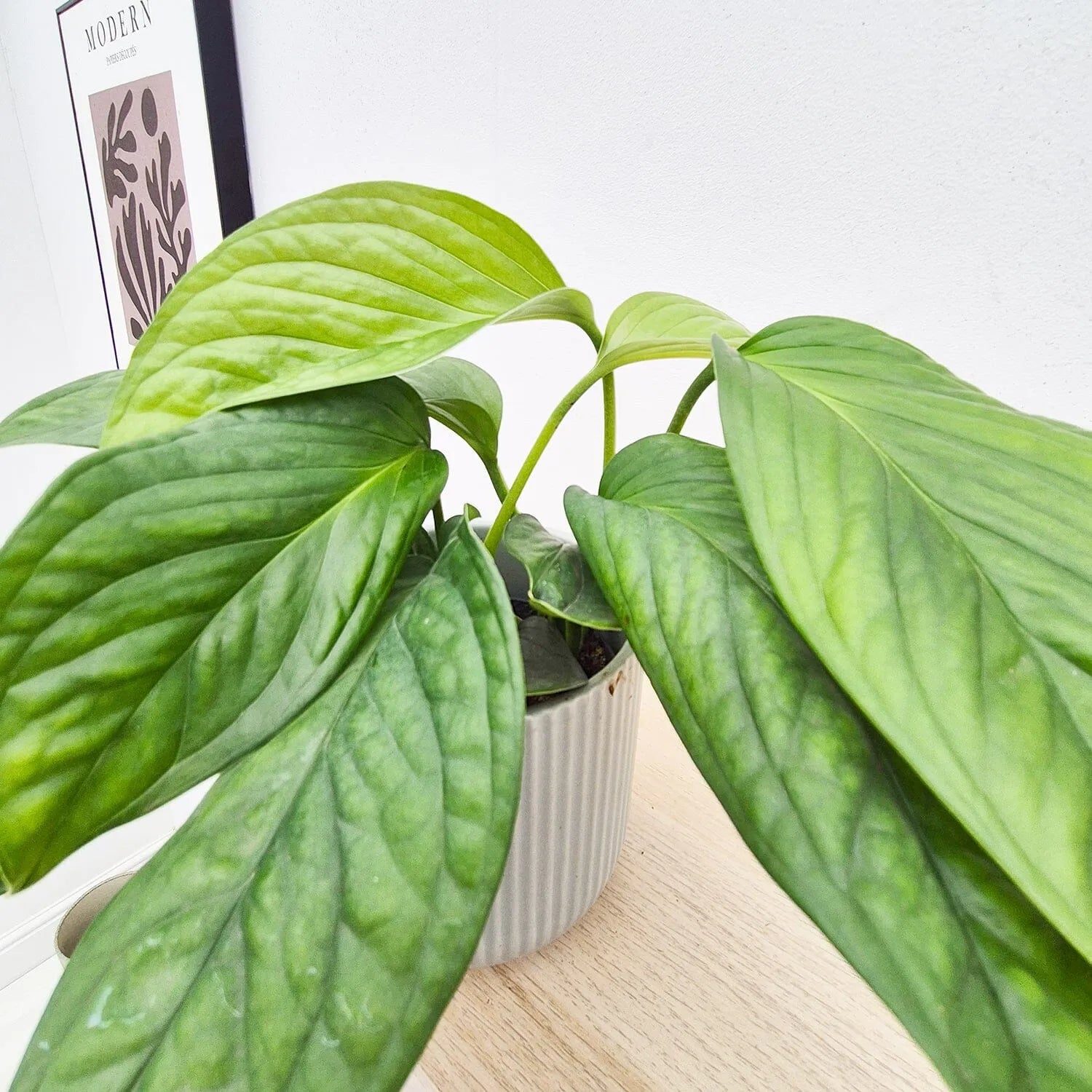


20 - 30cm Monstera Pinnatipartita 12cm Pot House Plant
Monstera pinnatipartita is an elegant tropical aroid celebrated for its deeply fenestrated, segmented foliage and dramatic climbing habit. Native to the humid rainforests of Colombia, Ecuador, and Peru, this species is part of the Araceae family and closely related to...
- £19.99
- £19.99
- Unit price
- per

Live Delivery Guarantee
At Plants for all Seasons, we stand behind the quality and vitality of every plant we deliver, which is why we proudly offer a Live Delivery Guarantee. This commitment means that we guarantee your plants will arrive at your doorstep in healthy, thriving condition. We understand the importance of receiving your plants in the best possible state, ready to enhance your space from the moment they arrive. With Plants for all Seasons's Live Delivery Guarantee, you can shop with complete peace of mind, knowing that your green investments are protected from our nursery to your doorstep.

30 Days Returns
Due to the sensitive and breakable nature of our products, it's understandable that damages may occur despite our meticulous packaging methods. If you find that your plant or pot has arrived in a less than satisfactory condition, please reach out to us at hello@plantsforallseasons.co.uk within a month of your delivery date. When contacting us, please provide your order reference, alongside a photo clearly showing the damaged item and its packaging, including the delivery label. We are committed to resolving such issues by offering a refund or a replacement, depending on the availability of the item in question.
We are unable to accept returns that are not related to damage because plants are inherently perishable and delicate. It's also worth noting that the plant you receive may slightly differ from the images displayed on our website. This variation is natural, given that each plant is unique and subject to seasonal growth changes.

Safe and Secure Delivery
At Plants for all Seasons, we recognise the critical role our courier partners play in ensuring the safe and secure delivery of your plants. We collaborate exclusively with leading courier services, renowned for their reliability and exceptional handling practices, to ensure your plants arrive in perfect condition. Our partners are carefully selected based on their commitment to timely deliveries and their proven track record in transporting delicate items with the utmost care.

Bespoke Eco Packaging
At Plants for all Seasons, our commitment to the environment extends to every aspect of our operations, especially in how we deliver your plants. We take pride in our bespoke, eco-friendly packaging, meticulously designed for the safe transport of live plants. Our innovative packaging solutions are crafted from sustainable materials, ensuring that your plants are not only secure but also that their journey from our nursery to your home treads lightly on the earth. This thoughtful approach minimises stress on the plants and reduces waste, aligning with our mission to promote a greener, more sustainable future.
🚚 Delivered in 2–3 working days
£6.99 delivery — add as many plants as you like for one delivery fee.

 Ask Leafy.AI
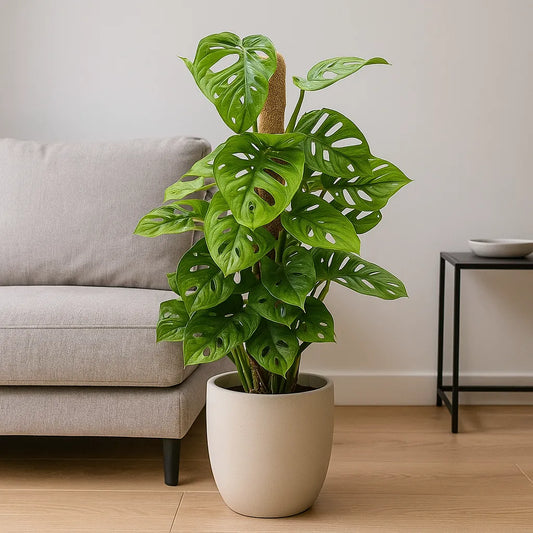
Monstera pinnatipartita is an elegant tropical aroid celebrated for its deeply fenestrated, segmented foliage and dramatic climbing habit. Native to the humid rainforests of Colombia, Ecuador, and Peru, this species is part of the Araceae family and closely related to Monstera deliciosa — though its mature form is distinguished by leaves that split into individual lobes resembling delicate fingers or feathers.
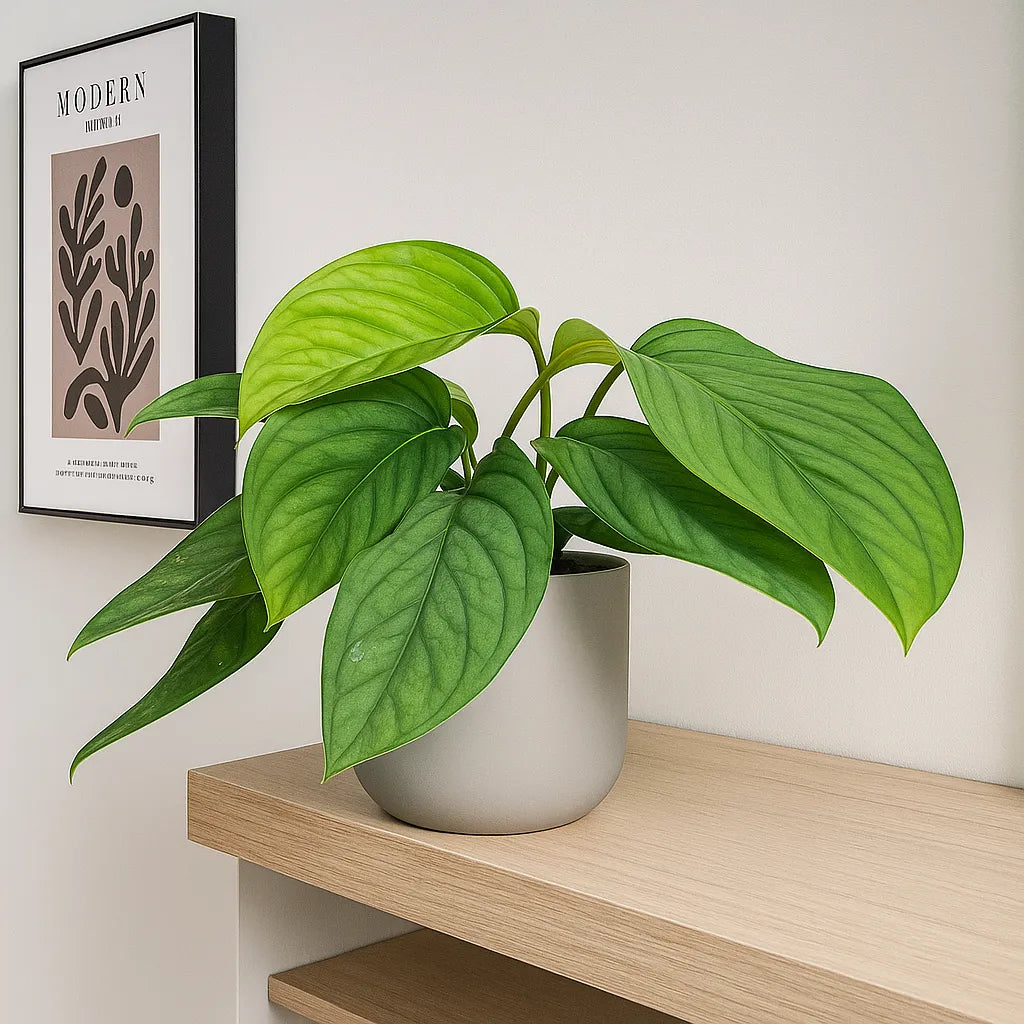
The juvenile leaves are solid, glossy, and heart-shaped, a rich emerald green with pronounced venation. As the plant climbs and matures, the leaves become deeply pinnatifid (split into separate lobes), creating a highly sculptural, architectural appearance. Each stage of growth offers a unique texture and form, making Monstera pinnatipartita a living example of tropical evolution.
Graceful, sophisticated, and truly distinctive, Monstera pinnatipartita is a must-have for collectors seeking a mature Monstera species that combines refined structure with wild tropical beauty.
Monstera pinnatipartita – Care Guide
Light
Thrives in bright, indirect light. Strong filtered light encourages leaf development and fenestration, while lower light levels will keep the foliage solid and smaller. Avoid direct midday sunlight, which can scorch the leaves.
Watering
Keep the soil lightly moist but never waterlogged. Water when the top 3–4 cm of soil feels dry. In spring and summer, maintain consistent moisture; in winter, reduce watering frequency. This Monstera prefers humidity around the roots but requires excellent drainage.
Temperature and Humidity
-
Temperature: Prefers warmth between 22–30 °C; avoid temperatures below 16 °C.
-
Humidity: Requires moderate to high humidity (60–80%) for lush growth. Mist regularly, use a humidifier, or grow near other tropicals to maintain ambient moisture.
Soil and Potting
Use a loose, airy aroid mix such as compost blended with orchid bark, perlite, and coco coir. This ensures moisture retention while allowing airflow. Provide a moss pole or plank for the plant to climb — M. pinnatipartita is a true climber and produces larger, more fenestrated leaves as it ascends. Repot every 1–2 years in spring to refresh the mix and give space for new roots.
Feeding
Feed every 4–6 weeks during the growing season with a diluted, balanced liquid fertiliser or an aroid-specific formula. Over-fertilising can damage roots and discolour leaves. Stop feeding in autumn and winter when growth slows.
Pruning and Maintenance
Prune to shape and control size. Remove any yellowing or aged leaves at the base. Wipe the leaves gently with a damp cloth to remove dust and highlight their natural sheen. Rotate regularly for even light exposure and balanced growth.
Growth and Maturity
A moderate to fast grower, Monstera pinnatipartita can reach 1.5–2.5 metres tall indoors when climbing. Juvenile plants exhibit entire, oval leaves, while mature specimens develop deeply pinnate foliage divided into narrow lobes — a transformation reminiscent of Monstera peru or Monstera deliciosa but even more segmented and refined. Mature leaves can reach 40–60 cm long under ideal conditions.
Common Issues
-
Yellow leaves: Overwatering or cold exposure.
-
Brown tips: Low humidity or inconsistent watering.
-
Lack of splits: Insufficient light or climbing support.
-
Pests: Occasionally spider mites or thrips; treat promptly with neem oil or insecticidal soap.
Background and Benefits
Native to the lush rainforests of western South America, Monstera pinnatipartita grows as a hemiepiphyte, beginning life on the forest floor before climbing trees toward the light. This growth habit explains its dramatic transformation from juvenile to mature form.
In cultivation, it has become one of the most desirable Monstera species for its distinctive fenestration and manageable size. Like other Monsteras, it is also an excellent air-purifying plant, filtering toxins while bringing a calm, tropical atmosphere to indoor environments. Its refined leaf shape and sculptural habit make it both a botanical statement and a functional piece of natural design.
Quick Care Summary
Light: Bright, indirect light; avoid harsh direct sun
Water: Keep soil evenly moist; allow top 3–4 cm to dry between watering
Temperature: 22–30 °C; avoid below 16 °C
Humidity: High (60–80%)
Soil: Airy, well-draining mix – compost, bark, perlite, coco coir
Feed: Every 4–6 weeks in spring/summer
Growth: Climbing habit, 1.5–2.5 m; mature leaves deeply lobed and segmented
⚠️ Toxicity note: Contains calcium oxalate crystals and is toxic if ingested. Keep out of reach of pets and children.
Styling Tip
Display Monstera pinnatipartita in a tall ceramic planter with a moss pole or natural wood totem to highlight its vertical growth and leaf segmentation. Its intricate, feather-like leaves pair beautifully with broad-foliaged species such as Philodendron ‘Rojo Congo’ or Anthurium luxurians. For a curated tropical look, place it near other climbing aroids like Rhaphidophora decursiva or Monstera deliciosa ‘Albo Variegata’. It thrives as a centrepiece in bright living spaces, conservatories, or plant cabinets — an embodiment of mature tropical elegance.
At Plants for all Seasons, we take pride in our eco-friendly approach to packaging. Our custom-made plant boxes are designed with both the environment and your plants' wellbeing in mind. Here’s what makes our packaging special:
Upright and Fresh: Our innovative design ensures that your plants remain upright and fresh during transit. Specially engineered compartments and supports within the box prevent movement and damage, so your plants arrive in perfect condition.
100% Recyclable: Our plant boxes are fully recyclable, ensuring that after they have served their purpose, they can be responsibly disposed of without harming the planet.
Made from Recycled Materials: Sustainability is at the core of our values. That’s why our packaging is crafted from recycled materials, reducing waste and promoting a circular economy.
Winter Shipping: We offer additional heat packs in winter to keep your plants nice and warm on their travels. Add one heat pack per plant when checking out in winter months.
By choosing our products, you are not only enhancing your home with beautiful plants but also contributing to a greener, more sustainable future
Check out our YouTube video to see exactly how we pack for safe delivery.
Upright and Fresh: Our innovative design ensures that your plants remain upright and fresh during transit. Specially engineered compartments and supports within the box prevent movement and damage, so your plants arrive in perfect condition.
100% Recyclable: Our plant boxes are fully recyclable, ensuring that after they have served their purpose, they can be responsibly disposed of without harming the planet.
Made from Recycled Materials: Sustainability is at the core of our values. That’s why our packaging is crafted from recycled materials, reducing waste and promoting a circular economy.
Winter Shipping: We offer additional heat packs in winter to keep your plants nice and warm on their travels. Add one heat pack per plant when checking out in winter months.
By choosing our products, you are not only enhancing your home with beautiful plants but also contributing to a greener, more sustainable future
Check out our YouTube video to see exactly how we pack for safe delivery.
Tropical Glasshouse Nursery: Our plants are nurtured in our tropical glasshouse nursery located in Lincolnshire, where we maintain an average temperature of 16°C. We do not use cold warehouses, ensuring optimal conditions for plant health.
Plastic Nursery Pots: All our plants are supplied in practical plastic nursery pots. If you prefer a more decorative option, we offer a range of stylish pots available for purchase separately.
Non-Consumable: Please note that our plants are intended for ornamental purposes only unless specifically stated as edible. Ensure you check product descriptions carefully if you are looking for edible varieties.
Variable Heights: The height of our plants can vary by approximately +/- 10%. This natural fluctuation ensures you receive a unique and healthy specimen. Plants are measured from the floor to the top of the plant.
Plant Pot Sizes: Pot sizes may vary by approximately +/- 1cm. To ensure a proper fit, we recommend selecting a decorative pot that is 1-2cm larger than the stated plant pot size. For instance, if you purchase a plant in a 17cm pot, a 18 - 19cm decorative pot would be ideal.
Quarantining: All our houseplants are regularly sprayed with a preventative systemic bug treatment. We do our best to ensure a bug free growing environment however sometimes these can unfortunately be missed, as such we always recommend quarantining plants when they first enter your home and checking them upon arrival for bugs.
Plastic Nursery Pots: All our plants are supplied in practical plastic nursery pots. If you prefer a more decorative option, we offer a range of stylish pots available for purchase separately.
Non-Consumable: Please note that our plants are intended for ornamental purposes only unless specifically stated as edible. Ensure you check product descriptions carefully if you are looking for edible varieties.
Variable Heights: The height of our plants can vary by approximately +/- 10%. This natural fluctuation ensures you receive a unique and healthy specimen. Plants are measured from the floor to the top of the plant.
Plant Pot Sizes: Pot sizes may vary by approximately +/- 1cm. To ensure a proper fit, we recommend selecting a decorative pot that is 1-2cm larger than the stated plant pot size. For instance, if you purchase a plant in a 17cm pot, a 18 - 19cm decorative pot would be ideal.
Quarantining: All our houseplants are regularly sprayed with a preventative systemic bug treatment. We do our best to ensure a bug free growing environment however sometimes these can unfortunately be missed, as such we always recommend quarantining plants when they first enter your home and checking them upon arrival for bugs.
