





Small but stunning!
"Didn't expect it to be so small, was a bit of a shock but still looks like a super solid plant! Healthy, new growth, great varigation."


At Plants for all Seasons, we stand behind the quality and vitality of every plant we deliver, which is why we proudly offer a Live Delivery Guarantee. This commitment means that we guarantee your plants will arrive at your doorstep in healthy, thriving condition. We understand the importance of receiving your plants in the best possible state, ready to enhance your space from the moment they arrive. With Plants for all Seasons's Live Delivery Guarantee, you can shop with complete peace of mind, knowing that your green investments are protected from our nursery to your doorstep.

Due to the sensitive and breakable nature of our products, it's understandable that damages may occur despite our meticulous packaging methods. If you find that your plant or pot has arrived in a less than satisfactory condition, please reach out to us at hello@plantsforallseasons.co.uk within a month of your delivery date. When contacting us, please provide your order reference, alongside a photo clearly showing the damaged item and its packaging, including the delivery label. We are committed to resolving such issues by offering a refund or a replacement, depending on the availability of the item in question.
We are unable to accept returns that are not related to damage because plants are inherently perishable and delicate. It's also worth noting that the plant you receive may slightly differ from the images displayed on our website. This variation is natural, given that each plant is unique and subject to seasonal growth changes.

At Plants for all Seasons, we recognise the critical role our courier partners play in ensuring the safe and secure delivery of your plants. We collaborate exclusively with leading courier services, renowned for their reliability and exceptional handling practices, to ensure your plants arrive in perfect condition. Our partners are carefully selected based on their commitment to timely deliveries and their proven track record in transporting delicate items with the utmost care.

At Plants for all Seasons, our commitment to the environment extends to every aspect of our operations, especially in how we deliver your plants. We take pride in our bespoke, eco-friendly packaging, meticulously designed for the safe transport of live plants. Our innovative packaging solutions are crafted from sustainable materials, ensuring that your plants are not only secure but also that their journey from our nursery to your home treads lightly on the earth. This thoughtful approach minimises stress on the plants and reduces waste, aligning with our mission to promote a greener, more sustainable future.
 Ask Leafy.AI
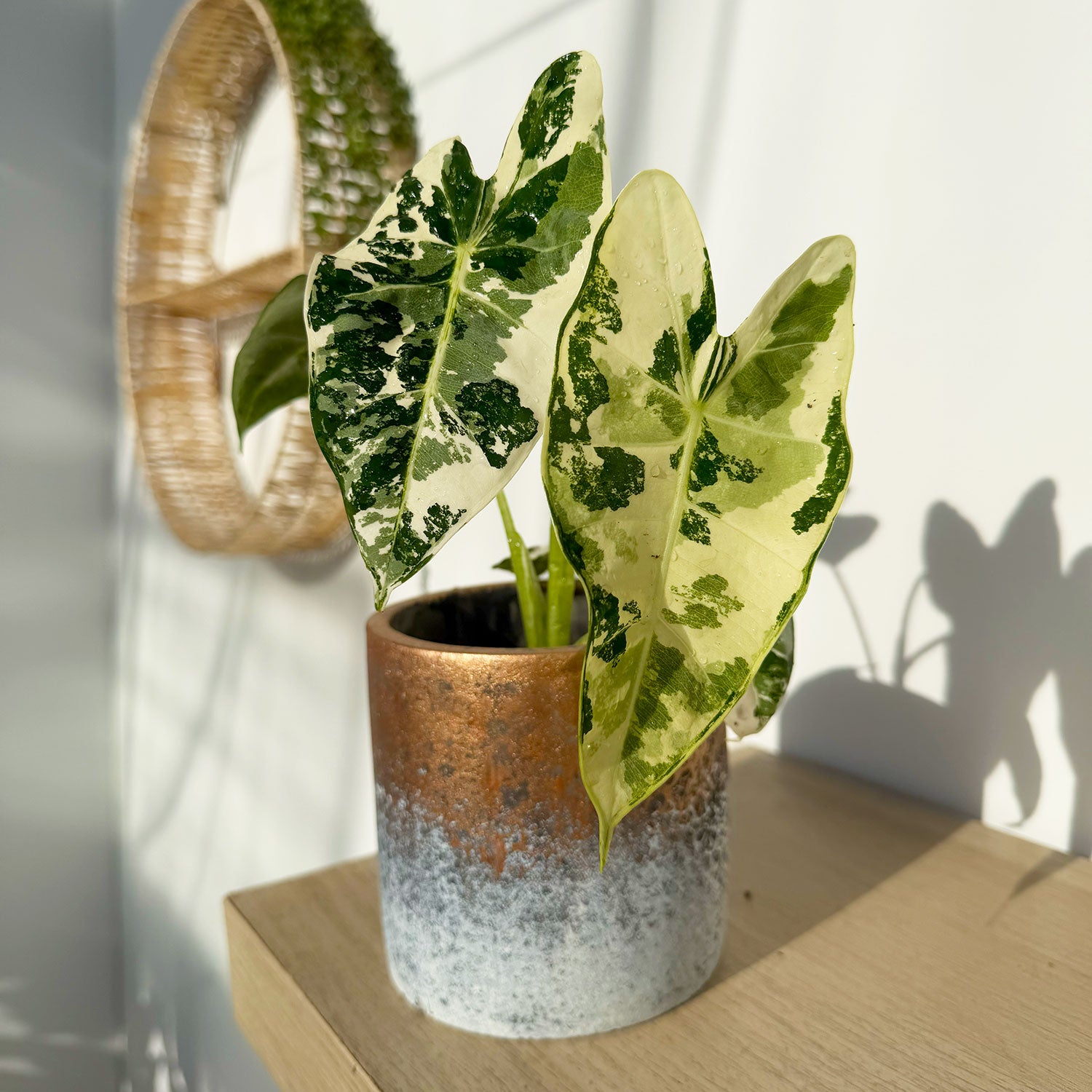
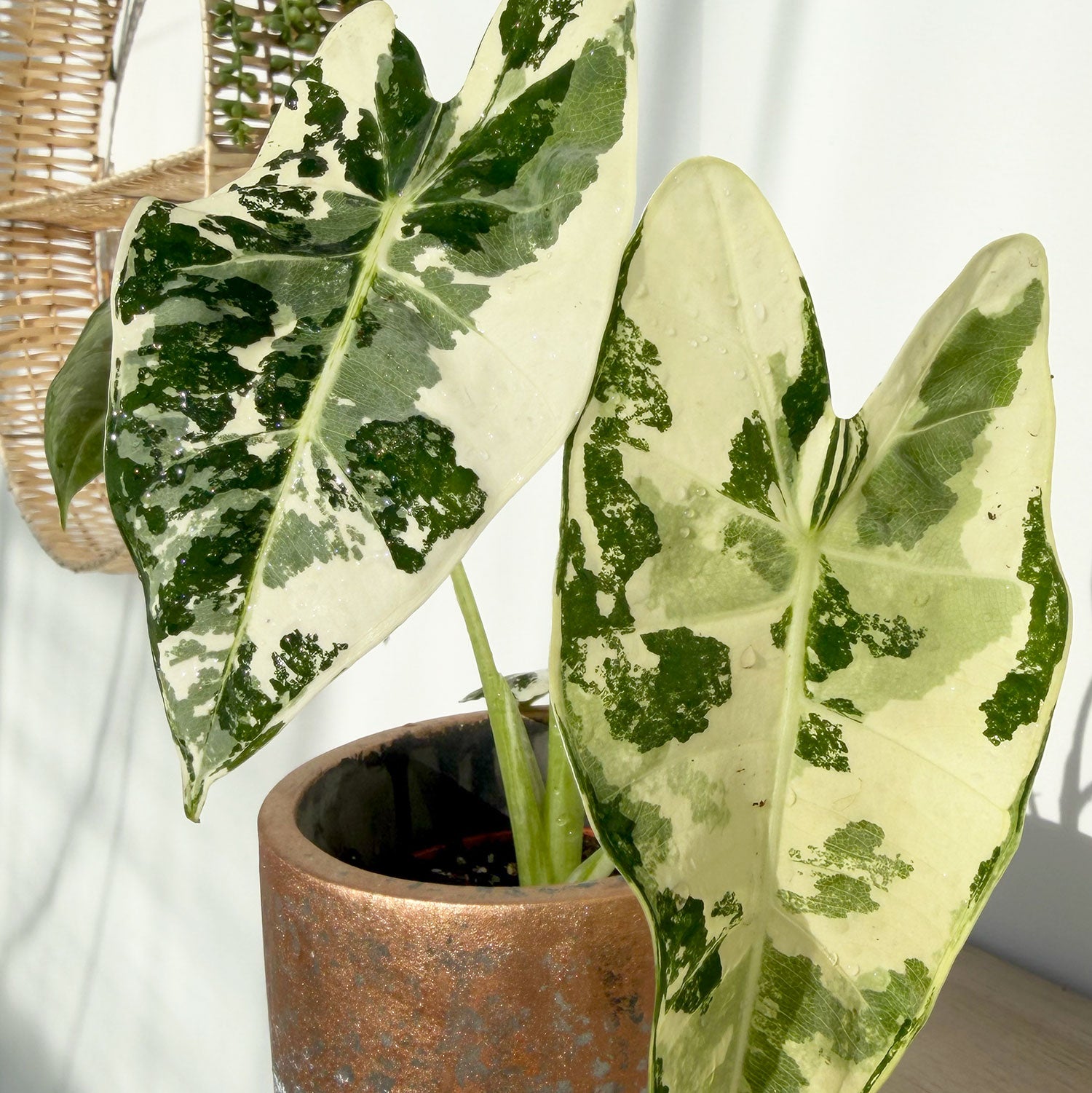
The Highly Variegated Alocasia Frydek is one of the most spectacular variegated Alocasias available, combining the unmistakable velvety foliage of the Green Velvet Alocasia with dramatic splashes of white, cream and pale green.
Each arrow-shaped leaf is completely individual. Against the rich green background, variegation can appear as bold white sectors, marbled patterns, speckles and minty green areas, often with several different patterns appearing across a single plant. The prominent pale veins running through each leaf add even more contrast.
With a highly variegated specimen, a significant proportion of the foliage displays these lighter areas, creating a much brighter and more dramatic appearance than plants with lower levels of variegation. New leaves are particularly exciting, as there's no way to know exactly how each one will look until it begins to unfurl.
The foliage has the beautifully soft, almost velvet-like texture associated with Alocasia micholitziana 'Frydek', while the upright petioles create an elegant, architectural shape. As the plant matures, increasingly substantial leaves can create an impressive display of contrasting green and white.
Because the white portions of the foliage contain little or no chlorophyll, highly variegated Frydeks require a little more attention than their completely green counterparts. Excellent light is particularly important, while consistent warmth, humidity and careful watering will help maintain those delicate variegated leaves.
It's worth remembering that variegation is naturally unpredictable. Individual leaves may emerge with dramatically different amounts and patterns of colour, and the plant's appearance will continue to evolve as it grows.
For collectors of unusual foliage, the Highly Variegated Alocasia Frydek is a genuine showpiece – a plant where every new leaf feels like a reveal.
Please note: These are living plants and variegation naturally differs between specimens. The exact amount, colour and pattern of variegation cannot be guaranteed on future leaves. Highly white areas contain little or no chlorophyll and can naturally develop some browning over time, even when the plant is being cared for correctly.
Bright, indirect light is particularly important for a highly variegated Frydek.
White and cream sections of the foliage contain significantly less chlorophyll than green tissue, meaning the plant has less usable leaf area for photosynthesis. Providing excellent light helps compensate for this.
Position the plant close to a bright window while protecting it from prolonged harsh midday sunlight. Gentle morning or evening sunlight can usually be tolerated, but strong direct sun can scorch the delicate variegated sections.
During the darker UK autumn and winter months, a suitable grow light can be extremely useful.
Avoid very dark positions. While a green Alocasia may tolerate reduced light for a period, a highly variegated specimen has much less chlorophyll available to produce energy.
Alocasia Frydek likes consistent moisture but doesn't want to remain waterlogged.
Allow the upper few centimetres of the growing medium to begin drying before watering again. When watering, thoroughly moisten the root ball and allow excess water to drain freely.
Avoid allowing the plant to stand in water.
Finding the balance is important. Keeping the roots permanently saturated can lead to root and corm rot, while allowing the plant to become extremely dry can cause drooping, crispy foliage and premature leaf loss.
Watering frequency will change according to:
Always check the growing medium rather than following a fixed watering schedule.
Highly Variegated Alocasia Frydek appreciates moderate to high humidity, ideally around 60–80%.
Higher humidity can be particularly beneficial for the pale areas of variegation, which are more prone to developing dry or crispy edges.
A humidifier is the most reliable way to maintain consistent humidity if your home is particularly dry.
Avoid relying heavily on misting. It only increases humidity very temporarily and repeatedly wet foliage combined with poor airflow can encourage other problems.
Good airflow is important alongside high humidity.
Keep your Frydek consistently warm.
An approximate range of 18–27°C is ideal, with temperatures above 20°C generally supporting strong active growth.
Avoid prolonged temperatures below approximately 15°C.
Alocasias can be particularly sensitive to sudden temperature changes, so protect the plant from:
Warm, stable conditions are preferable.
Use an airy, free-draining aroid growing medium that retains some moisture without becoming saturated.
A suitable mixture could contain:
The finished mixture should feel loose and well aerated.
Dense compost that remains wet for long periods significantly increases the risk of root problems.
Always use a pot with adequate drainage holes.
Highly variegated plants still require nutrients, but more fertiliser won't create more variegation.
During active growth, feed approximately every 3–4 weeks using a balanced liquid houseplant fertiliser at the manufacturer's recommended dilution.
Reduce feeding considerably during autumn and winter if the plant's growth slows.
Avoid excessive fertilisation, as a build-up of salts around the roots can contribute to brown leaf tips and root damage.
One of the most important things to understand about a Highly Variegated Frydek is that every new leaf can be different.
Variegation may appear as:
The amount of variegation on one leaf doesn't guarantee what the next leaf will produce.
Good light supports healthy variegated growth, but it cannot force the plant to produce a particular pattern.
White portions of variegated foliage are more delicate because they contain little or no chlorophyll.
As a result, some browning of white areas can occur naturally, particularly on highly variegated leaves.
You can help minimise browning by maintaining:
However, completely preventing browning on extremely white foliage isn't always possible.
A small brown area doesn't necessarily mean you're caring for the plant incorrectly.
New Alocasia leaves emerge tightly rolled before gradually unfurling and hardening.
Avoid touching or attempting to manually unfurl a new leaf. The tissue is extremely delicate at this stage and can easily be damaged.
Good humidity and consistent watering can help new leaves open naturally.
Fresh leaves may initially appear softer or slightly different in colour. Give them time to fully harden before assessing their final appearance.
Alocasias can grow relatively quickly when provided with warmth, strong light and good humidity.
However, growth may slow significantly during a UK winter.
Some plants may even lose leaves or enter a period of semi-dormancy when temperatures and daylight levels fall. If this happens, reduce watering because a plant with fewer leaves and slower growth will use considerably less moisture.
The underground corm can remain healthy even if above-ground growth temporarily disappears.
Alocasias don't need excessively large pots.
Repot when the root system has clearly filled the existing container or when the growing medium has broken down and is no longer draining effectively.
Move up by one sensible pot size at a time.
An oversized pot contains more unused growing medium, which remains wet for longer and can significantly increase the risk of root or corm rot.
Spring and early summer are generally the best times to repot.
As your Frydek matures, you may discover small corms developing beneath the growing medium.
These can eventually be separated and propagated to produce additional plants.
If you find very small corms while repotting, handle them carefully. They can be grown in suitable propagation conditions with warmth and high humidity until roots and shoots develop.
Remember that the level of variegation produced by propagated plants can vary.
The velvety foliage should be treated gently.
Dust can be removed using a very soft, slightly damp cloth, but avoid aggressively rubbing the leaf surface.
Don't use commercial leaf-shine products.
Support large leaves from underneath when cleaning them to avoid damaging the petiole or delicate foliage.
Very little pruning is required.
Older Alocasia leaves naturally yellow and die as the plant redirects energy into new growth. Once a leaf has substantially yellowed, it can be removed using clean, sharp scissors or secateurs.
Avoid removing healthy green portions unnecessarily, particularly on a highly variegated plant. Green tissue is extremely valuable because it provides the chlorophyll the plant needs to photosynthesise.
Yellowing leaves
An occasional older yellow leaf can be completely normal, particularly when a new leaf is emerging. Multiple yellowing leaves can indicate overwatering, root problems, insufficient light or environmental stress.
Brown white sections
Some browning is common on highly variegated foliage. Check humidity, watering consistency and root health, but remember that very pale tissue is naturally more vulnerable.
Drooping leaves
Can occur when the plant is thirsty, excessively wet, cold or adjusting to environmental changes.
Leaves becoming smaller
Check light levels, feeding, temperature and root health.
Plant losing leaves during winter
Reduced light and temperature can cause Alocasias to slow dramatically or enter semi-dormancy. Reduce watering accordingly and maintain warmth.
Alocasias can be particularly susceptible to spider mites, so regular inspection is worthwhile.
Also watch for:
Check the undersides of leaves, petioles and new growth regularly.
Catching pests early is especially important on a highly variegated plant because damaged foliage takes considerable time and energy to replace.
Highly Variegated Alocasia Frydek is not considered pet-safe.
Alocasias contain calcium oxalate crystals which can cause irritation if chewed or ingested.
Keep the plant somewhere inaccessible to pets and young children who may chew the foliage.
Botanical name: Alocasia micholitziana 'Frydek' Variegata
Common name: Variegated Frydek / Variegated Green Velvet Alocasia
Light: Bright, indirect light
Water: Allow the upper few centimetres to begin drying between waterings
Humidity: Ideally 60–80%
Temperature: Ideally 18–27°C
Soil: Airy, chunky and free-draining aroid mix
Feeding: Approximately every 3–4 weeks during active growth
Growth habit: Upright
Growth rate: Moderate to fast in ideal conditions
Difficulty: Intermediate
Pet safe: No
Special feature: Highly variable white, cream, mint and green variegation across velvety foliage
Overall rating: 4.2941175 / 5 from 17 reviews.
Review topics: [].
"Didn't expect it to be so small, was a bit of a shock but still looks like a super solid plant! Healthy, new growth, great varigation."
"Loved my free plant with my order"
"The plant arrived as described. Healthy and planted in apot"
"Delivered within 3 working days as promised. It was smaller than what I thought. I've left it to adjust to the clinic new environment . This is the best time to purchase as it is getting warmer and also time for active growth. Thank for timely delivery."
"This plant has been on my wish list and I hoped it would be just as lovely as the pictures online. I am very happy with my plant, it’s very dainty and I’m in love with the variegation 🥰 Looks healthy and I can’t wait until it sizes up and gets more robust."
"Very well packaged and super variagation, value for money"
"Plant arrived in a healthy and was well packaged to avoid damage. It seems to be thriving in its new pot and soil. Was also a great price"
"Never disappoints very happy, will definitely be ordering again and again."
"I’m always happy with my purchases from Plants for all seasons, the plants are always very happy when they arrive and the packaging keeps them safe and secure. My variegated frydek was pushing out three new leaves when it arrived! My only gripe was I did not get the free baby monstera that was offered and included on my invoice, but this didn’t really bother me as it was a bonus freebie"
"Plant was beautiful but showed signs of root rot on arrival, i repotted it from it's nursery pot and attempted to give it the necessary attention it required however it succumbed to its condition and died within a matter of days on arrival"
ONLY
99
LEFT
🌱 FREE WITH ORDERS OVER £50

By Plants for all Seasons
A plant care expert that gives clear, friendly advice for all your houseplants and garden plants – tailored to UK conditions. Perfect for beginners and seasoned growers alike.
Terms of Use