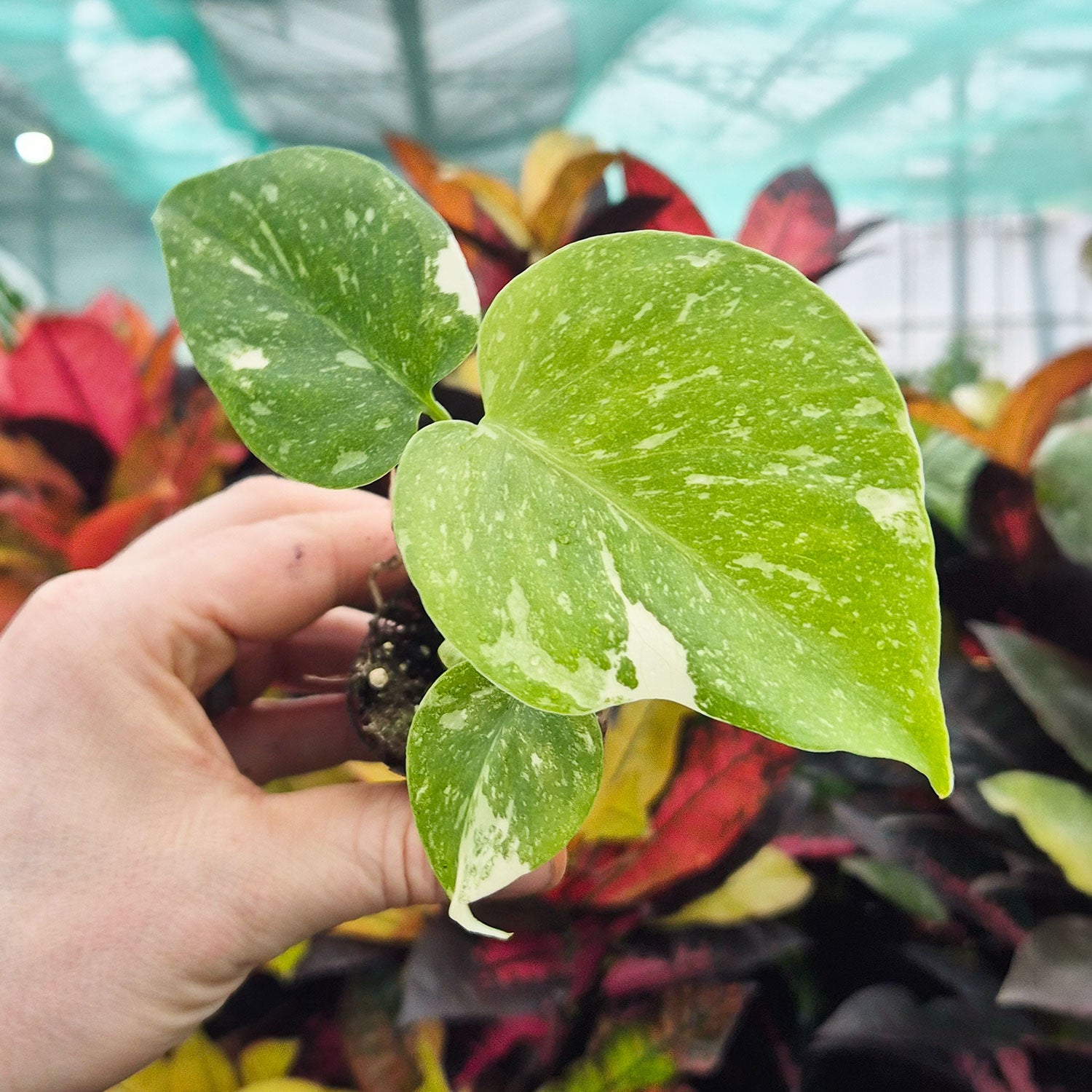
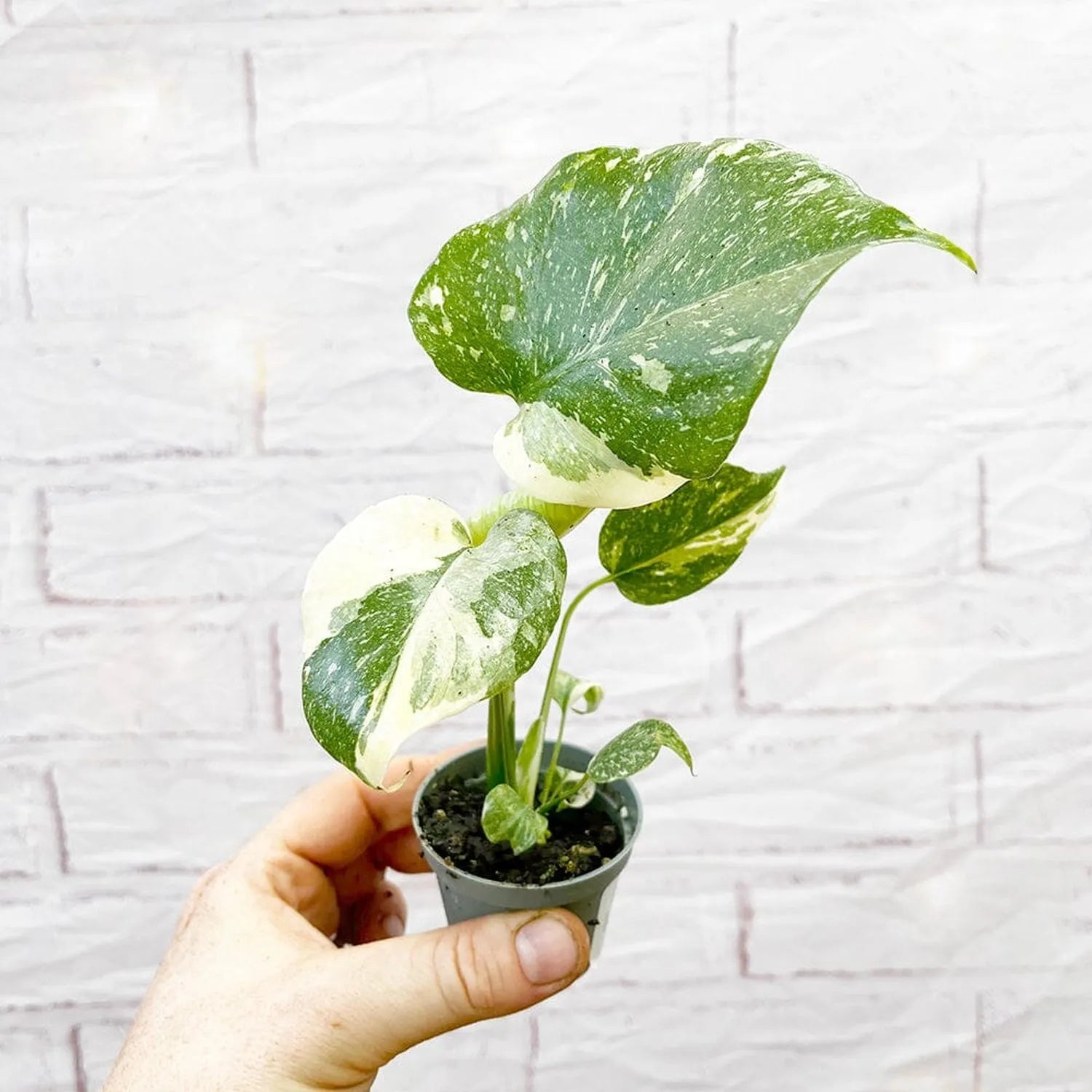
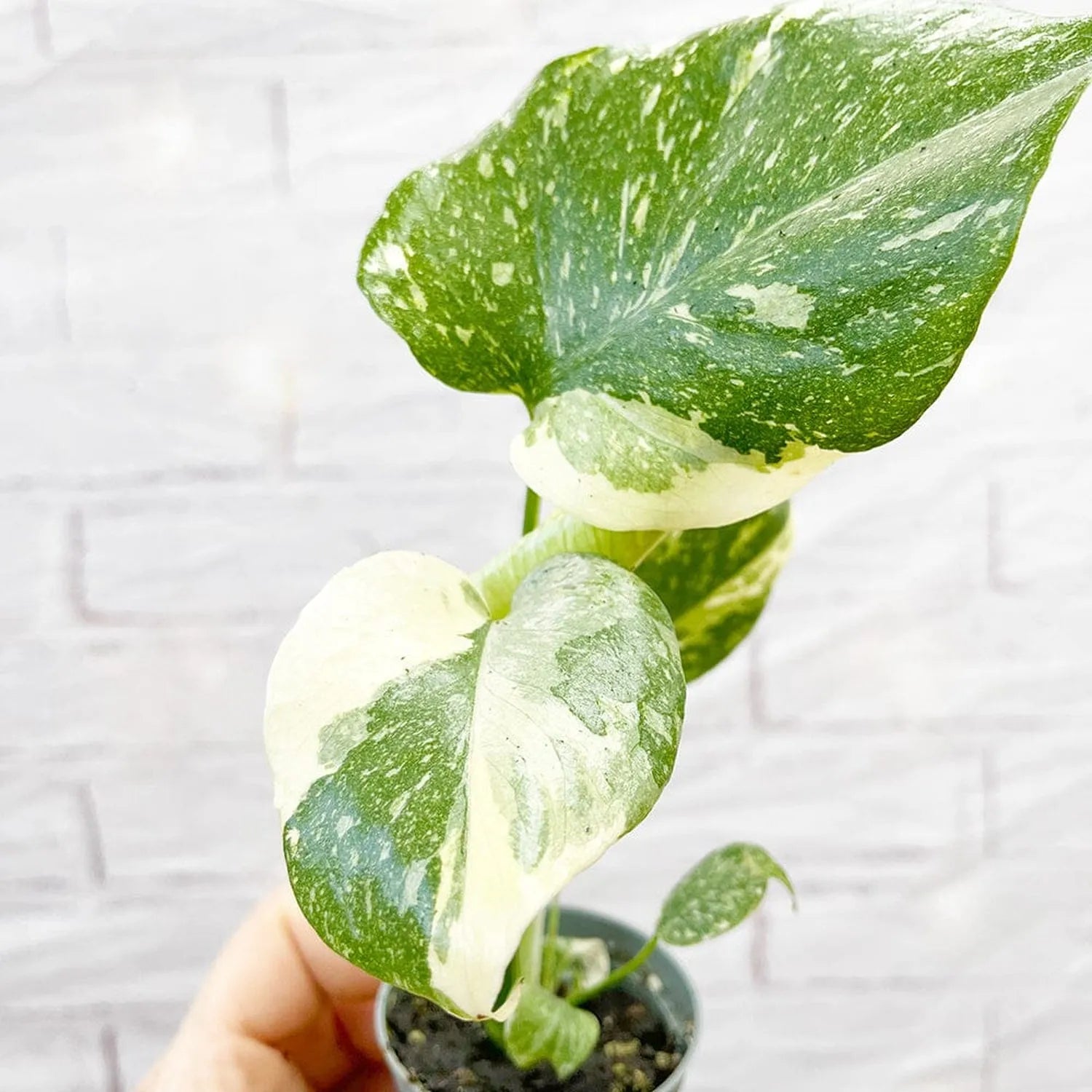
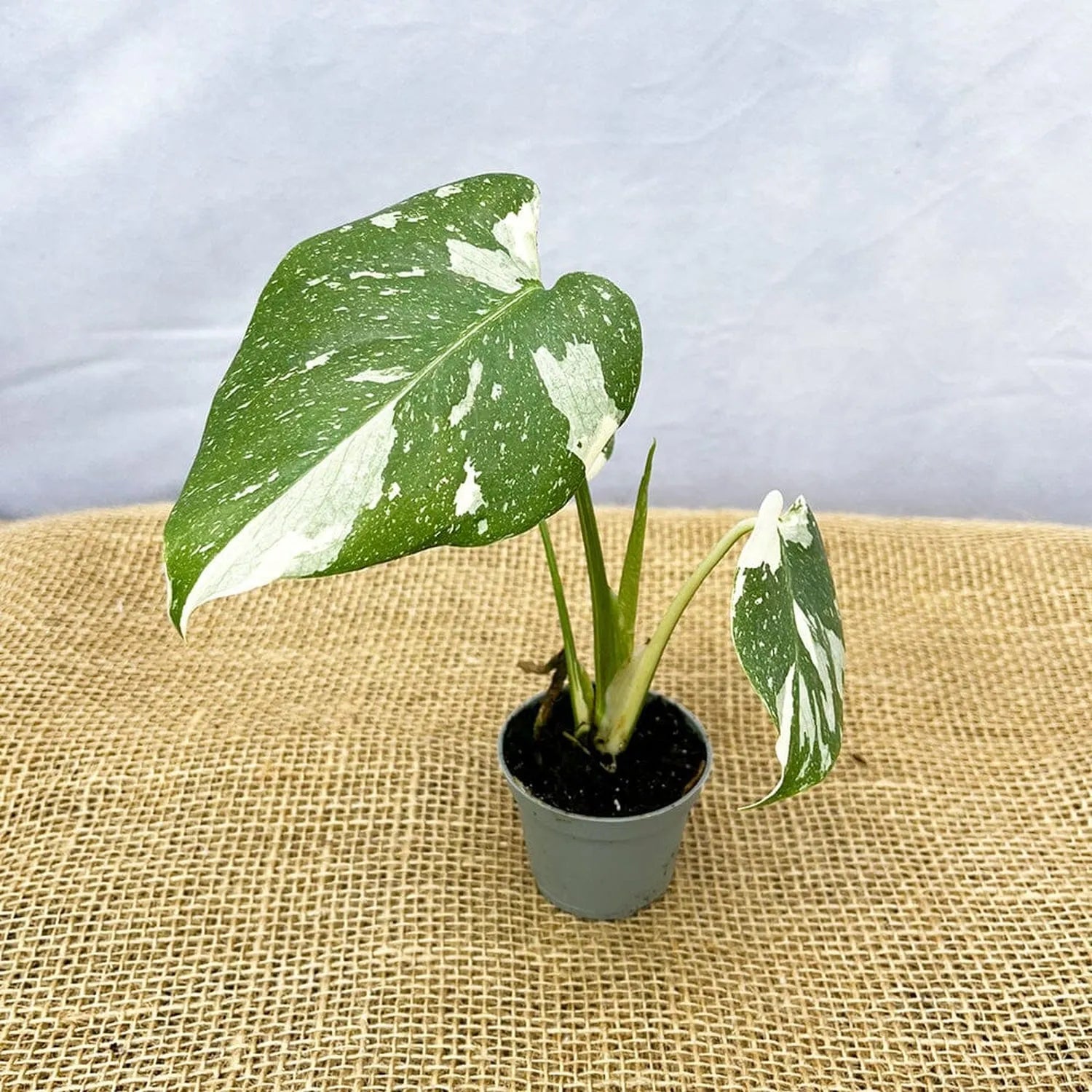
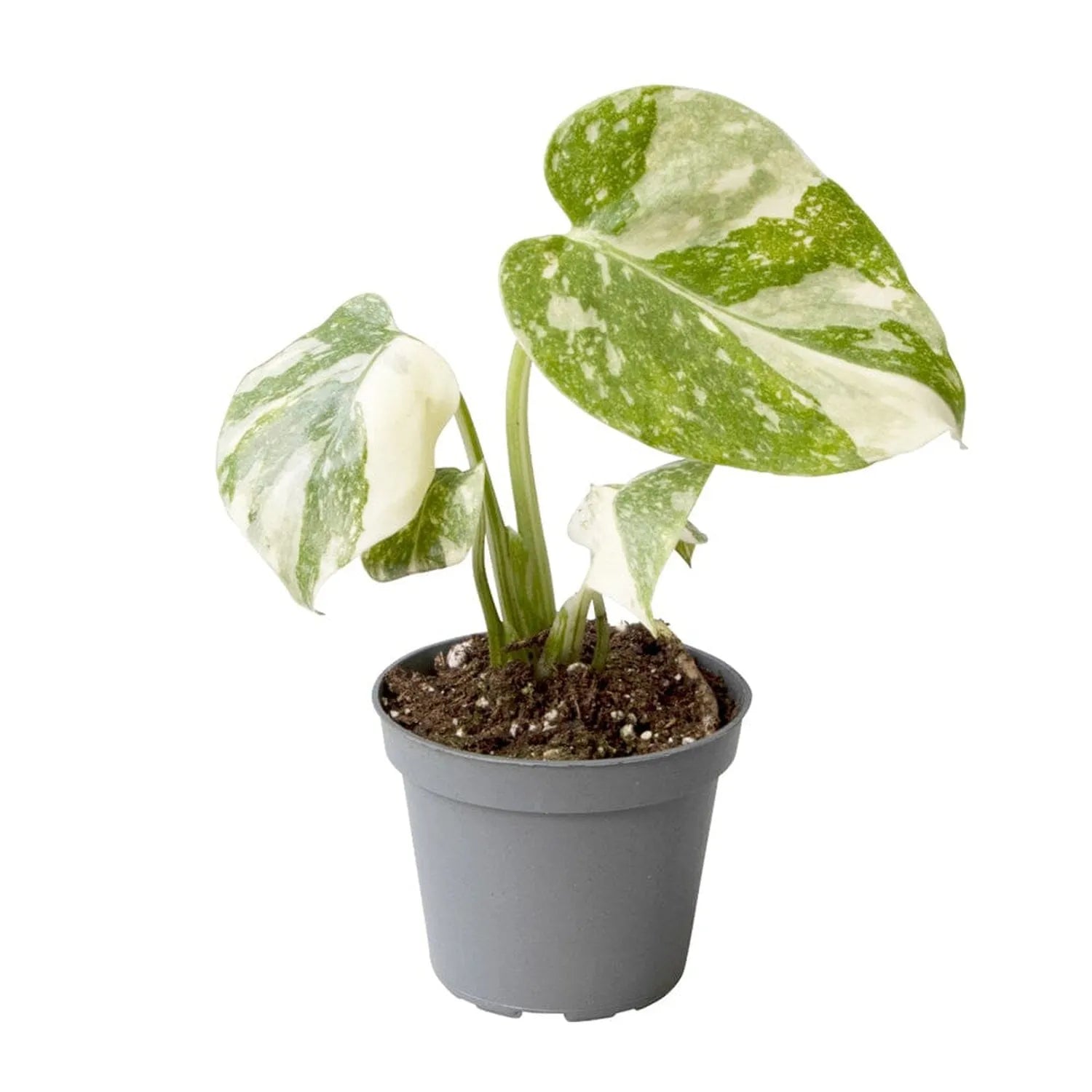
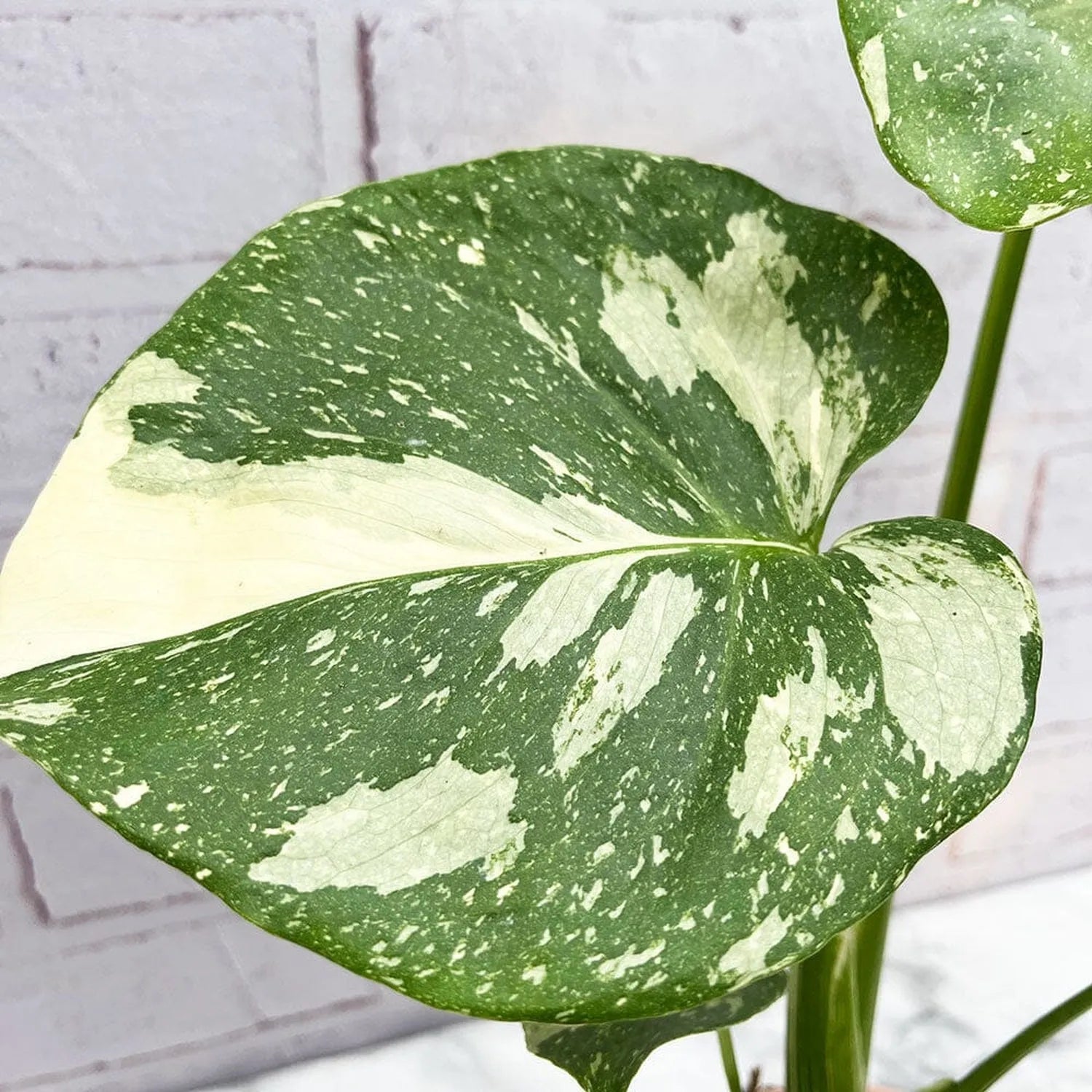
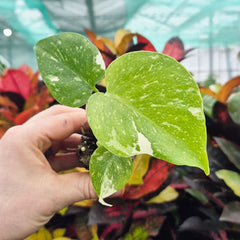
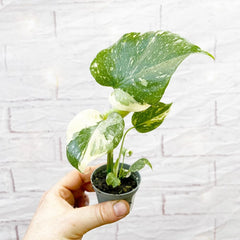
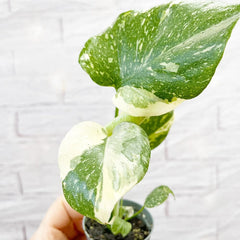
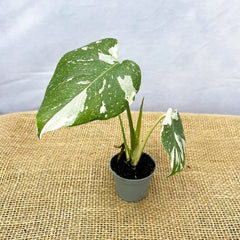
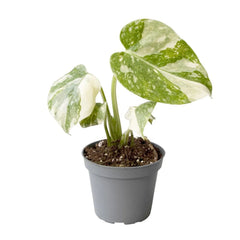
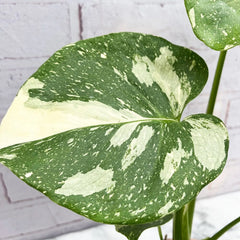
Monstera Thai Constellation is one of the most iconic variegated houseplants in the world. A cultivated form of Monstera deliciosa, it features creamy-white marbling scattered across rich green leaves — resembling stars across a night sky, hence the name “Constellation”.
Unlike Monstera Albo, Thai Constellation’s variegation is tissue-cultured and genetically stable. This means it maintains consistent marbling rather than producing unpredictable sectoral white patches.
With maturity, leaves become large, deeply fenestrated and highly architectural, making it a true statement plant.
Key Features
-
🌿 Creamy, speckled variegation
-
🌿 Large split and perforated leaves
-
🌿 Stable, tissue-cultured variety
-
🌿 Bold tropical statement plant
-
🌿 Slower growing than green Monstera
Care Guide
Light
Bright, indirect light is essential.
-
Ideal near east- or west-facing windows
-
South-facing rooms should use sheer curtains
-
Avoid low light — growth slows significantly
-
Avoid direct harsh sun — can scorch pale sections
Because the variegated areas contain less chlorophyll, Thai Constellation needs strong but filtered light to thrive.
Watering
Allow the top 3–5cm of soil to dry before watering.
Always:
-
Use pots with drainage holes
-
Empty saucers after watering
-
Avoid letting roots sit in water
Overwatering is the most common cause of problems.
Humidity
Prefers moderate to high humidity.
Low humidity may cause browning on creamy variegated areas.
Temperature
Consistent warmth encourages steady growth.
Soil & Potting Mix
Thai Constellation thrives in a chunky, well-aerated mix:
Good airflow around the roots is essential to prevent rot.
Feeding
Feed during active growth (March–September):
Do not overfeed — variegated plants can be more sensitive to salt build-up.
Growth Habit
Thai Constellation is a climbing plant that benefits from support.
-
Train up a moss pole for larger leaves
-
Aerial roots will anchor into support
-
Without support, leaves remain smaller
Mature plants can reach over 1.5–2 metres indoors with the right conditions.
Propagation
Propagation is possible via stem cuttings, but:
-
Must include at least one node
-
Growth is slower than standard Monstera
-
Variegation is stable and typically maintained
Due to its value, propagation should be done carefully and during active growth.
Common Issues
Yellow leaves
Brown patches on white areas
Slow growth
-
Insufficient light
-
Winter dormancy
Root rot
Is Thai Constellation Rare?
Thai Constellation was once extremely rare, but large-scale tissue culture production has made it more accessible. However, it remains a premium plant due to:
Well-variegated specimens with strong marbling are especially desirable.
Styling Ideas
-
Train up a moss pole for dramatic height
-
Pair with darker foliage plants for contrast
-
Use neutral or stone-toned pots to highlight variegation
-
Works beautifully in bright, modern interiors
Toxicity
Like other Monsteras, it is toxic if ingested by pets or humans. Keep out of reach of cats and dogs.