






Gorgeous Monsteras
"Ordered about 4/5 of these for me and some friends and they have all really been gorgeous. Arrived quick and all very healthy. Couldn't ask for more at this price!"


At Plants for all Seasons, we stand behind the quality and vitality of every plant we deliver, which is why we proudly offer a Live Delivery Guarantee. This commitment means that we guarantee your plants will arrive at your doorstep in healthy, thriving condition. We understand the importance of receiving your plants in the best possible state, ready to enhance your space from the moment they arrive. With Plants for all Seasons's Live Delivery Guarantee, you can shop with complete peace of mind, knowing that your green investments are protected from our nursery to your doorstep.

Due to the sensitive and breakable nature of our products, it's understandable that damages may occur despite our meticulous packaging methods. If you find that your plant or pot has arrived in a less than satisfactory condition, please reach out to us at hello@plantsforallseasons.co.uk within a month of your delivery date. When contacting us, please provide your order reference, alongside a photo clearly showing the damaged item and its packaging, including the delivery label. We are committed to resolving such issues by offering a refund or a replacement, depending on the availability of the item in question.
We are unable to accept returns that are not related to damage because plants are inherently perishable and delicate. It's also worth noting that the plant you receive may slightly differ from the images displayed on our website. This variation is natural, given that each plant is unique and subject to seasonal growth changes.

At Plants for all Seasons, we recognise the critical role our courier partners play in ensuring the safe and secure delivery of your plants. We collaborate exclusively with leading courier services, renowned for their reliability and exceptional handling practices, to ensure your plants arrive in perfect condition. Our partners are carefully selected based on their commitment to timely deliveries and their proven track record in transporting delicate items with the utmost care.

At Plants for all Seasons, our commitment to the environment extends to every aspect of our operations, especially in how we deliver your plants. We take pride in our bespoke, eco-friendly packaging, meticulously designed for the safe transport of live plants. Our innovative packaging solutions are crafted from sustainable materials, ensuring that your plants are not only secure but also that their journey from our nursery to your home treads lightly on the earth. This thoughtful approach minimises stress on the plants and reduces waste, aligning with our mission to promote a greener, more sustainable future.
 Ask Leafy.AI
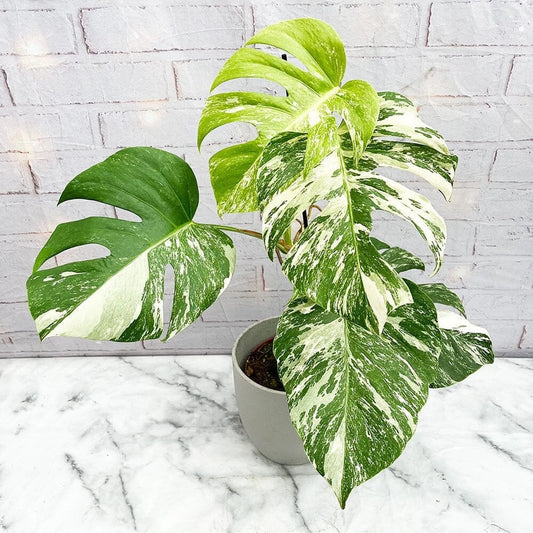
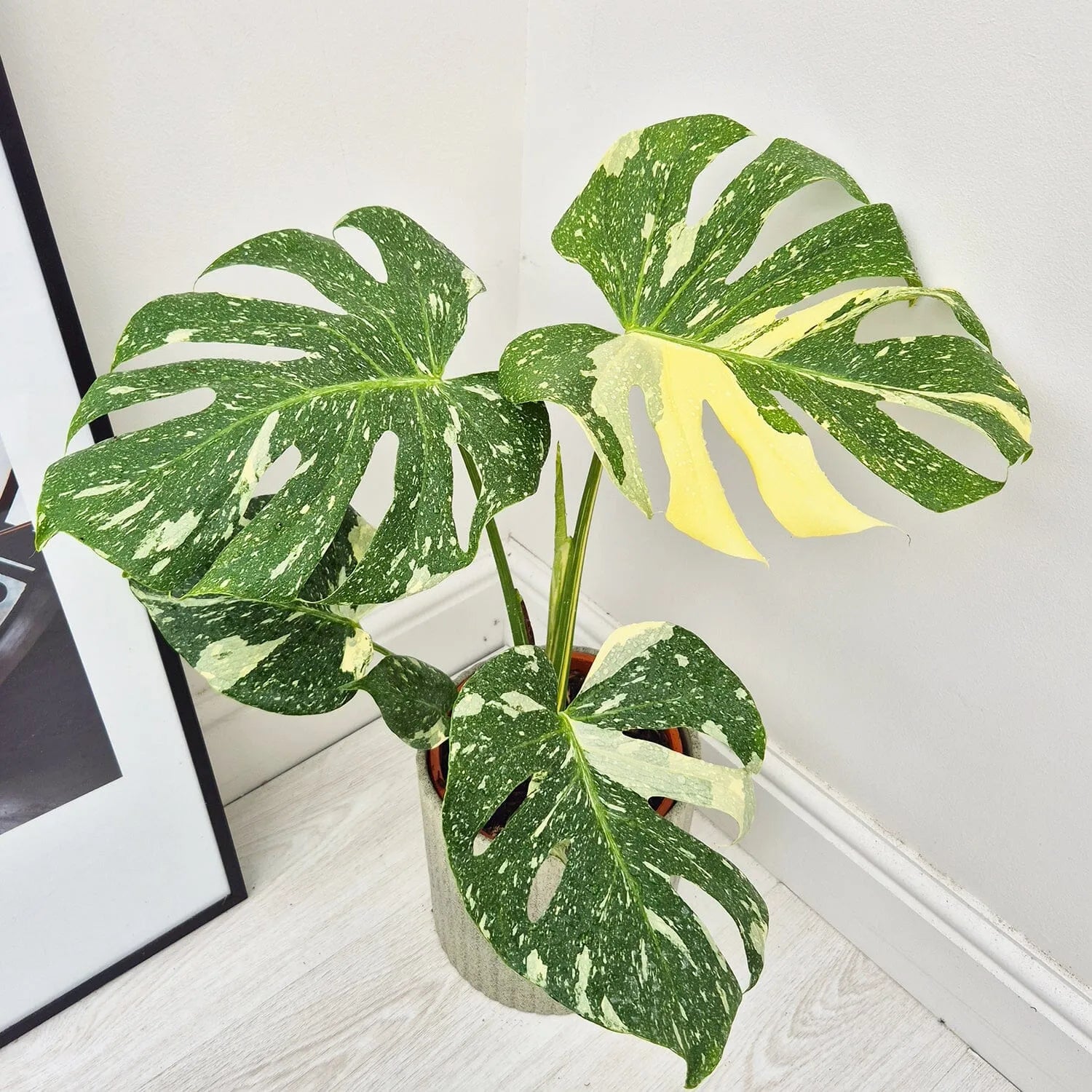
Monstera deliciosa ‘Thai Constellation’ is one of the most sought-after tropical houseplants in the world — a true collector’s gem. This exquisite variegated cultivar, developed in a laboratory in Thailand, is named for its celestial marbling, with creamy-white and pale-yellow flecks that resemble a galaxy of stars scattered across its deep green leaves.
Like its parent species, Monstera deliciosa, it produces large, heart-shaped leaves with dramatic fenestrations (splits and holes) as it matures. The ‘Thai Constellation’ differs from the more common Monstera Albo by featuring stable, naturally occurring variegation, ensuring each new leaf emerges beautifully patterned. No two leaves are alike — some display delicate freckles, while others showcase bold marbled patches or creamy half-moon sections.
With its combination of grandeur and reliability, Monstera ‘Thai Constellation’ adds instant luxury and tropical sophistication to any interior space.
Thrives in bright, indirect light. Ample light keeps the variegation vibrant, but avoid prolonged direct sunlight, which can scorch the pale leaf sections. Low light may lead to slower growth and reduced marbling.
Water when the top 3–5 cm of soil feels dry. Keep the soil lightly moist but not soggy — overwatering can cause root rot. In winter, reduce watering frequency as growth slows.
Temperature: Prefers warmth, 18–28°C. Avoid draughts and temperatures below 15°C.
Humidity: Prefers moderate to high humidity (60–80%) to prevent browning on the white leaf sections. Mist occasionally or use a humidifier for optimal results.
Use a chunky, free-draining aroid mix, such as peat-free compost combined with orchid bark, perlite, and coco coir. This allows air to circulate around the roots while retaining gentle moisture. Repot every 1–2 years in spring as the plant grows.
Feed every 4–6 weeks in spring and summer with a balanced, diluted liquid fertiliser. Stop feeding during autumn and winter.
Prune as needed to remove any yellowing or damaged leaves. Wipe leaves regularly with a soft cloth to remove dust and showcase their variegation. Provide a moss pole or coir totem for climbing support — this encourages larger, more fenestrated leaves.
A moderately fast-growing climbing aroid that can reach 1.5–2.5 metres indoors with proper support. Each new leaf emerges with unique marbling, and mature specimens develop grand, deeply fenestrated foliage.
Brown patches on white areas: Too much direct sunlight or low humidity.
Yellowing leaves: Overwatering.
Reduced variegation: Low light levels.
Pests: Occasionally thrips, spider mites, or mealybugs — wipe leaves regularly to deter them.
The ‘Thai Constellation’ was developed through tissue culture in Thailand and has since become one of the most desired Monstera varieties in the world. Its stable variegation and celestial marbling have made it a favourite among both plant collectors and interior designers. Beyond its aesthetic appeal, like all Monsteras, it also helps purify indoor air, making it as practical as it is beautiful.
✅ Quick Care Summary
Light: Bright, indirect; avoid harsh direct sun
Water: Keep lightly moist; allow topsoil to dry slightly
Temperature: 18–28°C; avoid below 15°C
Humidity: Moderate to high (60–80%)
Soil: Chunky, well-draining aroid mix
Feed: Every 4–6 weeks in spring/summer
Growth: Climbing plant, 1.5–2.5 m; creamy-white marbled leaves with stable variegation
⚠️ Toxicity Note: Like all Monsteras, Monstera ‘Thai Constellation’ is toxic if ingested. Keep out of reach of pets and children.
🌿 Collector’s Tip: The ‘Thai Constellation’ differs from Monstera Albo in that its variegation is genetic and stable — every leaf will carry marbling. It’s easier to grow, less prone to reverting, and produces consistently breathtaking foliage.
Overall rating: 4.3818183 / 5 from 55 reviews.
The Monstera Thai Constellation Cheese Plant is a highly sought-after tropical houseplant known for its celestial marbling and stable variegation. Customers praise its beautiful and healthy foliage, quick delivery, and well-packaged shipping. It thrives in bright, indirect light and requires moderate to high humidity. Proper care includes watering when the topsoil is slightly dry, feeding every 4-6 weeks in spring and summer, and maintaining temperatures between 18-28°C. Note: This plant is toxic if ingested.
Review topics: [].
"Ordered about 4/5 of these for me and some friends and they have all really been gorgeous. Arrived quick and all very healthy. Couldn't ask for more at this price!"
"All plants received well packaged and looking healthy. Delightful additions to my collection, look very healthy and a great price. Will definitely be ordering more in the future"
"Gorgeous little plant and came packaged very well. Already repotted and pushing out a new leaf, very happy with my purchase 😀"
"Ordered a few of these now and they have all been gorgeous. Highly recommend if you want a nice showpiece. Classic Monstera silhouette with a pop of colour!"
"It arrived on time and was packaged really well, so it came in perfect condition, which already made a great first impression. The quality of the plant, the care in packaging, and the attention to detail (like the potting mix) all stood out. I’d definitely order from this website again."
"Good"
"For its size and quality, the price of this is justifiable. Whoever the grower is, PlantsForAllSeasons need to continue doing business with them because I am highly pleased with my purchase this time."
"My first time buying plants from this website. At first I was very disappointed about prolonged delivery time. The express delivery charge was supposed to insure arrival of the plant within 1 day or 2-3 days in fine print, however it took 6 days for my parcel to arrive. Very annoying! But, once delivered, both plants looked healthy and pest-free. Maybe few leaves were a bit damaged from traveling, but all together, they look beautiful and exactly as advertised. 4 stars for misleading dispatch time."
"No issues at all. I love it."
"I bought the plant for my friends 50th Birthday. Beautiful plant with lots of variegation! However, I am disappointed with the delivery schedule, I paid £6. 99 for express delivery & took 6 days to arrive missing my friends birthday!"
ONLY
69
LEFT
🌱 FREE WITH ORDERS OVER £50

By Plants for all Seasons
A plant care expert that gives clear, friendly advice for all your houseplants and garden plants – tailored to UK conditions. Perfect for beginners and seasoned growers alike.
Terms of Use