





Great! Received the plant chosen,
"Great! Received the plant chosen, well packaged."

At Plants for all Seasons, we stand behind the quality and vitality of every plant we deliver, which is why we proudly offer a Live Delivery Guarantee. This commitment means that we guarantee your plants will arrive at your doorstep in healthy, thriving condition. We understand the importance of receiving your plants in the best possible state, ready to enhance your space from the moment they arrive. With Plants for all Seasons's Live Delivery Guarantee, you can shop with complete peace of mind, knowing that your green investments are protected from our nursery to your doorstep.

Due to the sensitive and breakable nature of our products, it's understandable that damages may occur despite our meticulous packaging methods. If you find that your plant or pot has arrived in a less than satisfactory condition, please reach out to us at hello@plantsforallseasons.co.uk within a month of your delivery date. When contacting us, please provide your order reference, alongside a photo clearly showing the damaged item and its packaging, including the delivery label. We are committed to resolving such issues by offering a refund or a replacement, depending on the availability of the item in question.
We are unable to accept returns that are not related to damage because plants are inherently perishable and delicate. It's also worth noting that the plant you receive may slightly differ from the images displayed on our website. This variation is natural, given that each plant is unique and subject to seasonal growth changes.

At Plants for all Seasons, we recognise the critical role our courier partners play in ensuring the safe and secure delivery of your plants. We collaborate exclusively with leading courier services, renowned for their reliability and exceptional handling practices, to ensure your plants arrive in perfect condition. Our partners are carefully selected based on their commitment to timely deliveries and their proven track record in transporting delicate items with the utmost care.

At Plants for all Seasons, our commitment to the environment extends to every aspect of our operations, especially in how we deliver your plants. We take pride in our bespoke, eco-friendly packaging, meticulously designed for the safe transport of live plants. Our innovative packaging solutions are crafted from sustainable materials, ensuring that your plants are not only secure but also that their journey from our nursery to your home treads lightly on the earth. This thoughtful approach minimises stress on the plants and reduces waste, aligning with our mission to promote a greener, more sustainable future.
 Ask Leafy.AI
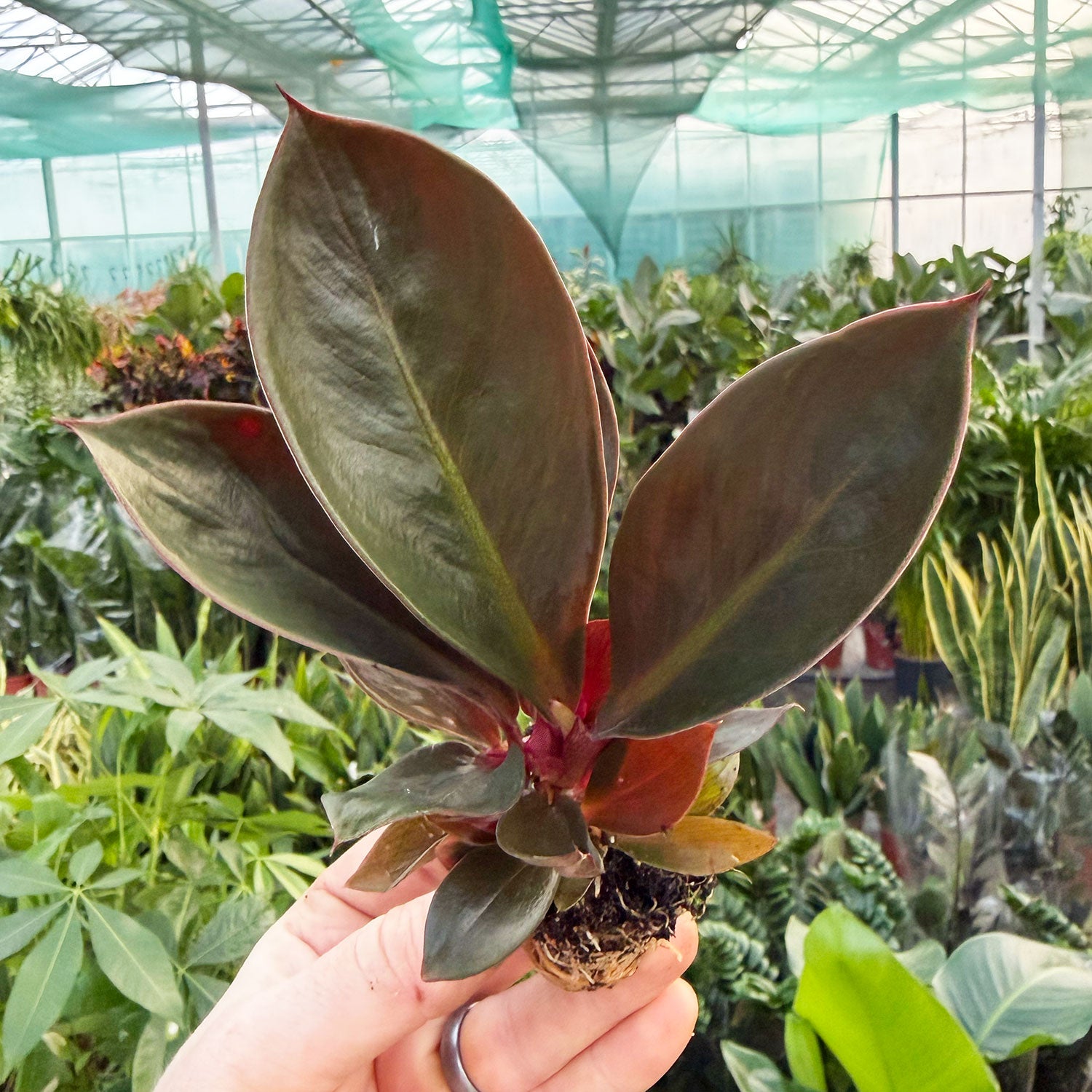
Philodendron linnaei is an unusual tropical houseplant with long, narrow green leaves arranged in distinctive, nest-like clusters. Its elongated foliage has a smooth, slightly leathery texture and a gently glossy finish, creating an elegant display with plenty of shape and structure.
The leaves taper towards pointed tips, with a sunken central vein adding definition. Their undersides can show reddish or purplish colouring, while fresh growth may emerge with a red tint before developing its mature green appearance.
Native to tropical South America, this species has a fascinating growth habit. Young plants often form a close rosette, but established specimens can produce long runners that develop new clusters of leaves. In its natural habitat, it grows against trees, forming successive rosettes along its climbing stems.
Its narrow foliage makes a beautiful contrast alongside broad-leaved houseplants. Display it where there is room for the leaves to spread, and allow space for its changing growth habit as it matures.
Provide bright, indirect light. A position near a window with filtered sunlight will support healthy growth without exposing the foliage to intense sun.
Protect it from strong direct summer sunshine, which can scorch the leaves. Although it can tolerate some shade, a very dark position may lead to slower growth and smaller foliage.
Water when the top few centimetres of compost have dried, keeping the mix beneath lightly moist.
Water thoroughly, allowing excess water to escape through the drainage holes, then empty the saucer or decorative cover pot. Avoid leaving the rootball permanently saturated.
Check the compost before each watering rather than following a fixed schedule. The plant may use less water during cooler, darker periods.
Normal indoor temperatures of around 18–27°C suit Philodendrons well. Keep your plant above 15°C, away from cold draughts and chilly windowpanes.
Avoid placing it beside a radiator, where concentrated heat can dry the foliage and compost unevenly.
Philodendron linnaei appreciates humid conditions, reflecting its tropical forest habitat. Moderate to high humidity is a useful aim, particularly while new leaves develop.
A humidifier can help in a dry room. A bright bathroom may also provide suitable conditions, provided it stays warm and has enough natural light. Maintain gentle airflow around the foliage.
Use a moisture-retentive but very free-draining potting mix. A peat-free aroid mix containing bark and perlite is a practical choice, holding some moisture while keeping air spaces around the roots.
Always use a container with drainage holes. Avoid compacted compost that remains wet for long periods.
Feed lightly approximately once a month during active spring and summer growth, using a balanced liquid houseplant fertiliser at the manufacturer’s recommended dilution.
Reduce or pause feeding when growth slows. Apply fertiliser to moist compost rather than a completely dry rootball.
Repot when the roots become crowded or the growing medium has deteriorated. Spring is usually the best time.
Choose a pot only slightly larger than the existing rootball and refresh the compost. Handle the roots gently and keep the plant at its previous planting depth.
A young plant can look compact, but long, sparsely leaved runners are part of this species’ natural growth habit. Their appearance does not automatically mean the plant lacks light.
As it develops, provide a moss pole, bark support or trellis for climbing stems. Guide them gently and secure them loosely, leaving new growth free to develop.
Wipe dusty leaves gently with a soft, damp cloth, supporting them from underneath. Remove fully dead or damaged foliage with clean scissors or secateurs.
Wear gloves when pruning, as Philodendron sap can irritate the skin.
Yellowing leaves: Check for persistently wet compost and poor drainage, particularly if several leaves are affected.
Brown, crispy edges: Review humidity and check whether the rootball has become too dry.
Drooping foliage: Check moisture before watering; both dehydration and damaged roots can cause wilting.
Small leaves or weak growth: Review the light level, temperature and root condition.
Pests: Inspect stems and leaf undersides regularly for mealybugs, spider mites and scale.
Philodendron linnaei is harmful if eaten, and its sap can irritate the skin. Keep it out of reach of pets and young children, and wash your hands after handling.
Overall rating: 5.0 / 5 from 1 reviews.
Review topics: [].
"Great! Received the plant chosen, well packaged."
ONLY
105
LEFT
🌱 FREE WITH ORDERS OVER £50

By Plants for all Seasons
A plant care expert that gives clear, friendly advice for all your houseplants and garden plants – tailored to UK conditions. Perfect for beginners and seasoned growers alike.
Terms of Use