





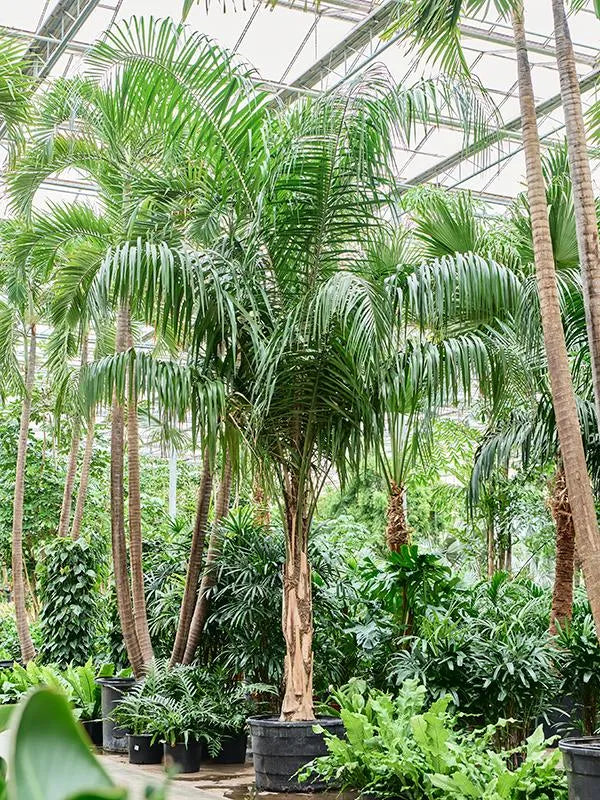
Syagrus Romanzoffiana 96cm Pot 500cm Height Outdoor Tree

Live Delivery Guarantee
At Plants for all Seasons, we stand behind the quality and vitality of every plant we deliver, which is why we proudly offer a Live Delivery Guarantee. This commitment means that we guarantee your plants will arrive at your doorstep in healthy, thriving condition. We understand the importance of receiving your plants in the best possible state, ready to enhance your space from the moment they arrive. With Plants for all Seasons's Live Delivery Guarantee, you can shop with complete peace of mind, knowing that your green investments are protected from our nursery to your doorstep.

30 Days Returns
Due to the sensitive and breakable nature of our products, it's understandable that damages may occur despite our meticulous packaging methods. If you find that your plant or pot has arrived in a less than satisfactory condition, please reach out to us at hello@plantsforallseasons.co.uk within a month of your delivery date. When contacting us, please provide your order reference, alongside a photo clearly showing the damaged item and its packaging, including the delivery label. We are committed to resolving such issues by offering a refund or a replacement, depending on the availability of the item in question.
We are unable to accept returns that are not related to damage because plants are inherently perishable and delicate. It's also worth noting that the plant you receive may slightly differ from the images displayed on our website. This variation is natural, given that each plant is unique and subject to seasonal growth changes.

Safe and Secure Delivery
At Plants for all Seasons, we recognise the critical role our courier partners play in ensuring the safe and secure delivery of your plants. We collaborate exclusively with leading courier services, renowned for their reliability and exceptional handling practices, to ensure your plants arrive in perfect condition. Our partners are carefully selected based on their commitment to timely deliveries and their proven track record in transporting delicate items with the utmost care.

Bespoke Eco Packaging
At Plants for all Seasons, our commitment to the environment extends to every aspect of our operations, especially in how we deliver your plants. We take pride in our bespoke, eco-friendly packaging, meticulously designed for the safe transport of live plants. Our innovative packaging solutions are crafted from sustainable materials, ensuring that your plants are not only secure but also that their journey from our nursery to your home treads lightly on the earth. This thoughtful approach minimises stress on the plants and reduces waste, aligning with our mission to promote a greener, more sustainable future.

Free Delivery Over £100
At Plants for all Seasons, we're delighted to offer our customers an exclusive perk: free delivery on all orders over £100. No matter how many plants you fall in love with, if your total reaches £100, the delivery is on us. This offer is our way of saying thank you for choosing us for your greenery needs and to make it easier for you to welcome more of nature’s beauty into your home without worrying about additional costs. Our commitment to providing value doesn't stop at our plant selection; it extends to ensuring that your chosen foliage arrives at your doorstep with care and precision, completely free of charge for qualifying orders. Enjoy the convenience of selecting from our wide range of plants, safe in the knowledge that your delivery costs are covered when you meet the threshold. It’s our way of helping you create your ideal green space, seamlessly and affordably.
The Syagrus romanzoffiana, widely known as the Queen Palm, is a stately and elegant feather palm native to South America, particularly Brazil, Argentina and Paraguay. It is celebrated for its graceful appearance, fast growth and suitability for ornamental planting in...
- £8,999.00
- £8,999.00
- Unit price
- per
Delivered within 3-5 working days
£6.99 for DHL next day service. Pay one delivery fee for any amount of plants & accessories.

 Ask Leafy.AI
The Syagrus romanzoffiana, widely known as the Queen Palm, is a stately and elegant feather palm native to South America, particularly Brazil, Argentina and Paraguay. It is celebrated for its graceful appearance, fast growth and suitability for ornamental planting in both private gardens and public spaces.
Appearance:
-
Trunk: Single, smooth, grey trunk with attractive leaf scars arranged in rings. It can reach up to 15–20 metres tall in ideal conditions.
-
Crown: Forms a large, lush canopy with feather-like fronds (pinnate leaves) that arch gracefully, typically 4–5 metres long.
-
Leaves: Rich, glossy green leaflets arranged along a central midrib, creating a soft, drooping effect.
-
Flowers & Fruit: Produces large, creamy inflorescences followed by clusters of bright orange dates (fruits), which are attractive to birds but can be messy when they drop.
The Queen Palm creates a tropical atmosphere and is often used as a specimen tree, avenue planting, or grouped for striking effect. While it thrives outdoors in subtropical and warm temperate regions, it is not frost hardy and is generally unsuitable for prolonged cold climates without protection.
🌱 Detailed Care Guide for Syagrus romanzoffiana
📍 Position & Light
-
Full sun: Thrives best in a bright, sunny spot to develop a strong trunk and full crown.
-
Can tolerate very light shade when young but needs sun to maintain its lush canopy as it matures.
🌡️ Temperature & Hardiness
-
Prefers temperatures above 10°C. Can tolerate short dips to around -3°C but may suffer leaf damage.
-
In cooler UK regions, best grown in large containers and moved to a conservatory or greenhouse over winter.
💧 Watering
-
Regular watering: Likes evenly moist soil, especially while establishing. Do not allow soil to completely dry out.
-
Mature palms are moderately drought-tolerant but benefit from supplemental watering during extended dry periods.
🌿 Humidity
-
Prefers moderate to high humidity. In dry indoor or patio environments, occasional misting of fronds can help reduce browning tips.
🪴 Soil
-
Needs well-draining soil. Sandy loam enriched with organic matter is ideal.
-
Avoid heavy clay soils that retain water, as this can lead to root rot.
🍽️ Feeding
-
During growing season (spring to late summer): Feed monthly with a balanced, slow-release granular fertiliser or a liquid palm fertiliser high in magnesium and potassium to prevent yellowing (common nutrient deficiencies in palms).
-
Reduce feeding in autumn and stop in winter.
✂️ Pruning & Maintenance
-
Remove spent or damaged fronds by cutting close to the trunk. Never remove green, healthy fronds as this can weaken the palm.
-
Keep area beneath the palm clear of fallen fruit to discourage pests and mess.
🪲 Pests & Problems
-
Common issues: Scale insects, spider mites, and sometimes fungal leaf spots.
-
Nutrient deficiencies: Often show as yellowing or see-through streaks on leaves. Address with a specialised palm fertiliser.
🚰 Container Growing
-
In colder parts of the UK, it’s often best grown in a large pot that can be moved under cover during winter.
-
Choose a pot with excellent drainage. Repot every 3–4 years or when roots fill the pot.
At Plants for all Seasons, we take pride in our eco-friendly approach to packaging. Our custom-made plant boxes are designed with both the environment and your plants' wellbeing in mind. Here’s what makes our packaging special:
Upright and Fresh: Our innovative design ensures that your plants remain upright and fresh during transit. Specially engineered compartments and supports within the box prevent movement and damage, so your plants arrive in perfect condition.
100% Recyclable: Our plant boxes are fully recyclable, ensuring that after they have served their purpose, they can be responsibly disposed of without harming the planet.
Made from Recycled Materials: Sustainability is at the core of our values. That’s why our packaging is crafted from recycled materials, reducing waste and promoting a circular economy.
Winter Shipping: We offer additional heat packs in winter to keep your plants nice and warm on their travels. Add one heat pack per plant when checking out in winter months.
By choosing our products, you are not only enhancing your home with beautiful plants but also contributing to a greener, more sustainable future
Check out our YouTube video to see exactly how we pack for safe delivery.
Upright and Fresh: Our innovative design ensures that your plants remain upright and fresh during transit. Specially engineered compartments and supports within the box prevent movement and damage, so your plants arrive in perfect condition.
100% Recyclable: Our plant boxes are fully recyclable, ensuring that after they have served their purpose, they can be responsibly disposed of without harming the planet.
Made from Recycled Materials: Sustainability is at the core of our values. That’s why our packaging is crafted from recycled materials, reducing waste and promoting a circular economy.
Winter Shipping: We offer additional heat packs in winter to keep your plants nice and warm on their travels. Add one heat pack per plant when checking out in winter months.
By choosing our products, you are not only enhancing your home with beautiful plants but also contributing to a greener, more sustainable future
Check out our YouTube video to see exactly how we pack for safe delivery.
Tropical Glasshouse Nursery: Our plants are nurtured in our tropical glasshouse nursery located in Lincolnshire, where we maintain an average temperature of 16°C. We do not use cold warehouses, ensuring optimal conditions for plant health.
Plastic Nursery Pots: All our plants are supplied in practical plastic nursery pots. If you prefer a more decorative option, we offer a range of stylish pots available for purchase separately.
Non-Consumable: Please note that our plants are intended for ornamental purposes only unless specifically stated as edible. Ensure you check product descriptions carefully if you are looking for edible varieties.
Variable Heights: The height of our plants can vary by approximately +/- 10%. This natural fluctuation ensures you receive a unique and healthy specimen.
Plant Pot Sizes: Pot sizes may vary by approximately +/- 1cm. To ensure a proper fit, we recommend selecting a decorative pot that is 1-2cm larger than the stated plant pot size. For instance, if you purchase a plant in a 17cm pot, a 18 - 19cm decorative pot would be ideal.
Plastic Nursery Pots: All our plants are supplied in practical plastic nursery pots. If you prefer a more decorative option, we offer a range of stylish pots available for purchase separately.
Non-Consumable: Please note that our plants are intended for ornamental purposes only unless specifically stated as edible. Ensure you check product descriptions carefully if you are looking for edible varieties.
Variable Heights: The height of our plants can vary by approximately +/- 10%. This natural fluctuation ensures you receive a unique and healthy specimen.
Plant Pot Sizes: Pot sizes may vary by approximately +/- 1cm. To ensure a proper fit, we recommend selecting a decorative pot that is 1-2cm larger than the stated plant pot size. For instance, if you purchase a plant in a 17cm pot, a 18 - 19cm decorative pot would be ideal.
Houseplants Under £20
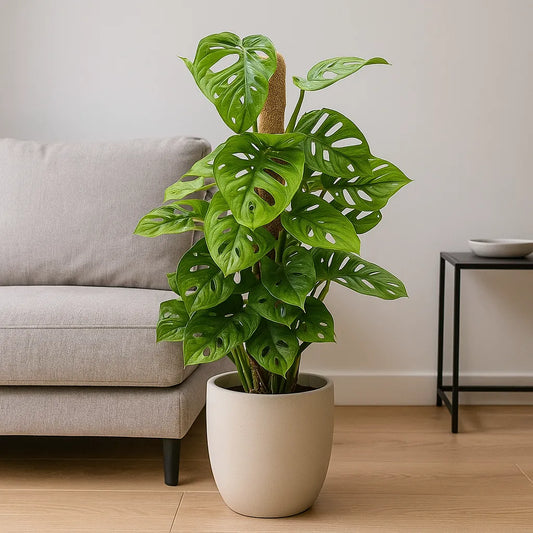
View all Houseplant under £20Monstera Adansonii Monkey Mask House Plant
- From £9.99
£14.99- From £9.99
- Unit price
- per
15 - 25cm Epipremnum Happy Leaf Pothos 12cm Pot House Plant
- £9.99
£14.99- £9.99
- Unit price
- per
30 - 40cm Aloe Vera 12cm Pot House Plant
- £9.99
£14.99- £9.99
- Unit price
- per
20 - 25cm Monstera Adansonii Monkey Mask 12cm Pot
- £9.99
£14.99- £9.99
- Unit price
- per
40 - 50cm Strelitzia Reginae Bird of Paradise 12cm Pot House Plant
- £14.99
£19.99- £14.99
- Unit price
- per
20 - 35cm Croton Mammi Codiaeum 12cm Pot House Plant
- £14.99
£19.99- £14.99
- Unit price
- per
20 - 25cm Philodendron Calkins Gold House Plant 12cm Pot
- £19.99
£14.99- £19.99
- Unit price
- per
20 - 25cm Ledebouria Socialis Silver Squill House Plant 12cm Pot
- £22.99
£14.99- £22.99
- Unit price
- per
20 - 25cm Philodendron Mayoi House Plant 12cm Pot
- £24.99
- £24.99
- Unit price
- per
20 - 25cm Monstera Adansonii Monkey Mask - Including Pot
- £22.99
£14.99- £22.99
- Unit price
- per
15 - 25cm Epipremnum Manjula Pothos 12cm Pot House Plant
- £14.99
- £14.99
- Unit price
- per
New Houseplants in Stock
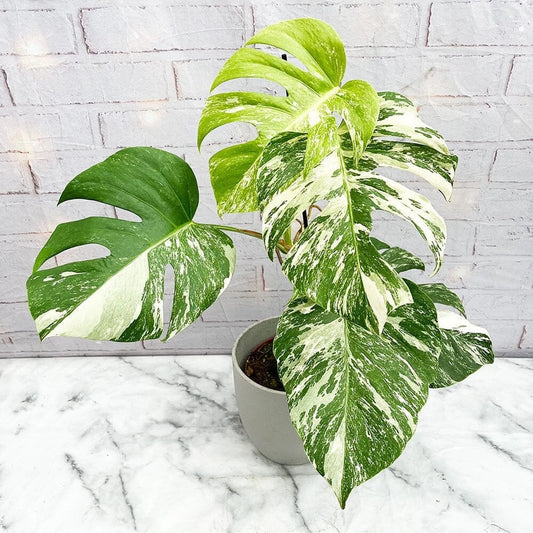
View all New Houseplants in Stock40 - 50cm Variegated Monstera - Monstera Variegata Albo Cheese Plant 17cm Pot House Plant
- £35.00
£44.99- £35.00
- Unit price
- per
Monstera Thai Constellation Cheese Plant Variegated House Plant
- From £8.99
£19.99- From £8.99
- Unit price
- per
Variegated Alocasia Frydek Elephant Ear Albo Variegata 9cm Pot
- £19.99
£49.99- £19.99
- Unit price
- per
Strelitzia Nicolai Bird of Paradise House Plant
- From £9.99
£19.99- From £9.99
- Unit price
- per
Monstera Adansonii Monkey Mask House Plant
- From £9.99
£14.99- From £9.99
- Unit price
- per
15 - 25cm Epipremnum Happy Leaf Pothos 12cm Pot House Plant
- £9.99
£14.99- £9.99
- Unit price
- per
15 - 25cm Philodendron Brazil Pothos 12cm Pot House Plant
- £9.99
£14.99- £9.99
- Unit price
- per
20 - 30cm Philodendron Micans Pothos 10cm Pot House Plant
- £9.99
£14.99- £9.99
- Unit price
- per
Monstera Deliciosa Swiss Cheese Plant House Plant
- From £9.99
£14.99- From £9.99
- Unit price
- per
15 - 25cm Epipremnum Neon Pothos 12cm Pot House Plant
- £9.99
£14.99- £9.99
- Unit price
- per
15 - 25cm Epipremnum Aureum Pothos 12cm Pot House Plant
- £9.99
£14.99- £9.99
- Unit price
- per
Pachira Aquatica Money Tree House Plant
- From £16.99
£24.99- From £16.99
- Unit price
- per
Monstera Deliciosa on Mosspole Swiss Cheese Plant House Plant
- From £30.00
£39.99- From £30.00
- Unit price
- per
25cm Monstera Thai Constellation Cheese Plant Variegated 11cm Pot House Plant
- £14.00
£24.99- £14.00
- Unit price
- per
Croton Mammi Codiaeum House Plant
- From £9.99
£14.99- From £9.99
- Unit price
- per
- Choosing a selection results in a full page refresh.
