





Great! Received the plant chosen,
"Great! Received the plant chosen, well packaged."


At Plants for all Seasons, we stand behind the quality and vitality of every plant we deliver, which is why we proudly offer a Live Delivery Guarantee. This commitment means that we guarantee your plants will arrive at your doorstep in healthy, thriving condition. We understand the importance of receiving your plants in the best possible state, ready to enhance your space from the moment they arrive. With Plants for all Seasons's Live Delivery Guarantee, you can shop with complete peace of mind, knowing that your green investments are protected from our nursery to your doorstep.

Due to the sensitive and breakable nature of our products, it's understandable that damages may occur despite our meticulous packaging methods. If you find that your plant or pot has arrived in a less than satisfactory condition, please reach out to us at hello@plantsforallseasons.co.uk within a month of your delivery date. When contacting us, please provide your order reference, alongside a photo clearly showing the damaged item and its packaging, including the delivery label. We are committed to resolving such issues by offering a refund or a replacement, depending on the availability of the item in question.
We are unable to accept returns that are not related to damage because plants are inherently perishable and delicate. It's also worth noting that the plant you receive may slightly differ from the images displayed on our website. This variation is natural, given that each plant is unique and subject to seasonal growth changes.

At Plants for all Seasons, we recognise the critical role our courier partners play in ensuring the safe and secure delivery of your plants. We collaborate exclusively with leading courier services, renowned for their reliability and exceptional handling practices, to ensure your plants arrive in perfect condition. Our partners are carefully selected based on their commitment to timely deliveries and their proven track record in transporting delicate items with the utmost care.

At Plants for all Seasons, our commitment to the environment extends to every aspect of our operations, especially in how we deliver your plants. We take pride in our bespoke, eco-friendly packaging, meticulously designed for the safe transport of live plants. Our innovative packaging solutions are crafted from sustainable materials, ensuring that your plants are not only secure but also that their journey from our nursery to your home treads lightly on the earth. This thoughtful approach minimises stress on the plants and reduces waste, aligning with our mission to promote a greener, more sustainable future.
 Ask Leafy.AI
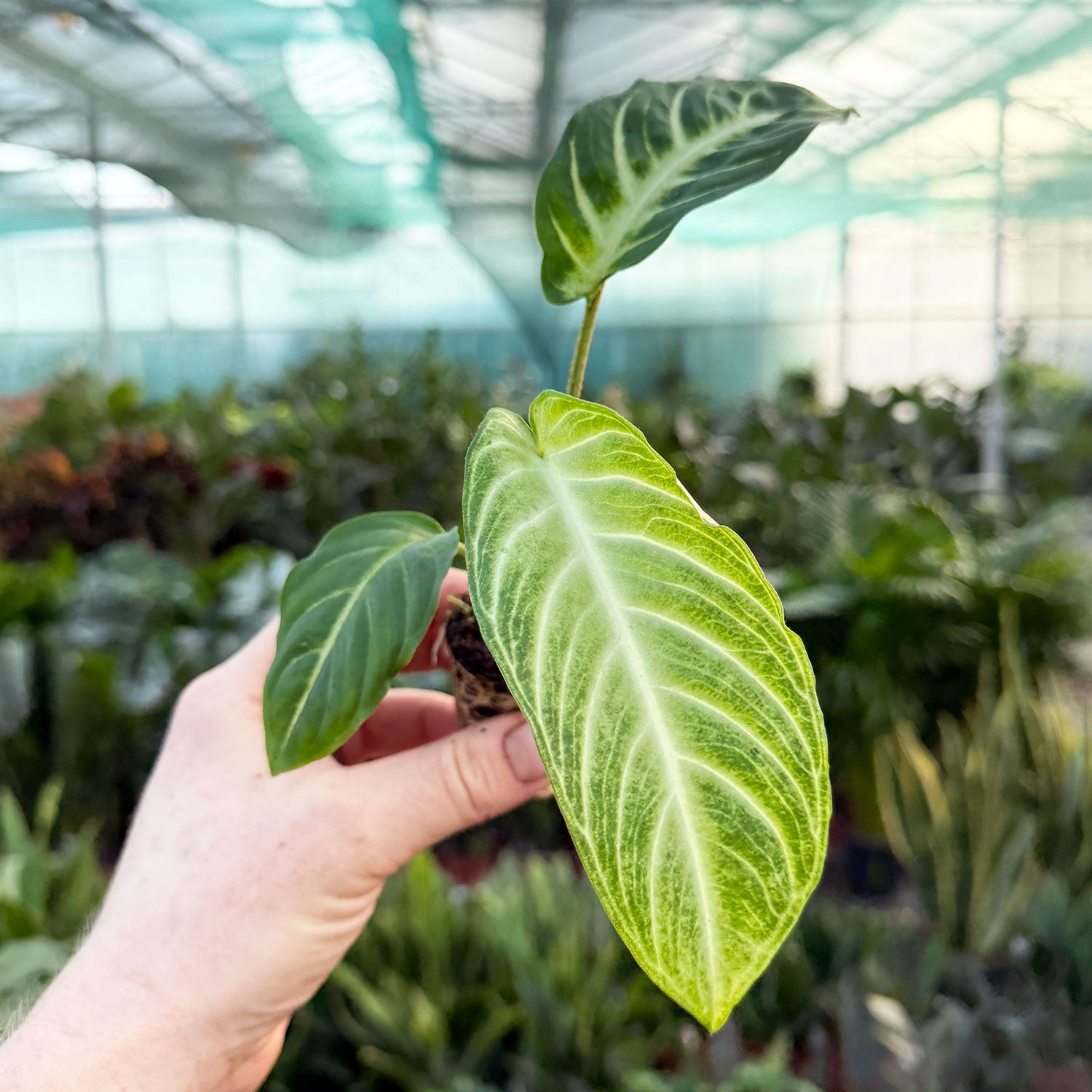
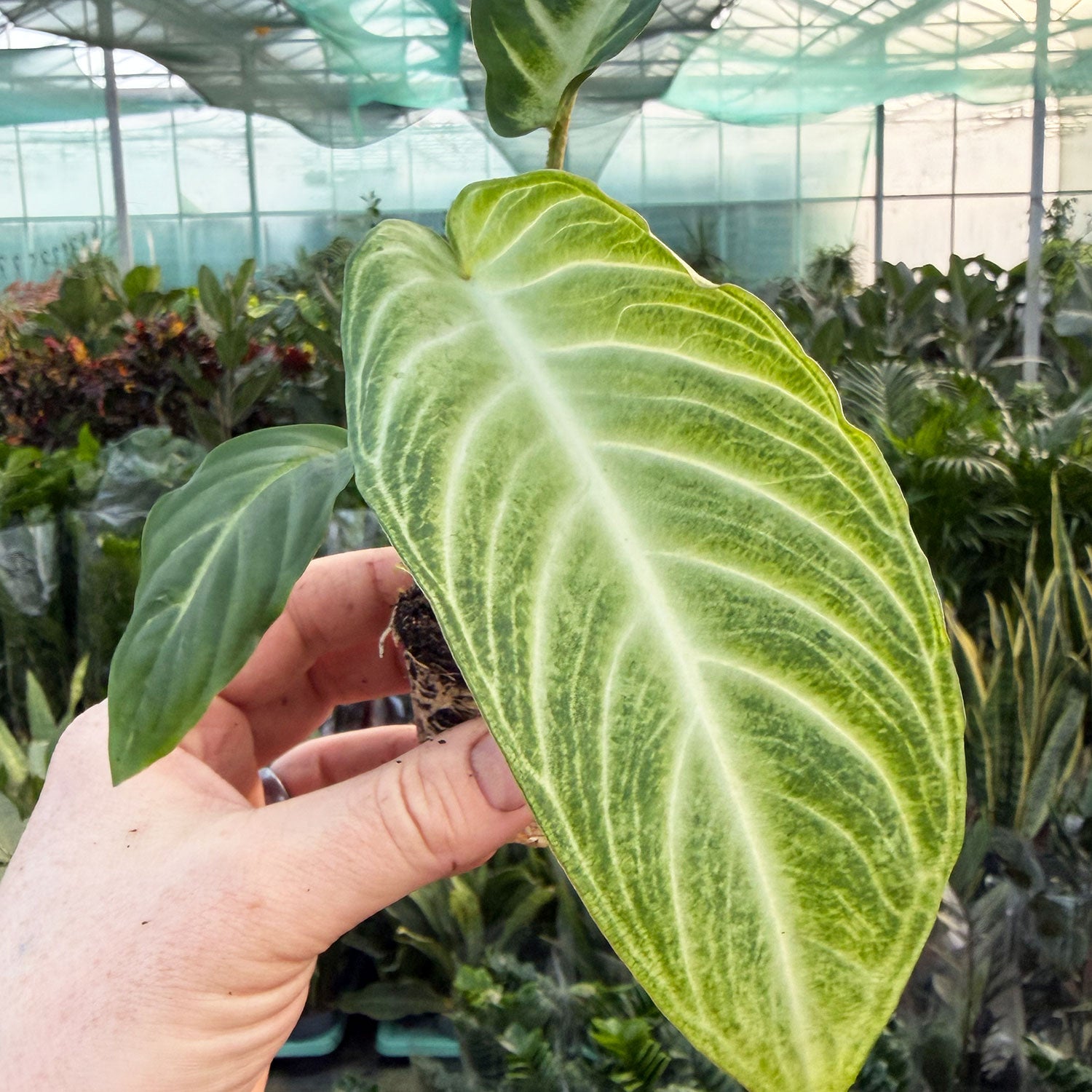
Xanthosoma lindenii is a striking tropical houseplant with elongated, arrow-shaped leaves and prominent creamy-white veins. The contrasting markings trace across the green foliage, creating a bold pattern that makes each leaf stand out.
Long, slender stalks hold the leaves above the compost, giving the plant an elegant, open shape. Its pointed leaf tips and wing-like lobes bring structure to a houseplant collection, while the pale veining provides a beautiful contrast alongside plain green foliage.
Native to Panama and Colombia, this tropical plant is now botanically recognised as Phyllotaenium lindenii, although it remains widely sold as Xanthosoma lindenii or Caladium lindenii. It belongs to the Araceae family and grows from an underground storage structure.
With filtered light, consistent moisture and humid air, it makes an eye-catching addition to a warm indoor space. It suits plant owners who enjoy checking their plants regularly, particularly when balancing watering and humidity.
Provide bright, indirect light, protecting the leaves from strong direct sunshine. Filtered light through a sheer curtain or a position near an east-facing window can work well.
Avoid intense midday and afternoon sun, which can scorch the foliage. A deeply shaded corner is less suitable for maintaining healthy, steady growth.
Keep the compost lightly and consistently moist, allowing the surface to begin drying between waterings. Avoid letting the entire rootball become completely dry.
Check the compost before watering rather than following a fixed weekly schedule. Water thoroughly, allow excess water to drain, then empty the saucer or decorative cover pot.
Although this plant enjoys moisture, its roots need air too. Saturated compost and standing water can encourage root rot.
Xanthosoma lindenii appreciates humid air. A bright bathroom can provide suitable conditions, provided it stays warm and receives enough natural light.
If your home is dry, particularly while the central heating is running, consider using a humidifier. Keep the plant away from radiators and maintain gentle airflow around its leaves. Brown, crisp edges can indicate dry air, although watering problems can cause similar symptoms.
As a practical indoor growing range, aim for 18–26°C and keep conditions as stable as possible.
Protect the plant from cold draughts, sudden temperature changes and contact with cold windowpanes. A consistently warm position is especially helpful while new leaves are developing.
Choose a moisture-retentive but free-draining, peat-free potting mix. A houseplant compost improved with perlite and fine orchid bark is a practical option: it should hold some moisture while allowing excess water to escape.
Avoid a very dense mix that stays waterlogged, or an excessively coarse mix that dries out before the roots can take up enough moisture. Always use a pot with drainage holes.
During active spring and summer growth, feed approximately once a month with a balanced liquid houseplant fertiliser, following the manufacturer’s dilution instructions.
Apply feed to moist compost. Reduce or pause feeding when growth slows, rather than trying to encourage new leaves with additional fertiliser.
Check the roots in spring and repot when they have become crowded. Choose a pot only slightly larger than the existing rootball and refresh the compost around it.
Handle the roots and leaf stalks gently, and avoid burying the plant more deeply than it was previously growing. Spring repotting gives it the growing season to establish.
Gently wipe dusty leaves with a soft, damp cloth, supporting each leaf from underneath. Remove fully yellow or dead leaves with clean scissors or secateurs.
Wear gloves when handling or pruning, as the plant can irritate the skin and eyes.
Check moisture carefully as growth slows during the darker months. Watering requirements may decrease, but warm rooms and central heating can still dry pots quickly.
If the plant loses leaves, check its temperature, light and root condition before assuming it is simply resting. Adjust watering to the amount of foliage and how quickly the compost dries.
Yellow leaves: Check for overly wet compost, poor drainage or cold conditions. An occasional older leaf may also yellow naturally.
Brown, crispy edges: Review humidity and check whether the rootball has become too dry.
Drooping foliage: Feel the compost first. Both dehydration and root problems caused by excess moisture can lead to wilting.
Pale, scorched patches: Move the plant away from strong direct sunlight.
Pests: Inspect the foliage and stems regularly, particularly for mealybugs and whitefly. Isolate affected plants promptly.
Harmful if eaten and an irritant to skin and eyes. Keep Xanthosoma lindenii out of reach of pets and young children, and wash your hands after handling.
Overall rating: 5.0 / 5 from 1 reviews.
Review topics: [].
"Great! Received the plant chosen, well packaged."
ONLY
105
LEFT
🌱 FREE WITH ORDERS OVER £50

By Plants for all Seasons
A plant care expert that gives clear, friendly advice for all your houseplants and garden plants – tailored to UK conditions. Perfect for beginners and seasoned growers alike.
Terms of Use