




Excellent plant, healthy, potted in
"Excellent plant, healthy, potted in good substrate, no damage on arrival. Thanks!"


At Plants for all Seasons, we stand behind the quality and vitality of every plant we deliver, which is why we proudly offer a Live Delivery Guarantee. This commitment means that we guarantee your plants will arrive at your doorstep in healthy, thriving condition. We understand the importance of receiving your plants in the best possible state, ready to enhance your space from the moment they arrive. With Plants for all Seasons's Live Delivery Guarantee, you can shop with complete peace of mind, knowing that your green investments are protected from our nursery to your doorstep.

Due to the sensitive and breakable nature of our products, it's understandable that damages may occur despite our meticulous packaging methods. If you find that your plant or pot has arrived in a less than satisfactory condition, please reach out to us at hello@plantsforallseasons.co.uk within a month of your delivery date. When contacting us, please provide your order reference, alongside a photo clearly showing the damaged item and its packaging, including the delivery label. We are committed to resolving such issues by offering a refund or a replacement, depending on the availability of the item in question.
We are unable to accept returns that are not related to damage because plants are inherently perishable and delicate. It's also worth noting that the plant you receive may slightly differ from the images displayed on our website. This variation is natural, given that each plant is unique and subject to seasonal growth changes.

At Plants for all Seasons, we recognise the critical role our courier partners play in ensuring the safe and secure delivery of your plants. We collaborate exclusively with leading courier services, renowned for their reliability and exceptional handling practices, to ensure your plants arrive in perfect condition. Our partners are carefully selected based on their commitment to timely deliveries and their proven track record in transporting delicate items with the utmost care.

At Plants for all Seasons, our commitment to the environment extends to every aspect of our operations, especially in how we deliver your plants. We take pride in our bespoke, eco-friendly packaging, meticulously designed for the safe transport of live plants. Our innovative packaging solutions are crafted from sustainable materials, ensuring that your plants are not only secure but also that their journey from our nursery to your home treads lightly on the earth. This thoughtful approach minimises stress on the plants and reduces waste, aligning with our mission to promote a greener, more sustainable future.
 Ask Leafy.AI
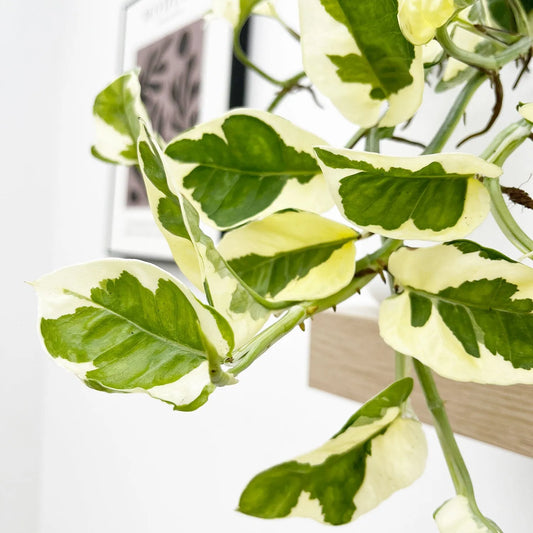
Epipremnum pictum ‘Argyraeus’, often called the Satin Pothos, Silver Vine, or Silvery Philodendron, is one of the most elegant and easy-care tropical houseplants. A native of Southeast Asia and a member of the Araceae family, it is beloved for its soft, heart-shaped leaves adorned with delicate silver speckles and markings that shimmer gently in the light.
The small, velvety leaves have a beautiful contrast between deep green and silvery grey tones, creating a refined, understated look that suits both modern and classic interiors. The trailing vines can cascade gracefully from shelves or hanging planters or be trained up a moss pole for a more sculptural display.
Compact, air-purifying, and tolerant of low light, Epipremnum ‘Argyraeus’ is the perfect choice for anyone wanting tropical beauty without the fuss.
Thrives in bright, indirect light, which enhances its silvery variegation. It can tolerate medium or lower light levels but may grow more slowly or develop smaller leaves. Avoid direct sunlight, which can scorch the delicate foliage.
Water when the top 2–3 cm of soil feels dry. Keep the soil lightly moist during the growing season but ensure good drainage — Epipremnum ‘Argyraeus’ does not like sitting in water. In winter, water less frequently while allowing the soil to dry slightly more between waterings.
Temperature: Prefers warmth, 18–28°C. Protect from cold draughts and temperatures below 15°C.
Humidity: Adapts well to household humidity but enjoys slightly higher levels (50–70%). Mist occasionally to keep the foliage fresh.
Use a well-draining, airy mix, such as peat-free houseplant compost blended with perlite and orchid bark. Repot every 1–2 years in spring to refresh the soil and encourage growth.
Feed every 4–6 weeks in spring and summer with a balanced, diluted liquid fertiliser. Stop feeding during winter when growth slows naturally.
Prune to maintain a compact, bushy shape or to control length. Trim any leggy or yellowing stems at the base. Propagate easily from stem cuttings in water or soil to create new plants.
A moderate to fast-growing trailing or climbing plant, capable of reaching 1–2 metres indoors. The leaves remain relatively small and dainty compared to other Epipremnum varieties, giving it a refined, delicate appearance.
Yellowing leaves: Overwatering or poor drainage.
Curling leaves: Underwatering or very dry air.
Faded colouration: Insufficient light.
Pests: Occasionally spider mites, mealybugs, or thrips.
Epipremnum pictum ‘Argyraeus’ is part of a group of tropical climbing plants found throughout the jungles of Indonesia and the Solomon Islands. The name “Argyraeus” means “silvery” in Latin, referring to its distinctive metallic variegation.
This species is valued not only for its attractive foliage but also for being low-maintenance and air-purifying, making it one of the best indoor plants for improving air quality and adding texture to plant displays.
✅ Quick Care Summary
Light: Bright, indirect; tolerates medium light
Water: Lightly moist; allow topsoil to dry slightly
Temperature: 18–28°C; avoid below 15°C
Humidity: Average to high (50–70%)
Soil: Well-draining, airy mix
Feed: Every 4–6 weeks in spring/summer
Growth: Trailing vine, 1–2 m; velvety green leaves with silver spots and shimmer
⚠️ Toxicity Note: Like all Epipremnum species, ‘Argyraeus’ is toxic if ingested and may cause mild skin irritation. Keep out of reach of pets and children.
🌿 Styling Tip:
Display Epipremnum pictum ‘Argyraeus’ in a hanging planter to show off its cascading vines, or let it climb a trellis for a vertical accent. Its soft silvery tones pair beautifully with dark green or burgundy foliage plants such as Philodendron ‘Micans’ or Ficus ‘Melany’.
Overall rating: 4.9 / 5 from 10 reviews.
Review topics: [].
"Excellent plant, healthy, potted in good substrate, no damage on arrival. Thanks!"
"The silvery patterning is even nicer in person and gives it such a unique look. It was also potted in a high-quality mix that drained well and was suitable for the plant, which made a great first impression."
"Arrived quickly, well packaged and happy and healthy!"
"Delayed delivery due to the holidays but contacted customer services for a update and they were quick to reply with a rough delivery date. Plants arrived and are beautiful, healthy and well packed. Dpd didn't take very good care of them tho as box was battered and 1 plant out of it's pot, that's no reflection on plants for all seasons tho that is purely on the delivery company,"
"Absolutely beautiful plant, I have a few Pothos but this is now my absolute favourite!"
"So happy with it, glad I decided to buy two!"
"Very reasonably priced. Great size and very healthy. Would definately recommend."
"I’ve ordered a variation of plants from here and they always come well packaged and healthy and getting a free plant with your order always makes it so much better!"
"I was so happy with the packaging as it came in perfect condition, unlike other plants that I have ordered online. Not one bit of soil had fell out of the pot and The leafs were in perfect condition. My order was delayed due to myself not being home, therefore I was worried about the condition of the plants which I shouldn’t of had any worries as they came perfect"
"The plants came in great condition and seemed healthy on arrival. The only reason I’ve knocked a star off is because all of the plants were absolutely drenched and smelt a bit because they’d been sat in soggy soil. It also made it very hard to get them all out of the box, as the water had drenched the paper packaging around the plants and therefore this stuck to them."
ONLY
89
LEFT
🌱 FREE WITH ORDERS OVER £50

By Plants for all Seasons
A plant care expert that gives clear, friendly advice for all your houseplants and garden plants – tailored to UK conditions. Perfect for beginners and seasoned growers alike.
Terms of Use