




Fern
"A beautiful plant, makes me happy! Another gem from Plants for all."


At Plants for all Seasons, we stand behind the quality and vitality of every plant we deliver, which is why we proudly offer a Live Delivery Guarantee. This commitment means that we guarantee your plants will arrive at your doorstep in healthy, thriving condition. We understand the importance of receiving your plants in the best possible state, ready to enhance your space from the moment they arrive. With Plants for all Seasons's Live Delivery Guarantee, you can shop with complete peace of mind, knowing that your green investments are protected from our nursery to your doorstep.

Due to the sensitive and breakable nature of our products, it's understandable that damages may occur despite our meticulous packaging methods. If you find that your plant or pot has arrived in a less than satisfactory condition, please reach out to us at hello@plantsforallseasons.co.uk within a month of your delivery date. When contacting us, please provide your order reference, alongside a photo clearly showing the damaged item and its packaging, including the delivery label. We are committed to resolving such issues by offering a refund or a replacement, depending on the availability of the item in question.
We are unable to accept returns that are not related to damage because plants are inherently perishable and delicate. It's also worth noting that the plant you receive may slightly differ from the images displayed on our website. This variation is natural, given that each plant is unique and subject to seasonal growth changes.

At Plants for all Seasons, we recognise the critical role our courier partners play in ensuring the safe and secure delivery of your plants. We collaborate exclusively with leading courier services, renowned for their reliability and exceptional handling practices, to ensure your plants arrive in perfect condition. Our partners are carefully selected based on their commitment to timely deliveries and their proven track record in transporting delicate items with the utmost care.

At Plants for all Seasons, our commitment to the environment extends to every aspect of our operations, especially in how we deliver your plants. We take pride in our bespoke, eco-friendly packaging, meticulously designed for the safe transport of live plants. Our innovative packaging solutions are crafted from sustainable materials, ensuring that your plants are not only secure but also that their journey from our nursery to your home treads lightly on the earth. This thoughtful approach minimises stress on the plants and reduces waste, aligning with our mission to promote a greener, more sustainable future.
 Ask Leafy.AI
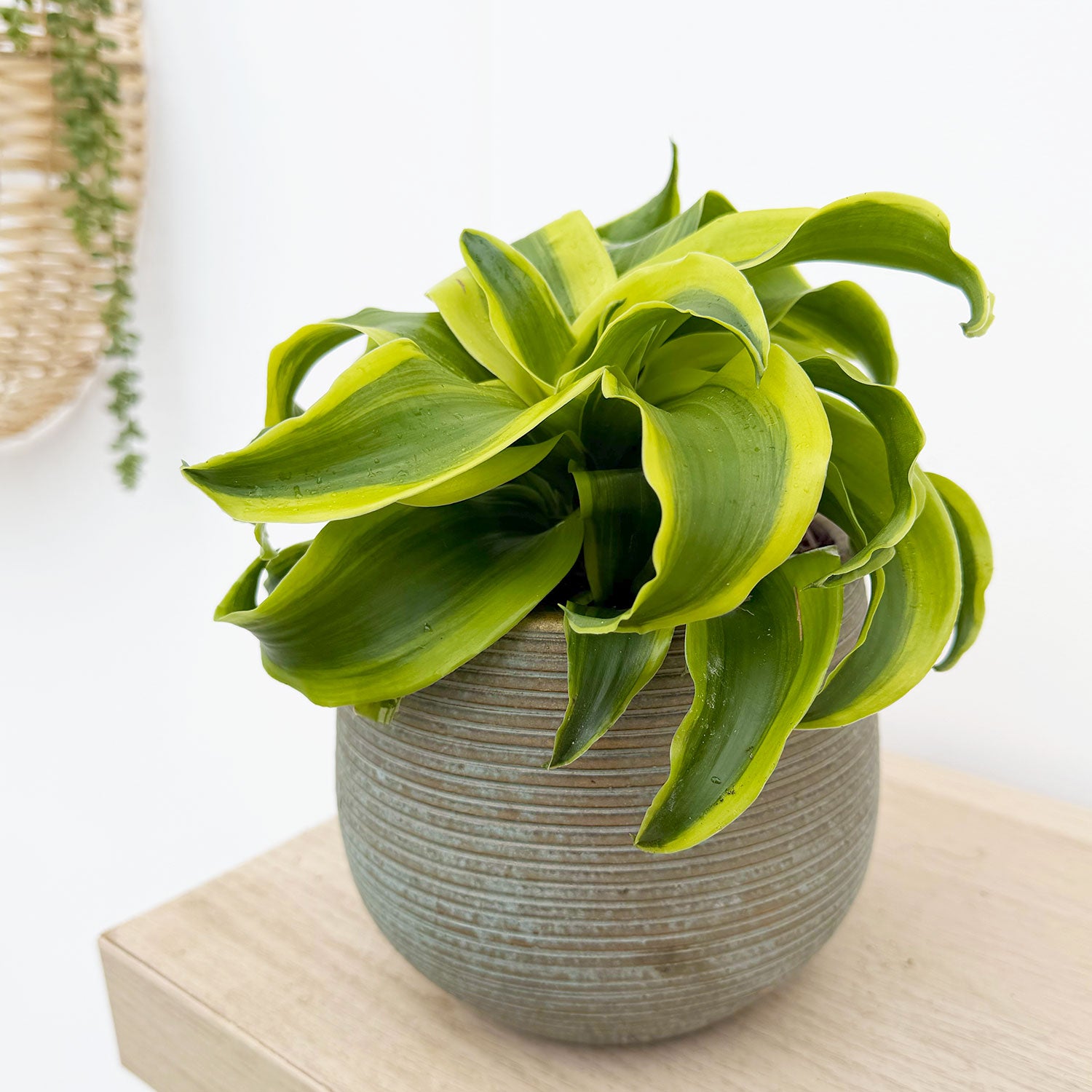
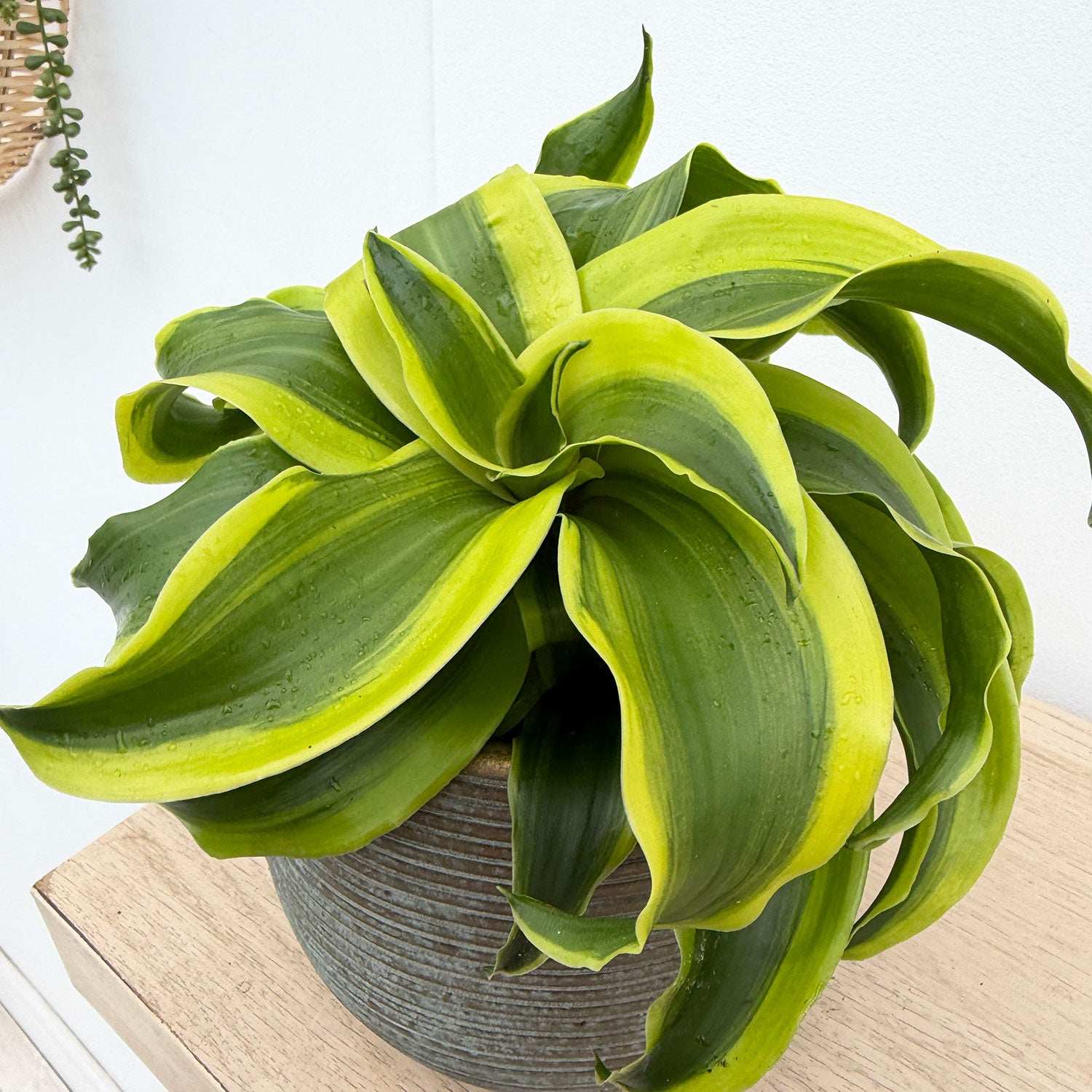
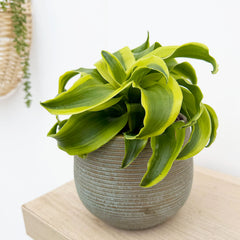
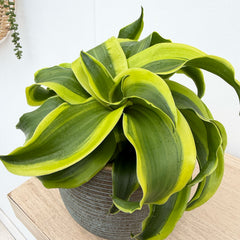
Dracaena ‘Lemon Tornado’ is a striking and compact tropical houseplant grown for its colourful, twisting foliage. Its distinctive leaves combine rich green with bright lime and lemon-yellow tones, creating a fresh, vibrant appearance that stands out amongst more traditional green houseplants.
The foliage grows in dense rosettes, with the leaves naturally curling and twisting around the central stem. This unusual spiral-like growth is responsible for the ‘Tornado’ name and gives the plant an attractive architectural shape even when relatively young.
Unlike some Dracaena varieties that quickly develop tall, bare canes, Lemon Tornado tends to maintain a compact, bushy appearance, particularly while young. As the plant matures, it can gradually develop more defined stems topped with clusters of colourful foliage.
Its combination of dramatic variegation and manageable growth makes it particularly useful for desks, shelves, side tables and smaller spaces. Larger specimens can also make excellent floor plants as they mature.
Dracaena are well known for being adaptable indoor plants, and Lemon Tornado shares many of these qualities. It tolerates normal household humidity, doesn't require constant watering and can cope with a range of indoor light conditions.
Dracaena Lemon Tornado grows best in bright, indirect light.
Good light helps maintain the plant's characteristic lime and yellow colouring and encourages strong, compact growth.
Position it close to an east- or west-facing window or slightly further back from a bright south-facing window.
Gentle morning or evening sunshine is usually tolerated, but prolonged exposure to intense midday sunlight can scorch the foliage.
Lemon Tornado can tolerate somewhat lower light levels, making it adaptable to different positions around the home. However, growth will generally become slower and the variegation may become less pronounced in darker conditions.
Avoid placing it in an extremely dark corner.
Ideal: Bright, indirect light, although medium indirect light is tolerated.
Dracaena Lemon Tornado prefers to partially dry between waterings.
Allow approximately the upper third to half of the compost to dry before watering again.
When watering, thoroughly moisten the compost until excess water begins to drain from the bottom of the pot. Allow this excess water to escape completely.
Never allow the plant to remain permanently standing in water.
Dracaena store some moisture within their stems and are considerably more tolerant of becoming slightly dry than they are of consistently waterlogged compost.
Overwatering is one of the most common causes of problems with Dracaena.
During spring and summer, the plant will generally require more frequent watering as temperatures and light levels increase.
During autumn and winter, allow the compost to dry for longer between waterings.
The exact watering frequency depends on:
Always check the compost rather than watering according to a fixed weekly schedule.
Dracaena can be sensitive to fluoride, chlorine and excessive mineral salts in water.
In some areas, regularly using hard tap water can contribute to brown or crispy leaf tips.
If your Lemon Tornado repeatedly develops brown tips despite otherwise appropriate care, consider using:
Allowing tap water to reach room temperature before watering can also help avoid shocking the roots with very cold water.
Occasionally flushing the compost thoroughly with water can help reduce the accumulation of fertiliser salts.
Dracaena Lemon Tornado is relatively adaptable when it comes to humidity and usually grows well in average household conditions.
A humidity level of approximately 40–60% or above is generally suitable.
Higher humidity can help maintain healthy foliage, but creating tropical greenhouse conditions is not necessary.
Extremely dry air may contribute to brown or crispy leaf tips, particularly during winter when central heating is being used.
Avoid positioning the plant directly beside:
Good airflow is beneficial, but avoid persistent blasts of hot or cold air.
Dracaena Lemon Tornado prefers warm, stable indoor temperatures.
An ideal range is approximately 18–27°C.
Avoid prolonged temperatures below approximately 12–15°C.
Dracaena can be sensitive to sudden temperature changes, particularly when combined with wet compost.
Protect the plant from:
Normal household temperatures are generally ideal.
Dracaena Lemon Tornado grows best in an airy, free-draining houseplant compost.
The growing medium should retain some moisture without becoming dense or waterlogged.
A suitable mixture can contain:
The aim is to create a mixture that allows plenty of oxygen around the roots while allowing excess water to drain efficiently.
Avoid heavy compost that remains saturated for extended periods.
Always use a pot with adequate drainage holes.
Feed Dracaena Lemon Tornado during the active growing season, generally from spring through to early autumn.
Apply a balanced liquid houseplant fertiliser at a diluted strength approximately once every 4 weeks.
Dracaena are not particularly heavy feeders, so avoid excessive fertilisation.
Too much fertiliser can result in mineral salts accumulating within the compost, potentially causing:
If the plant has recently been repotted into fresh compost containing nutrients, additional feeding may initially be unnecessary.
Reduce or stop feeding during autumn and winter.
Dracaena Lemon Tornado does not require frequent repotting and is generally comfortable being slightly root-bound.
Repot approximately every 2–3 years, or when there are clear signs that the plant has outgrown its existing container.
Signs can include:
Choose a new container only slightly larger than the existing pot.
Avoid moving a small root system into a disproportionately large container. The additional compost can retain moisture for too long and increase the risk of root rot.
Spring is generally the best time to repot.
Dracaena Lemon Tornado requires relatively little pruning.
Remove individual leaves once they become completely yellow or brown.
Damaged leaf tips can also be carefully trimmed if desired. Follow the natural shape of the leaf when trimming to maintain an attractive appearance.
As older plants develop taller stems, they can also be pruned to control their height.
Cutting back a healthy Dracaena stem can encourage new shoots to emerge below the cut, creating a fuller plant.
Always use clean, sharp cutting tools.
The colourful foliage of Lemon Tornado can gradually collect dust.
Gently wipe the leaves with a soft, damp cloth to keep them clean.
This not only improves the plant's appearance but also ensures the leaves receive as much available light as possible.
Avoid using artificial leaf-shine products, as these can leave residues on the foliage.
Cleaning the plant also provides an opportunity to inspect it for pests.
Dracaena Lemon Tornado can be propagated using stem or cane cuttings, although propagation is generally easier with larger, mature plants.
Take a healthy section of stem using a clean, sharp cutting tool.
The cutting can be rooted in:
Keep the cutting somewhere warm with bright, indirect light.
When rooting directly into compost, keep the growing medium lightly moist rather than saturated.
Root development can take several weeks, so patience is required.
Sections of mature cane can also potentially produce new shoots from dormant growing points.
Brown or crispy leaf tips are relatively common on Dracaena.
Possible causes include:
If only the very ends of otherwise healthy leaves are affected, the problem is generally cosmetic rather than a sign of serious decline.
Consider switching to filtered or rainwater if brown tips occur repeatedly.
An occasional older lower leaf turning yellow is normal as the plant matures.
Widespread yellowing, however, can indicate:
If several leaves yellow simultaneously and the compost remains wet, check the roots and review your watering routine.
The leaves of Lemon Tornado naturally have a curved and twisting appearance, so some curling is completely normal.
A noticeable change in the plant's usual appearance, however, can be associated with:
Check the compost and overall growing conditions before making significant changes.
Brown areas on the foliage can be caused by:
If brown patches develop predominantly on the side facing a bright window, excessive direct sunlight may be responsible.
A soft or mushy stem can indicate rot and should be investigated promptly.
This is most commonly associated with prolonged overwatering or poor drainage.
Remove the plant from its pot and inspect the root system.
Healthy roots should generally feel firm. Dark, soft or unpleasant-smelling roots may indicate rot.
Remove severely affected material using clean tools and repot healthy remaining sections into fresh, free-draining compost.
If new growth becomes increasingly dark green with less noticeable lemon colouring, insufficient light may be contributing.
Move the plant gradually into a brighter position with plenty of indirect light.
Avoid suddenly placing it into strong direct sunlight, as leaves accustomed to lower light can scorch.
Dracaena naturally grow more slowly than many climbing tropical houseplants.
Growth will also slow considerably during autumn and winter.
If the plant produces little or no growth during spring and summer, consider:
Providing brighter indirect light will often encourage stronger growth.
Dracaena Lemon Tornado is generally resilient but can occasionally be affected by common houseplant pests, including:
Regularly inspect:
Spider mites can become more problematic in particularly warm, dry conditions.
If pests are discovered, isolate the plant from the rest of your collection while treatment is carried out.
Dracaena species are considered toxic to cats and dogs if ingested.
Keep Lemon Tornado somewhere pets are unlikely to chew the foliage.
Ingestion can cause symptoms such as vomiting, loss of appetite and excessive drooling in pets.
Dracaena Lemon Tornado is generally considered an easy-care houseplant.
It is particularly suitable for anyone looking for colourful foliage without the demanding humidity requirements associated with some variegated tropical plants.
The biggest potential problem is overwatering.
Allowing the compost to partially dry before watering again, providing good drainage and positioning the plant in bright indirect light will prevent many of the most common problems.
It can also tolerate periods of slightly lower light and occasional missed waterings, making it a relatively forgiving addition to the home.
The compact, colourful growth of Dracaena Lemon Tornado makes it suitable for a wide range of positions.
Good locations include:
Avoid placing the plant in intense direct sunlight or directly beside a radiator.
As the plant matures and increases in size, it can be moved from a tabletop position to a plant stand or floor-level decorative pot.
Light: Bright, indirect light; tolerates medium light
Water: Allow the upper third to half of the compost to dry between waterings
Humidity: Average household humidity; approximately 40–60% or above
Temperature: Ideally 18–27°C
Soil: Airy, free-draining houseplant mix
Feeding: Diluted fertiliser approximately every 4 weeks during spring and summer
Repotting: Approximately every 2–3 years
Growth Habit: Compact, upright and bushy with twisting foliage
Pruning: Minimal; remove damaged foliage or cut back mature stems if required
Propagation: Stem or cane cuttings
Water Quality: Filtered or rainwater can help prevent brown tips
Toxicity: Toxic to cats and dogs if ingested
Difficulty: Easy
Overall rating: 5.0 / 5 from 5 reviews.
Review topics: [].
"A beautiful plant, makes me happy! Another gem from Plants for all."
"Plant came in lovely condition and was delivered quickly."
"Very healthy plant and as per description, loved it"
"The plants were in very good condition and the packaging was great."
"Lovely healthy plant, packaged very well, will definitely be ordering again"
ONLY
30
LEFT
🌱 FREE WITH ORDERS OVER £50

By Plants for all Seasons
A plant care expert that gives clear, friendly advice for all your houseplants and garden plants – tailored to UK conditions. Perfect for beginners and seasoned growers alike.
Terms of Use