




Fern
"A beautiful plant, makes me happy! Another gem from Plants for all."


At Plants for all Seasons, we stand behind the quality and vitality of every plant we deliver, which is why we proudly offer a Live Delivery Guarantee. This commitment means that we guarantee your plants will arrive at your doorstep in healthy, thriving condition. We understand the importance of receiving your plants in the best possible state, ready to enhance your space from the moment they arrive. With Plants for all Seasons's Live Delivery Guarantee, you can shop with complete peace of mind, knowing that your green investments are protected from our nursery to your doorstep.

Due to the sensitive and breakable nature of our products, it's understandable that damages may occur despite our meticulous packaging methods. If you find that your plant or pot has arrived in a less than satisfactory condition, please reach out to us at hello@plantsforallseasons.co.uk within a month of your delivery date. When contacting us, please provide your order reference, alongside a photo clearly showing the damaged item and its packaging, including the delivery label. We are committed to resolving such issues by offering a refund or a replacement, depending on the availability of the item in question.
We are unable to accept returns that are not related to damage because plants are inherently perishable and delicate. It's also worth noting that the plant you receive may slightly differ from the images displayed on our website. This variation is natural, given that each plant is unique and subject to seasonal growth changes.

At Plants for all Seasons, we recognise the critical role our courier partners play in ensuring the safe and secure delivery of your plants. We collaborate exclusively with leading courier services, renowned for their reliability and exceptional handling practices, to ensure your plants arrive in perfect condition. Our partners are carefully selected based on their commitment to timely deliveries and their proven track record in transporting delicate items with the utmost care.

At Plants for all Seasons, our commitment to the environment extends to every aspect of our operations, especially in how we deliver your plants. We take pride in our bespoke, eco-friendly packaging, meticulously designed for the safe transport of live plants. Our innovative packaging solutions are crafted from sustainable materials, ensuring that your plants are not only secure but also that their journey from our nursery to your home treads lightly on the earth. This thoughtful approach minimises stress on the plants and reduces waste, aligning with our mission to promote a greener, more sustainable future.
 Ask Leafy.AI
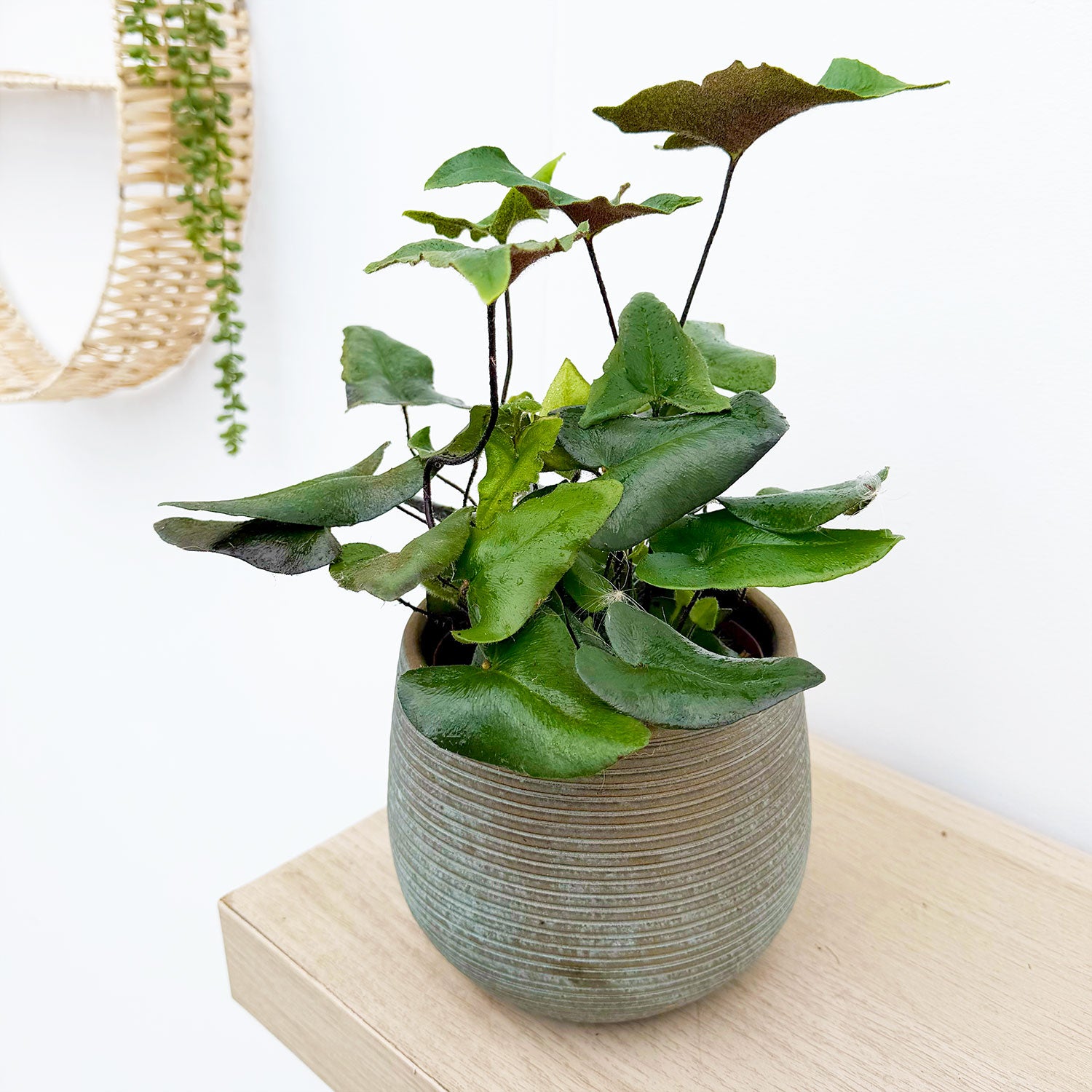
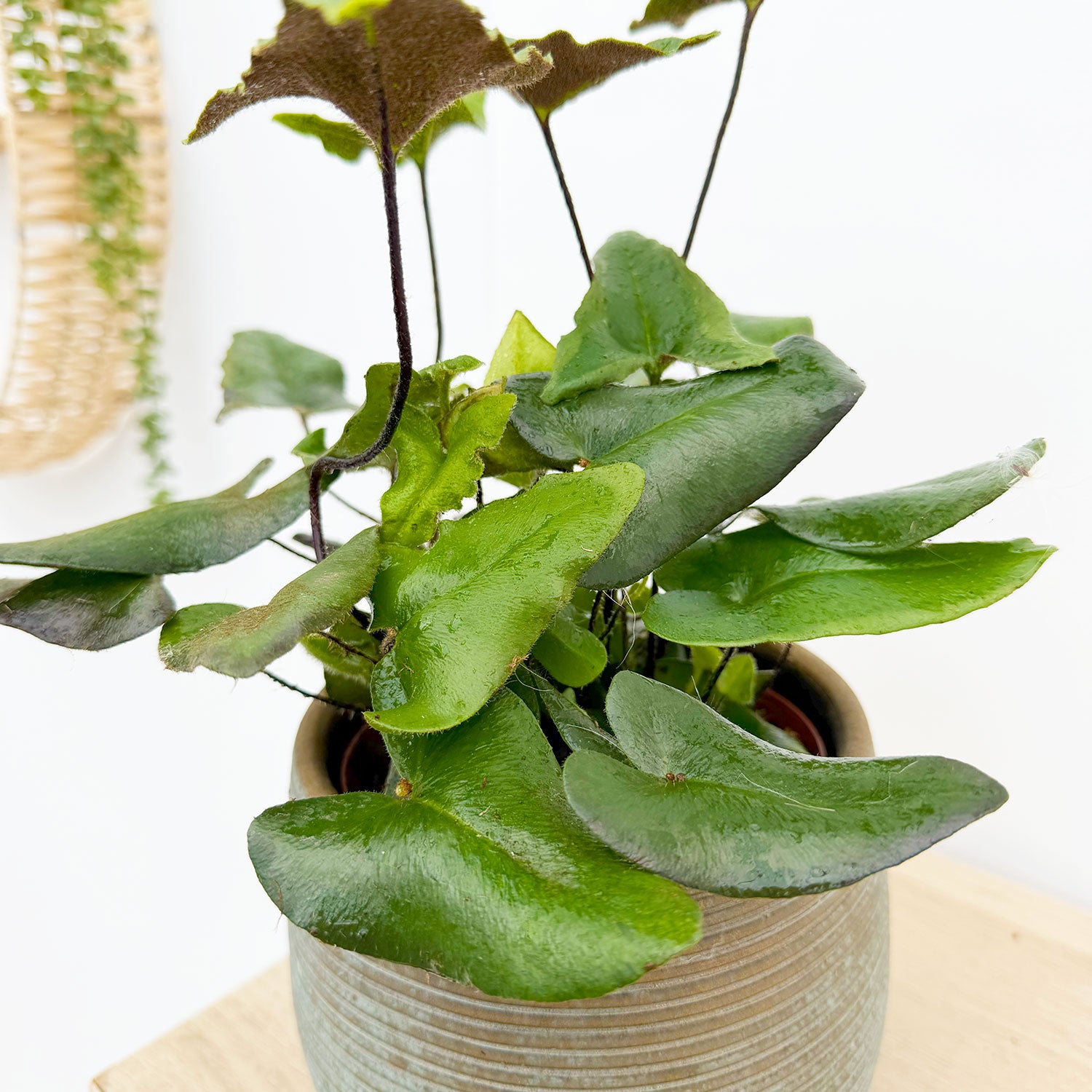
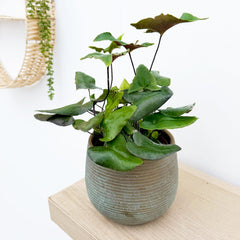
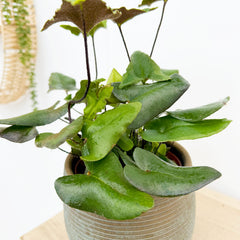
Hemionitis arifolia, commonly known as the Heart Fern, is a distinctive tropical fern grown for its beautifully shaped, deep green leaves. Unlike the feathery fronds associated with many traditional ferns, this species produces individual heart-shaped leaves held on slender, dark stems, giving it a wonderfully unusual and elegant appearance.
The foliage is the main attraction. Each leaf develops a broad, heart-like shape with a rich green colour and slightly leathery texture. The contrast between the foliage and the thin, dark stems gives Hemionitis arifolia a delicate appearance while allowing the unusual shape of each leaf to stand out.
It has a naturally compact growth habit, making it particularly useful where space is limited. Rather than producing long arching fronds, the leaves emerge from the centre of the plant to create a low-growing cluster of foliage.
Native to warm, humid tropical environments, the Heart Fern enjoys conditions quite different from those preferred by many conventional houseplants. It appreciates consistent moisture, warmth, high humidity and filtered light, making it particularly well suited to bright bathrooms, terrariums and humid plant cabinets.
Hemionitis arifolia can require a little more attention than some common houseplants, particularly when it comes to maintaining humidity and consistent moisture. However, when provided with suitable conditions, its unusual foliage makes it a rewarding addition to a fern or tropical plant collection.
Hemionitis arifolia prefers bright to medium indirect light.
In its natural environment, the plant grows beneath larger vegetation where it receives filtered light rather than prolonged direct sunshine.
A position close to an east- or north-facing window can work particularly well. It can also be grown further back from a brighter south- or west-facing window.
Avoid strong direct midday and afternoon sunlight, which can quickly scorch the delicate foliage and cause brown, dry patches.
Although Heart Ferns tolerate somewhat lower light levels, extremely dark conditions can result in slower growth and weaker foliage.
Artificial grow lights can also be used successfully, particularly when growing the plant inside a terrarium or plant cabinet.
Ideal: Medium to bright, indirect or filtered light.
Consistent moisture is particularly important for Hemionitis arifolia.
Unlike plants that prefer their compost to dry considerably between waterings, the Heart Fern prefers its growing medium to remain lightly and consistently moist.
Water when the surface of the compost begins to feel slightly dry.
Water thoroughly enough to evenly moisten the growing medium, but always allow excess water to drain away.
The aim is to achieve a balance between moisture and drainage.
Avoid allowing the compost to become completely dry for prolonged periods. Heart Ferns can react quickly to drought, with foliage becoming wilted, curled or crispy.
At the same time, the plant should not remain permanently waterlogged. Saturated, stagnant compost reduces oxygen around the roots and can eventually cause root and crown rot.
During warmer spring and summer conditions, check the plant regularly as the compost may dry relatively quickly.
During winter, growth generally slows and the plant may require less frequent watering.
The exact frequency depends on:
Check the compost rather than following a strict weekly watering schedule.
High humidity is one of the most important requirements for Hemionitis arifolia.
This tropical fern performs best when humidity remains consistently above average household levels.
Ideally, aim for approximately 60–80% humidity where possible.
This makes the Heart Fern particularly well suited to:
The plant can sometimes adapt to normal household conditions, but extremely dry air can cause leaf edges and tips to become brown and crispy.
Centrally heated rooms can be particularly challenging during winter.
Keep the plant away from radiators, heaters and strong sources of dry moving air.
Good airflow should accompany high humidity. Warm, stagnant and excessively wet conditions can encourage fungal problems.
Hemionitis arifolia prefers warm, stable temperatures.
An ideal range is approximately 18–26°C.
Avoid prolonged temperatures below approximately 15°C, particularly when the compost is wet.
The plant dislikes:
Warmth combined with high humidity generally produces the strongest growth.
Hemionitis arifolia grows best in a moisture-retentive but airy and well-draining growing medium.
The compost needs to hold sufficient moisture to prevent the fine roots from drying out while still allowing oxygen to reach the root system.
A suitable mixture can contain:
A specialist fern mix can also work well.
Avoid extremely coarse mixtures that dry too rapidly, as well as heavy, compacted compost that remains saturated for long periods.
The pot should always have adequate drainage.
Hemionitis arifolia has relatively modest feeding requirements.
During spring and summer, apply a balanced liquid houseplant fertiliser at a diluted strength approximately once every 4 weeks.
Avoid applying concentrated fertiliser, as the plant's delicate root system can be sensitive to excessive mineral salts.
If the plant has recently been repotted into fresh, nutrient-rich compost, additional feeding may not initially be necessary.
Reduce or stop feeding during autumn and winter when growth naturally slows.
Heart Ferns generally prefer to remain relatively snug in their containers and do not require frequent repotting.
Repot approximately every 1–2 years, or when the root system has clearly filled the existing container.
Signs that repotting may be required include:
Choose a new container only slightly larger than the existing pot.
An excessively large pot can contain too much wet compost around a relatively small root system, increasing the risk of root rot.
Spring is generally the best time to repot.
Handle the plant carefully during the process, as both the roots and foliage can be relatively delicate.
Hemionitis arifolia does not require traditional pruning.
Instead, maintenance primarily involves removing old or damaged foliage.
Remove leaves that have become:
Cut the affected stem close to the base using clean, sharp scissors.
Avoid cutting healthy leaves unnecessarily.
Removing old foliage helps keep the plant looking tidy while allowing more light and airflow around new growth.
New Heart Fern leaves emerge from the centre of the plant and may initially appear smaller, paler or more delicate than mature foliage.
As they develop, they gradually expand and darken.
Take particular care around emerging foliage, as new growth can be easily damaged by handling.
Consistently warm temperatures, high humidity and evenly moist compost will help encourage healthy new leaves.
Like other ferns, Hemionitis arifolia does not produce conventional seeds or stem cuttings. Ferns naturally reproduce using spores.
Mature plants can develop spores on the undersides of their leaves.
Propagation from spores is possible but requires patience and carefully controlled conditions. It is considerably more involved than propagating common houseplants from cuttings.
Where a mature plant develops multiple distinct crowns or sections, division may sometimes provide a more practical method of propagation.
Carefully remove a mature plant from its pot and inspect the root system.
If there are clearly separate sections with their own roots and growing points, these can potentially be divided.
Gently separate the sections while disturbing the roots as little as possible.
Pot each division into an appropriate fern growing medium and keep it:
Avoid dividing small or immature plants unnecessarily.
Brown or crispy foliage is one of the most common problems with Heart Ferns.
Possible causes include:
Check both the humidity and compost moisture.
If the plant is positioned near a radiator or in particularly dry household air, moving it into a more humid environment can make a considerable difference to new growth.
Existing brown areas will not recover, but healthy new leaves can replace damaged foliage.
Wilting frequently occurs when the compost has become too dry.
Check the growing medium and water if necessary.
However, persistently wet compost combined with wilting can indicate root damage.
If the compost is saturated and the plant continues to wilt, inspect the root system for signs of rot.
Yellow foliage can be caused by:
An occasional older leaf turning yellow is not necessarily a cause for concern.
Widespread yellowing, particularly when accompanied by wet compost, should be investigated.
Blackened, soft or mushy growth can indicate rot.
This is particularly likely when the plant is kept excessively wet in cool or poorly ventilated conditions.
Remove badly affected foliage and inspect the crown and root system.
Improve drainage and airflow if necessary.
Leaves may curl in response to:
Check the plant's environment and ensure both humidity and moisture levels are appropriate.
New growth may naturally emerge lighter before darkening.
Persistently pale mature foliage, however, can indicate:
Consider the plant's overall care rather than increasing fertiliser immediately.
Hemionitis arifolia can occasionally be affected by common houseplant pests.
Potential problems include:
Spider mites can become particularly problematic when conditions are too dry.
Regularly inspect the foliage, including the undersides of leaves and around emerging growth.
If pests are discovered, isolate the affected plant while treatment is carried out.
Small brown markings appearing on the undersides of mature leaves are not necessarily pests or disease.
Ferns reproduce using spores, which develop in structures called sori on mature foliage.
These can sometimes be mistaken for scale insects or other pests.
Before treating the plant, inspect the markings carefully. Regularly arranged brown reproductive structures on otherwise healthy fern foliage may simply be part of the plant's natural life cycle.
Hemionitis arifolia is best considered a moderately challenging houseplant rather than a beginner-proof fern.
Its main requirement is consistency.
The plant dislikes being allowed to dry completely and can struggle in the low humidity found in some homes, particularly during winter.
The easiest way to keep a Heart Fern healthy is to provide:
For this reason, Hemionitis arifolia can be particularly successful in a terrarium or plant cabinet where humidity can be maintained more easily.
The compact size and humidity requirements of the Heart Fern make it an excellent candidate for terrarium growing.
A terrarium can provide the consistently humid environment that this species appreciates while reducing how quickly its growing medium dries.
Position it somewhere with good indirect light but avoid allowing direct sunlight to hit a closed glass terrarium, as temperatures inside can rise extremely quickly.
The growing medium should remain lightly moist rather than saturated.
Some airflow is beneficial, particularly in very humid enclosed environments.
Hemionitis arifolia performs particularly well in locations that provide warmth, humidity and filtered light.
Good positions include:
Avoid:
The combination of its compact growth and distinctive heart-shaped foliage makes it particularly attractive when positioned where the individual leaves can be viewed closely.
Common Name: Heart Fern
Light: Medium to bright, indirect light
Water: Keep lightly and consistently moist; avoid completely drying out
Humidity: High; approximately 60–80% is ideal
Temperature: Ideally 18–26°C
Soil: Moisture-retentive, airy and well-draining fern mix
Feeding: Diluted fertiliser approximately every 4 weeks during spring and summer
Repotting: Approximately every 1–2 years or when necessary
Growth Habit: Compact and clumping
Pruning: Remove old or damaged foliage at the base
Propagation: Spores or division of suitable mature plants
Best For: Terrariums, plant cabinets and humid rooms
Difficulty: Moderate
Overall rating: 5.0 / 5 from 5 reviews.
Review topics: [].
"A beautiful plant, makes me happy! Another gem from Plants for all."
"Plant came in lovely condition and was delivered quickly."
"Very healthy plant and as per description, loved it"
"The plants were in very good condition and the packaging was great."
"Lovely healthy plant, packaged very well, will definitely be ordering again"
ONLY
79
LEFT
🌱 FREE WITH ORDERS OVER £50

By Plants for all Seasons
A plant care expert that gives clear, friendly advice for all your houseplants and garden plants – tailored to UK conditions. Perfect for beginners and seasoned growers alike.
Terms of Use