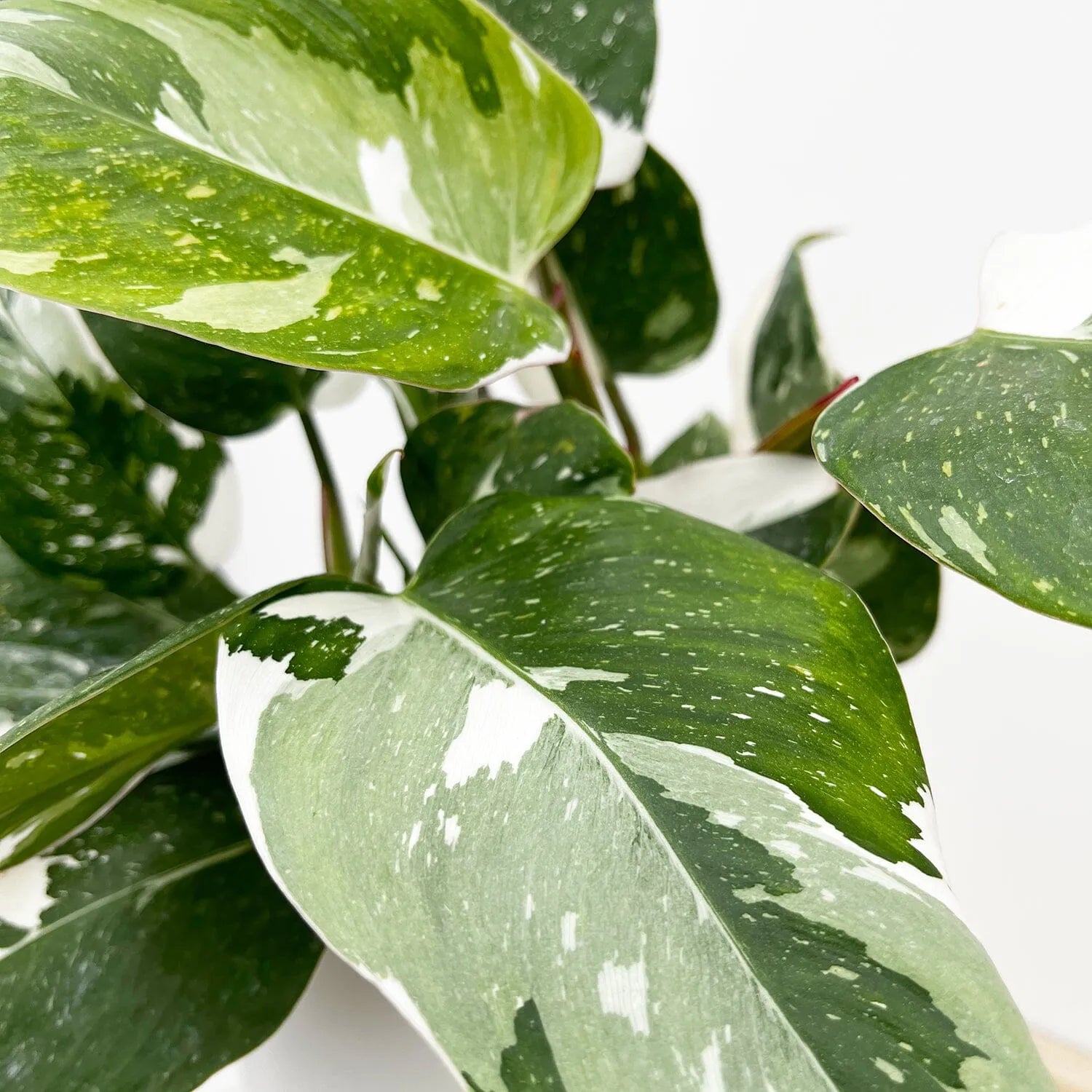
Philodendron ‘White Princess’ is one of the most elegant and sought-after variegated Philodendrons, adored for its vivid white and green marbled foliage and graceful upright growth habit. A member of the Araceae family and native to the tropical rainforests of South America, this compact hybrid is a must-have for collectors and enthusiasts of rare tropical plants.
Each leaf of ‘White Princess’ is a work of art — a stunning mix of deep emerald and pure white variegation, with occasional streaks of blush pink on the stems and leaf bases. The plant’s self-heading (non-vining) nature gives it a neat, bushy shape, making it ideal for display on tables, shelves, or as a statement piece in a bright room.
Sophisticated, refined, and surprisingly easy to care for, Philodendron ‘White Princess’ embodies tropical luxury in a compact form, bringing light and calm to any indoor setting.
Philodendron ‘White Princess’ – Care Guide
Light
Thrives in bright, indirect light, which helps maintain strong white variegation. Too little light can cause the leaves to turn greener, while harsh direct sunlight may burn the pale sections. A bright spot near an east- or north-facing window is ideal.
Watering
Keep the soil lightly moist, watering when the top 2–3 cm feels dry. Do not overwater, as Philodendrons are prone to root rot. In winter, reduce watering frequency and allow the soil to dry slightly more between waterings.
Temperature and Humidity
-
Temperature: Prefers warmth, 20–28°C. Avoid cold draughts and temperatures below 16°C.
-
Humidity: Enjoys moderate to high humidity (60–80%). Mist occasionally or use a humidifier to maintain leaf quality and prevent browning on the variegated edges.
Soil and Potting
Use a chunky, well-draining aroid mix — a blend of peat-free compost, orchid bark, perlite, and coco coir is ideal. This provides excellent airflow while retaining gentle moisture. Repot every 1–2 years in spring to refresh the mix and encourage new growth.
Feeding
Feed every 4–6 weeks during spring and summer with a balanced, diluted liquid fertiliser. Avoid over-fertilising, especially as variegated plants grow more slowly.
Pruning and Maintenance
Remove any yellow or damaged leaves at the base to encourage healthy new growth. Wipe the large leaves gently with a soft, damp cloth to remove dust and enhance their shine. Prune leggy stems to maintain compactness and shape.
Growth and Maturity
A slow to moderate-growing self-heading hybrid, typically reaching 40–60 cm in height. Mature plants produce larger, broader leaves with strikingly stable variegation, displaying creamy-white sectors and marbled patterns.
Common Issues
-
Loss of variegation: Insufficient light.
-
Brown tips: Low humidity or inconsistent watering.
-
Yellowing leaves: Overwatering or poor drainage.
-
Pests: Occasionally thrips, mealybugs, or spider mites.
Background and Benefits
Philodendron ‘White Princess’ is a hybrid believed to originate from the Philodendron erubescens group, which also produced popular cultivars such as ‘Pink Princess’ and ‘White Knight’. It is highly valued for its consistent variegation, compact growth, and occasional pink stem highlights, setting it apart from other white-variegated varieties.
Beyond its aesthetic appeal, it is also an air-purifying plant, helping to filter toxins from indoor air and promoting a sense of calm and freshness in the home.
✅ Quick Care Summary
-
Light: Bright, indirect; avoid harsh sun
-
Water: Lightly moist; allow topsoil to dry slightly
-
Temperature: 20–28°C; avoid below 16°C
-
Humidity: Moderate to high (60–80%)
-
Soil: Chunky, well-draining aroid mix
-
Feed: Every 4–6 weeks in spring/summer
-
Growth: Compact, self-heading plant, 40–60 cm; glossy green and white variegated leaves with pink-tinted stems
⚠️ Toxicity Note: Like all Philodendrons, ‘White Princess’ is toxic if ingested and may cause mild skin irritation. Keep out of reach of pets and children.
🌿 Styling Tip:
Display Philodendron ‘White Princess’ in a neutral or pale pot to complement its elegant variegation. It pairs beautifully with darker-leaved plants such as Ficus ‘Melany’ or Philodendron ‘Red Sun’ for a refined, balanced look.