






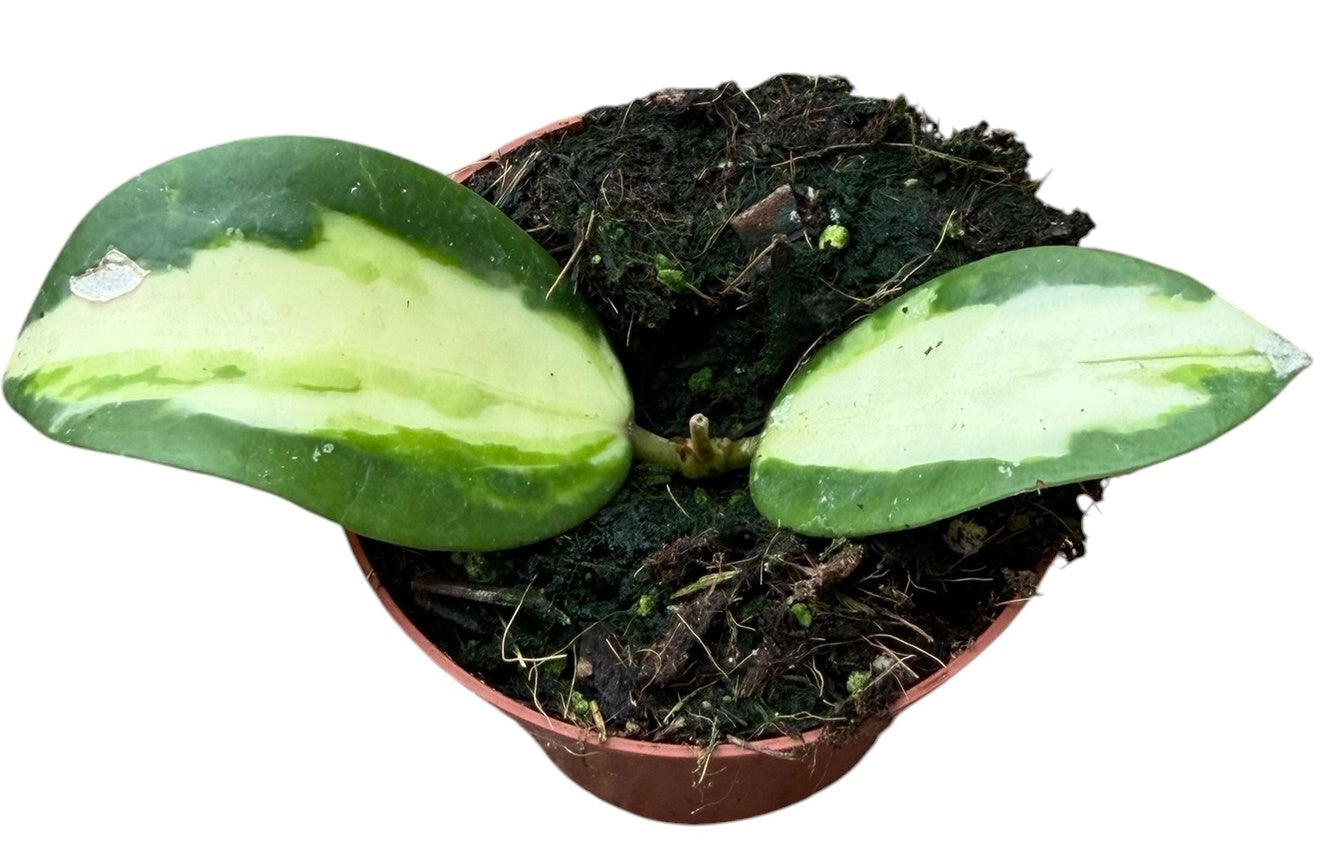
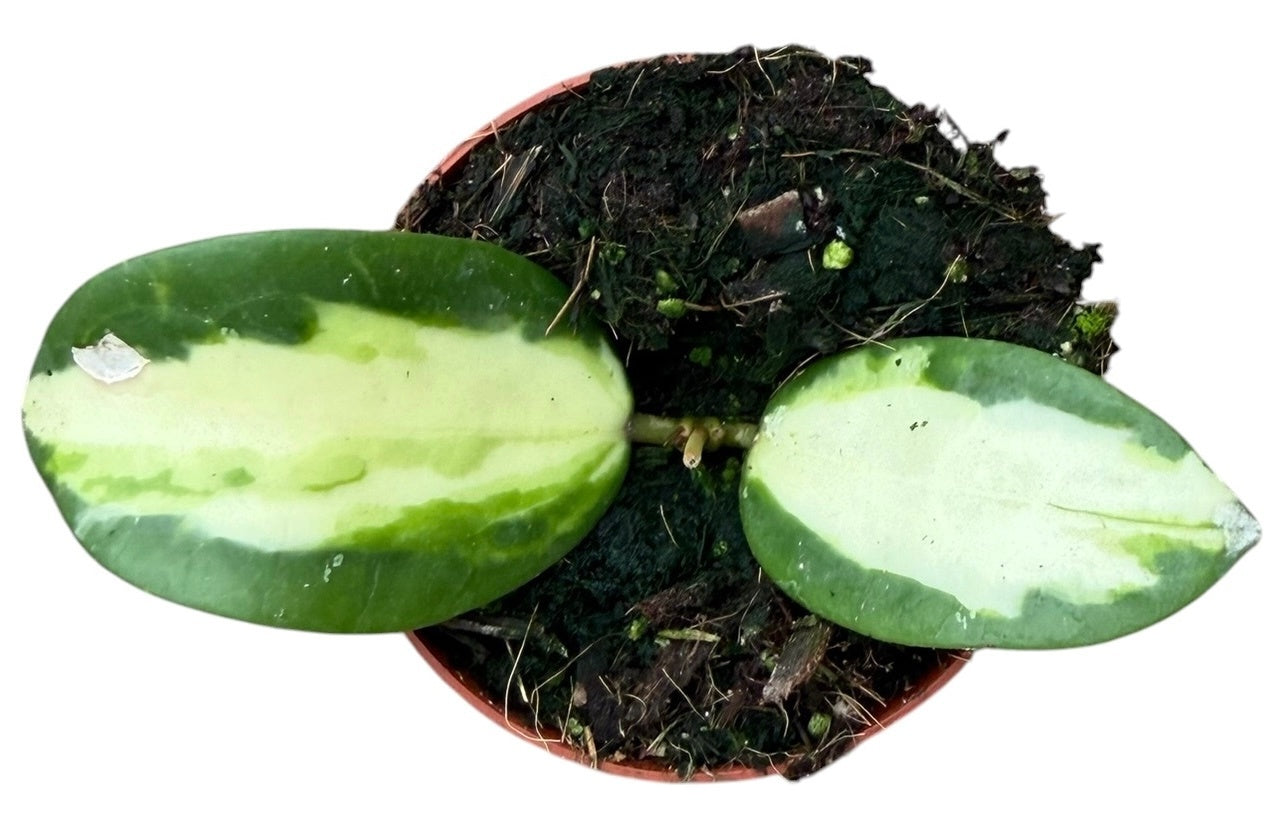
Hoya Acuta Inner Variegata 8cm Pot House Plant

Live Delivery Guarantee
At Plants for all Seasons, we stand behind the quality and vitality of every plant we deliver, which is why we proudly offer a Live Delivery Guarantee. This commitment means that we guarantee your plants will arrive at your doorstep in healthy, thriving condition. We understand the importance of receiving your plants in the best possible state, ready to enhance your space from the moment they arrive. With Plants for all Seasons's Live Delivery Guarantee, you can shop with complete peace of mind, knowing that your green investments are protected from our nursery to your doorstep.

30 Days Returns
Due to the sensitive and breakable nature of our products, it's understandable that damages may occur despite our meticulous packaging methods. If you find that your plant or pot has arrived in a less than satisfactory condition, please reach out to us at hello@plantsforallseasons.co.uk within a month of your delivery date. When contacting us, please provide your order reference, alongside a photo clearly showing the damaged item and its packaging, including the delivery label. We are committed to resolving such issues by offering a refund or a replacement, depending on the availability of the item in question.
We are unable to accept returns that are not related to damage because plants are inherently perishable and delicate. It's also worth noting that the plant you receive may slightly differ from the images displayed on our website. This variation is natural, given that each plant is unique and subject to seasonal growth changes.

Safe and Secure Delivery
At Plants for all Seasons, we recognise the critical role our courier partners play in ensuring the safe and secure delivery of your plants. We collaborate exclusively with leading courier services, renowned for their reliability and exceptional handling practices, to ensure your plants arrive in perfect condition. Our partners are carefully selected based on their commitment to timely deliveries and their proven track record in transporting delicate items with the utmost care.

Bespoke Eco Packaging
At Plants for all Seasons, our commitment to the environment extends to every aspect of our operations, especially in how we deliver your plants. We take pride in our bespoke, eco-friendly packaging, meticulously designed for the safe transport of live plants. Our innovative packaging solutions are crafted from sustainable materials, ensuring that your plants are not only secure but also that their journey from our nursery to your home treads lightly on the earth. This thoughtful approach minimises stress on the plants and reduces waste, aligning with our mission to promote a greener, more sustainable future.
Hoya acuta ‘Inner Variegata’ Description Hoya acuta ‘Inner Variegata’ is a striking variegated Hoya recognised for its glossy foliage and contrasting cream-coloured centres. The plant is also sold as Hoya verticillata ‘Inner Variegated’, reflecting the currently accepted botanical classification of...
- £40.00
£59.99- £40.00
- Unit price
- per
Delivered within 4-5 working days
These plants are kept in optimal conditions at their specialist growers until ordered. This means they take little longer to be delivered, but quality is assured. Please allow up to 5 working days for these to be delivered.
£6.99 for DHL next day service. Pay one delivery fee for any amount of plants & accessories.
£6.99 for DHL next day service. Pay one delivery fee for any amount of plants & accessories.

 Ask Leafy.AI
Hoya acuta ‘Inner Variegata’
Description
Hoya acuta ‘Inner Variegata’ is a striking variegated Hoya recognised for its glossy foliage and contrasting cream-coloured centres. The plant is also sold as Hoya verticillata ‘Inner Variegated’, reflecting the currently accepted botanical classification of the species.
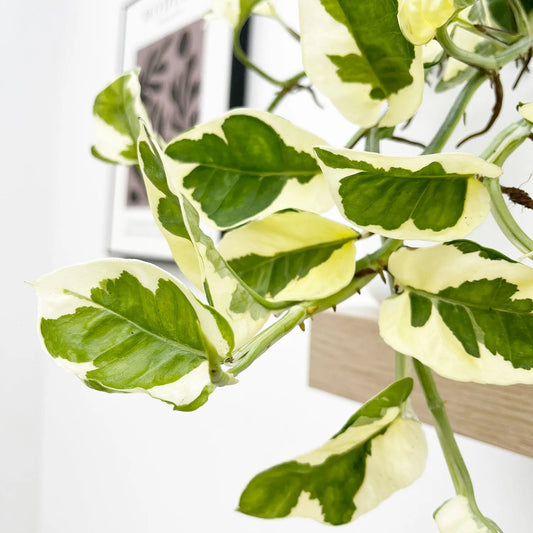
The thick, oval to elliptical leaves develop deep green margins surrounding irregular centres of cream, ivory, pale yellow and light green. New foliage may emerge with an attractive pink or rose-coloured flush before gradually developing its mature colouring.
The variegation pattern differs naturally between leaves. Some develop broad cream centres with only a narrow green outline, while others contain more green or a marbled mixture of several shades. The green margins contain most of the chlorophyll needed to support the plant, while the pale central areas contribute to its distinctive appearance.
This is a climbing and trailing Hoya with long, flexible vines. It can be displayed in a hanging pot or trained around a hoop, trellis or climbing frame. Providing support helps organise its growth and displays the patterned foliage particularly well.
Mature plants may produce rounded umbels of waxy cream-white to pale pink flowers. These have contrasting yellow, orange or pink centres and may release a mild, spicy fragrance. Flower colour can vary because Hoya verticillata is a widespread and naturally variable species.
The accepted botanical name is Hoya verticillata var. verticillata. Hoya acuta and Hoya parasitica are older names that remain common in horticulture. The species has a wide natural range extending from the Indian subcontinent through southern China to western and central Malesia.
‘Inner Variegata’ describes the position of the pale pattern within the centre of the leaf. It is different from an outer-variegated or albomarginata form, where the cream colouring appears around the leaf margins.
Care Guide
Light
Provide plenty of bright, indirect light. Variegated plants contain less chlorophyll than fully green plants and generally require a brighter position to maintain strong growth.
An east- or west-facing window is ideal. A small amount of gentle morning or late-afternoon sunshine can encourage compact growth and flowering.
Introduce direct light gradually. The pale central sections are more sensitive to scorching than the green margins and may develop dry, brown patches under intense sunlight.
Insufficient light can result in slow growth, longer gaps between leaves and an increased likelihood of greener foliage.
A grow light can be useful during the darker UK winter. Keep it far enough from the leaves to prevent bleaching or heat damage.
Watering
Allow approximately the upper half of the growing mixture to dry before watering again. The thick leaves store moisture, making this Hoya more tolerant of a short dry period than permanently wet roots.
Water thoroughly until excess water drains freely from the bottom of the pot. Allow it to drain completely before returning it to a decorative container or saucer.
Avoid providing small amounts of water frequently. This can create uneven moisture and leave sections of the root system continuously damp.
Never leave the plant standing in water. Its epiphytic roots require oxygen and can rot in dense, saturated compost.
Reduce watering during autumn and winter when growth slows. Always check the growing mixture rather than following a fixed weekly schedule.
Humidity
Moderate humidity is generally sufficient, although levels of approximately 50–70% can encourage stronger growth.
An established plant can adapt to normal household humidity. Very dry air may cause crispy growth, brown tips or stalled new leaves.
A humidifier is the most reliable way to increase humidity. Grouping plants together can also create a slightly more humid local environment.
High humidity must be combined with gentle air circulation. Stagnant, continuously damp conditions can encourage fungal problems.
Routine misting is unnecessary and only raises humidity briefly.
Temperature
Maintain temperatures between approximately 18°C and 27°C. Warm, stable conditions encourage active growth.
Protect the plant from prolonged temperatures below 15°C, particularly when the growing mixture is damp.
Keep it away from cold windows, draughty doorways, air-conditioning units and sudden temperature changes.
Avoid positioning the plant directly beside a radiator or heating vent, as hot, dry air can damage its foliage.
Compost
Use an open, chunky and fast-draining mixture suitable for an epiphytic Hoya.
A suitable mixture can include:
- Fine or medium orchid bark
- Perlite or pumice
- Coco chips or coco coir
- Peat-free houseplant compost
- Horticultural charcoal
- A small amount of chopped sphagnum moss
The mixture should retain a little moisture while allowing excess water to escape quickly. Air must be able to circulate around the roots.
Avoid dense compost that compacts or remains saturated for extended periods.
Always use a pot with sufficient drainage holes.
Feeding
Feed approximately once every four weeks during spring and summer using a balanced liquid houseplant or orchid fertiliser diluted to half the recommended strength.
Apply fertiliser when the growing mixture is already moist. Concentrated feed applied to dry roots can cause damage.
Avoid using excessive nitrogen fertiliser, as this can encourage weak growth or greener foliage at the expense of balanced variegation.
Flush the pot occasionally with plain water to remove accumulated fertiliser salts.
Reduce feeding towards autumn and stop during winter unless the plant remains warm, well-lit and actively growing.
Repotting
Hoya acuta ‘Inner Variegata’ performs well when slightly snug in its pot and does not require frequent repotting.
Repot when:
- The roots have filled the container
- The growing mixture has started to break down
- Drainage has become poor
- The plant begins drying considerably faster than before
- There are signs of root deterioration
Choose a new pot only slightly larger than the existing one. An oversized container retains more moisture than the root system can use.
Repotting may be required approximately every two to three years. Spring or early summer is the best time because the plant can recover during active growth.
Growth and Support
This is a climbing or trailing Hoya that can eventually produce long vines.
It can be allowed to trail from a hanging pot, but a hoop, trellis or climbing frame will support its natural growth habit.
Guide young stems around the support while they remain flexible. Fasten them loosely using soft plant ties, leaving enough room for the vines to thicken.
Long, temporarily leafless searching vines are normal. These stems are exploring for something to climb and may produce leaves after finding support.
Avoid repeatedly unwinding established vines. Older stems can become rigid and may snap when bent.
Inner Variegation
Inner variegation means that the cream, yellow and white colouring is concentrated towards the centre of the leaf, while the margins remain green.
The pattern varies naturally and cannot be controlled precisely. A highly variegated leaf may be followed by one containing considerably more green.
Bright indirect light supports balanced variegated growth, but excessive sunlight can scorch the pale tissue.
The cream sections contain little or no chlorophyll. Healthy green tissue is therefore essential for producing the energy needed to support the plant.
Do not remove healthy green leaves simply because they contain less variegation. They contribute significantly to the plant’s overall strength.
Reversion
An occasional greener leaf is normal. However, a vine producing several entirely green leaves may be reverting.
Allow enough growth to confirm the pattern before pruning. If a branch continues to produce only green foliage, cut it back to the last node that produced clearly variegated leaves.
Green shoots generally grow faster because they contain more chlorophyll. If left in place, they may eventually dominate the slower variegated growth.
At the other extreme, a shoot producing almost entirely cream leaves may struggle to sustain itself. Retain nearby green or balanced leaves so that the plant can continue photosynthesising.
Pink New Growth
New leaves and stems may emerge with pink, peach or rose colouring. This is a normal feature of the variegated form.
The pink tone generally fades as the leaf expands and hardens, leaving cream, yellow and green variegation.
Bright light can intensify the pink flush, but harsh direct sun should not be used to force stronger colouring.
Flowering
Flowering normally begins once the plant is mature, well rooted and receiving sufficiently bright light.
To improve the likelihood of blooms:
- Provide bright, indirect light
- Maintain warm, stable temperatures
- Water consistently without keeping the roots wet
- Feed lightly during active growth
- Avoid unnecessary repotting
- Allow the vines to mature on their support
The waxy flowers are produced in rounded clusters from permanent spurs called peduncles.
Do not remove peduncles after the flowers fade. The plant can bloom repeatedly from the same flowering point.
Allow spent flowers to fall naturally or remove only the individual faded blooms.
Avoid moving or rotating the plant after buds have formed. Sudden changes in light, temperature or moisture can cause bud drop.
Pruning
Prune only when necessary to control the plant’s size, remove damaged growth or manage reversion.
Cut immediately above a healthy node using clean, sharp scissors or secateurs. Check carefully for peduncles before pruning.
The stems contain white, milky sap that may irritate sensitive skin. Wear gloves and keep the sap away from the eyes and mouth.
Leaf Care
Dust can be removed using a soft, damp cloth. Support each leaf from underneath and wipe gently.
Avoid using commercial leaf-shine products, as these can leave residue or cause spotting.
Do not clean young leaves until they have fully expanded and hardened. Emerging variegated foliage can be easily creased or damaged.
Brown areas within the pale tissue will not become cream again. Once damage has occurred, the appearance can only be improved by removing the entire leaf, which is not necessary unless the damage is extensive.
Winter Care
Growth is likely to slow during the darker UK winter. Move the plant to the brightest suitable position while protecting it from cold glass and draughts.
Allow more of the growing mixture to dry between waterings and stop routine feeding.
The plant may produce greener foliage during periods of reduced light. Stronger variegation may return as natural light improves.
Supplementary lighting can help maintain balanced growth through winter.
Do not compensate for dry indoor air by keeping the roots excessively wet. Use a humidifier if additional humidity is required.
Common Problems
Yellow leaves: Frequently caused by overwatering, poor drainage or cold conditions.
Wrinkled or soft leaves: May indicate dehydration, but can also occur when damaged roots cannot absorb water. Check the roots before watering again.
Brown patches in the cream centres: Can result from intense sunlight, dry air, cold exposure, inconsistent watering or fertiliser accumulation.
Pale or bleached foliage: Usually caused by excessive direct sunlight.
Long gaps between leaves: Often indicate insufficient light, although searching vines can remain temporarily leafless.
Small new leaves: May result from inadequate light, nutrition or root health.
Entirely green growth: May indicate reversion if several consecutive leaves are affected.
Almost completely cream growth: Contains too little chlorophyll to remain vigorous without support from greener foliage.
Black or collapsing roots: A sign of root rot. Remove damaged roots and repot into a fresh, airy mixture.
Stalled growing tips: Can be caused by low temperatures, root damage, dry air or sudden environmental changes.
No flowers: The plant may be immature, receiving insufficient light or still establishing its roots and vines.
Dropping flower buds: Commonly caused by moving the plant, inconsistent watering or sudden temperature changes.
Pests
Inspect the leaf joints, stems, growing tips, undersides of leaves and peduncles regularly. Potential pests include:
- Mealybugs
- Scale insects
- Thrips
- Spider mites
- Root mealybugs
Mealybugs and scale can hide around the nodes and flowering spurs. Thrips may damage new leaves before they have fully expanded.
Isolate an affected plant and treat it promptly with a suitable houseplant pest treatment. Repeat applications may be necessary to interrupt the pest’s life cycle.
Propagation
Propagate Hoya acuta ‘Inner Variegata’ using stem cuttings.
Select a healthy vine with balanced green and cream foliage. Each cutting must contain at least one node, although a section with two nodes is usually easier to establish.
Remove the lowest leaf and place the node into water, moist sphagnum moss, perlite or a fine, airy propagation mixture.
Keep the cutting warm and humid with bright, indirect light. Maintain light moisture around the node without leaving it saturated.
Once a healthy root system has developed, transfer the cutting into a suitable Hoya mixture.
Avoid propagating an entirely green section if the aim is to preserve the inner variegation. Similarly, a cutting with almost no green tissue may lack enough chlorophyll to establish successfully.
A detached leaf without a node may produce roots and remain alive, but it will not normally develop into a complete vining plant.
Pet Safety
Hoyas are generally regarded as non-toxic to cats and dogs. However, pets should still be discouraged from chewing the leaves and stems, as consuming plant material can cause digestive discomfort.
The white sap may irritate sensitive skin. Keep the plant away from children and pets that are likely to chew or handle it.
At Plants for all Seasons, we take pride in our eco-friendly approach to packaging. Our custom-made plant boxes are designed with both the environment and your plants' wellbeing in mind. Here’s what makes our packaging special:
Upright and Fresh: Our innovative design ensures that your plants remain upright and fresh during transit. Specially engineered compartments and supports within the box prevent movement and damage, so your plants arrive in perfect condition.
100% Recyclable: Our plant boxes are fully recyclable, ensuring that after they have served their purpose, they can be responsibly disposed of without harming the planet.
Made from Recycled Materials: Sustainability is at the core of our values. That’s why our packaging is crafted from recycled materials, reducing waste and promoting a circular economy.
Winter Shipping: We offer additional heat packs in winter to keep your plants nice and warm on their travels. Add one heat pack per plant when checking out in winter months.
By choosing our products, you are not only enhancing your home with beautiful plants but also contributing to a greener, more sustainable future
Check out our YouTube video to see exactly how we pack for safe delivery.
At Plants for all Seasons, we offer a specialist range of plants that are kept at their growers until ordered, ensuring they remain in their ideal conditions. This unique approach means that these plants receive expert care right up until the moment they are prepared for delivery.
Our dedicated growers are passionate about their craft and maintain the perfect environment for each species in this range, ensuring that every plant is healthy, vibrant, and ready to thrive in your home or garden.
Delivery and Quality Assurance We understand that receiving your plants in excellent condition is crucial. While delivery for this specialist range can take up to 7 days, we assure you that this time is used to carefully select, prepare, and package your plants to maintain their health and vitality during transit.
Our commitment to quality means that every plant in this range is thoroughly inspected before it leaves the grower, ensuring it meets our high standards. You can trust that your new plant will arrive ready to flourish, bringing beauty and life to your space.
Tropical Glasshouse Nursery: Our plants are nurtured in our tropical glasshouse nursery located in Lincolnshire, where we maintain an average temperature of 16°C. We do not use cold warehouses, ensuring optimal conditions for plant health.
Plastic Nursery Pots: All our plants are supplied in practical plastic nursery pots. If you prefer a more decorative option, we offer a range of stylish pots available for purchase separately.
Non-Consumable: Please note that our plants are intended for ornamental purposes only unless specifically stated as edible. Ensure you check product descriptions carefully if you are looking for edible varieties.
Variable Heights: The height of our plants can vary by approximately +/- 10%. This natural fluctuation ensures you receive a unique and healthy specimen.
Plant Pot Sizes: Pot sizes may vary by approximately +/- 1cm. To ensure a proper fit, we recommend selecting a decorative pot that is 1-2cm larger than the stated plant pot size. For instance, if you purchase a plant in a 17cm pot, a 18 - 19cm decorative pot would be ideal.
Quarantining: All our houseplants are regularly sprayed with a preventative systemic bug treatment. We do our best to ensure a bug free growing environment however sometimes these can unfortunately be missed, as such we always recommend quarantining plants when they first enter your home and checking them upon arrival for bugs.
Fresh from the Grower
View all Houseplants Fresh from the GrowerHoya Acuta Silver Heart 8cm Pot House Plant
- £50.00
£74.99- £50.00
- Unit price
- per
Hoya sp Padang Sidempuan 8cm Pot House Plant
- £40.00
£59.99- £40.00
- Unit price
- per
Hoya Acuta Inner Variegata 8cm Pot House Plant
- £40.00
£59.99- £40.00
- Unit price
- per
Hoya Multiflora Silver Splash 8cm Pot House Plant
- £30.00
£39.99- £30.00
- Unit price
- per
Hoya Glabra Splash 10.5cm Pot House Plant
- £30.00
£44.99- £30.00
- Unit price
- per
Hoya Kaikoeana Splash Sp Dahlia 8cm Pot House Plant
- £30.00
£44.99- £30.00
- Unit price
- per
Begonia Umbrella Hybrid 8cm Pot House Plant
- £25.00
£34.99- £25.00
- Unit price
- per
Hoya Latifolia Albomarginata 8cm Pot House Plant
- £25.00
£39.99- £25.00
- Unit price
- per
Hoya Sp Loei 8cm Pot House Plant
- £25.00
£39.99- £25.00
- Unit price
- per
Anthurium Vittarifolium 6cm Pot House Plant
- £20.00
£34.99- £20.00
- Unit price
- per
Hoya Red Moon 8cm Pot House Plant
- £25.00
£34.99- £25.00
- Unit price
- per
Begonia Hairy Dots 8cm Pot House Plant
- £25.00
£34.99- £25.00
- Unit price
- per
Hoya Hoya Verticillata Nganjuk Splash 10.5cm Pot House Plant
- £25.00
£34.99- £25.00
- Unit price
- per
Begonia Betsi 8cm Pot 10cm Height House Plant
- £25.00
£34.99- £25.00
- Unit price
- per
Sansevieria Cleopatra 6cm Pot House Plant
- £25.00
£34.99- £25.00
- Unit price
- per
New Houseplants in Stock
View all New Houseplants in Stock40 - 50cm Variegated Monstera - Monstera Variegata Albo Cheese Plant 17cm Pot House Plant
- £30.00
£44.99- £30.00
- Unit price
- per
Monstera Thai Constellation Cheese Plant Variegated House Plant
- From £8.99
£19.99- From £8.99
- Unit price
- per
Strelitzia Nicolai Bird of Paradise House Plant
- From £9.99
£19.99- From £9.99
- Unit price
- per
15 - 25cm Epipremnum Njoy Pothos 12cm Pot House Plant
- £9.99
£14.99- £9.99
- Unit price
- per
Monstera Adansonii Monkey Mask House Plant
- From £9.99
£14.99- From £9.99
- Unit price
- per
15 - 25cm Epipremnum Happy Leaf Pothos 12cm Pot House Plant
- £9.99
£14.99- £9.99
- Unit price
- per
15 - 25cm Philodendron Brazil Pothos 12cm Pot House Plant
- £9.99
£14.99- £9.99
- Unit price
- per
20 - 30cm Philodendron Micans Pothos 10cm Pot House Plant
- £14.99
£19.99- £14.99
- Unit price
- per
15 - 25cm Epipremnum Neon Pothos 12cm Pot House Plant
- £9.99
£14.99- £9.99
- Unit price
- per
Monstera Deliciosa Swiss Cheese Plant House Plant
- From £9.99
£14.99- From £9.99
- Unit price
- per
15 - 25cm Epipremnum Aureum Pothos 12cm Pot House Plant
- £9.99
£14.99- £9.99
- Unit price
- per
Pachira Aquatica Money Tree House Plant
- From £14.99
£24.99- From £14.99
- Unit price
- per
Monstera Deliciosa on Mosspole Swiss Cheese Plant House Plant
- From £30.00
£39.99- From £30.00
- Unit price
- per
25cm Monstera Thai Constellation Cheese Plant Variegated 11cm Pot House Plant
- £14.00
£24.99- £14.00
- Unit price
- per
Croton Mammi Codiaeum House Plant
- From £9.99
£14.99- From £9.99
- Unit price
- per
- Choosing a selection results in a full page refresh.