Asparagus setaceus, commonly known as the Asparagus Fern, Lace Fern, or Climbing Asparagus, is a delicate and airy tropical plant loved for its finely textured foliage and graceful habit. Despite its common name, it’s not a true fern but a member of the Asparagaceae family, native to Southern Africa.
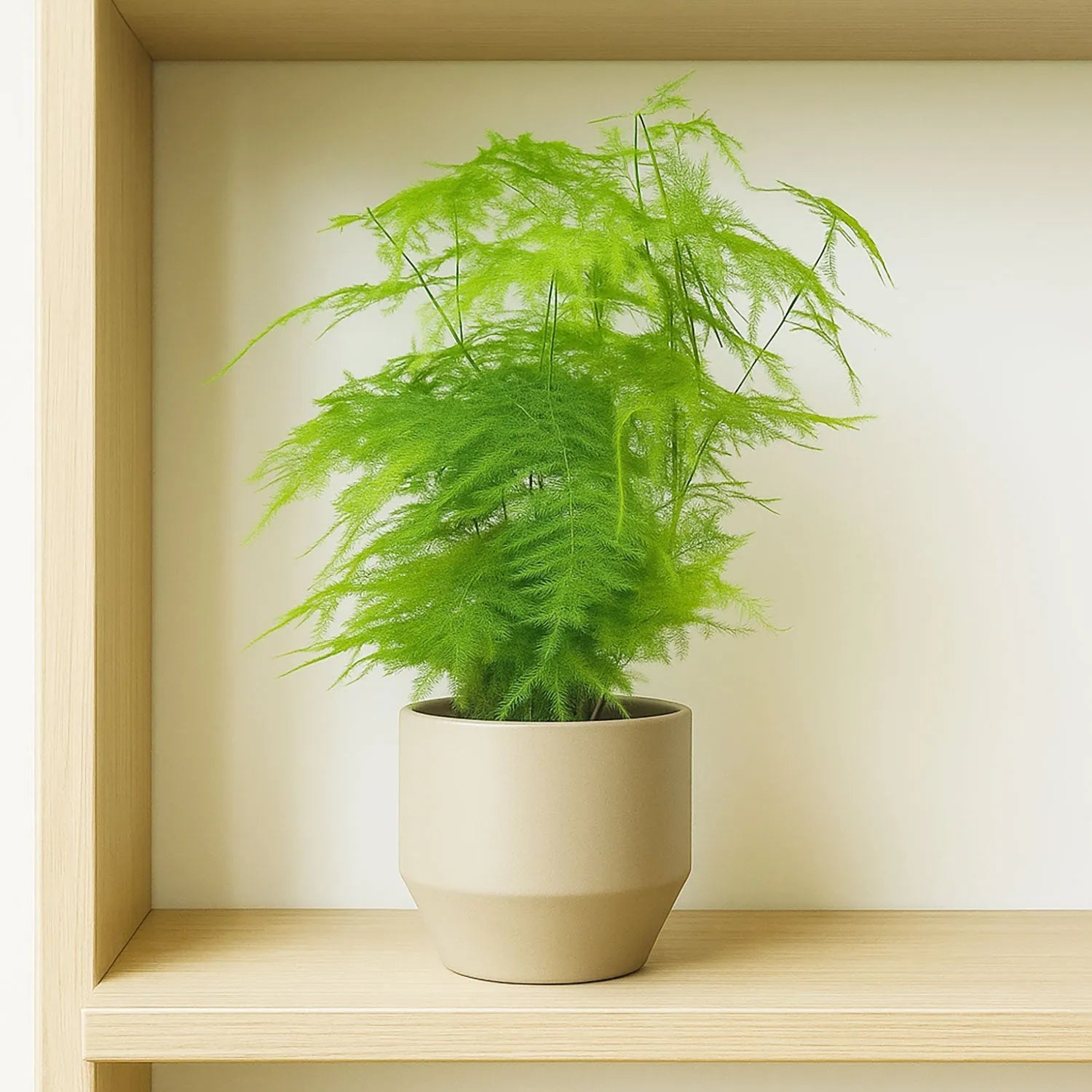
This elegant species produces soft, feathery fronds made up of countless fine, needle-like cladodes (leaf-like structures) that create a light, cloud-like appearance. Its arching stems can be allowed to trail gracefully or trained to climb a support, making it highly versatile for both hanging baskets and pots. Mature plants may even produce small white flowers followed by clusters of tiny green berries that ripen to red.
The Asparagus setaceus adds texture, movement, and a touch of vintage charm to any interior, making it a favourite among plant stylists and collectors.
Asparagus setaceus – Care Guide
Light
Thrives in bright, indirect light but tolerates moderate shade. Avoid harsh direct sunlight, which can scorch its delicate fronds. A bright room with filtered light is ideal.
Watering
Keep the soil lightly moist, watering when the top 2–3 cm feels dry. Do not allow the soil to dry out completely, but also avoid waterlogging. In winter, reduce watering frequency.
Temperature and Humidity
-
Temperature: Prefers warmth, 18–26°C. Avoid cold draughts and temperatures below 10°C.
-
Humidity: Enjoys moderate to high humidity (50–70%). Mist regularly, especially in centrally heated homes, to prevent frond tips from drying.
Soil and Potting
Use a rich, well-draining, peat-free compost, ideally mixed with a little perlite or sand for aeration. Repot every 1–2 years in spring to refresh the soil and encourage new growth.
Feeding
Feed every 4–6 weeks in spring and summer with a balanced liquid fertiliser diluted to half strength. No feeding is needed in winter.
Pruning and Maintenance
Trim any yellowing or old fronds at the base to maintain a tidy shape. If the plant becomes too large, it can be cut back hard — it will resprout vigorously from the base. Wipe or mist foliage occasionally to keep it dust-free.
Growth and Maturity
A moderately fast grower that can reach 60–100 cm in height and spread. It can be trained to climb supports or left to trail naturally from shelves and hanging planters.
Common Issues
-
Yellowing fronds: Underwatering, too much direct sunlight, or low humidity.
-
Brown tips: Dry air or inconsistent watering.
-
Sparse growth: Insufficient light or lack of nutrients.
-
Pests: Occasionally spider mites or mealybugs — increase humidity and clean foliage regularly.
Background and Benefits
Although often mistaken for a true fern, Asparagus setaceus is a relative of edible asparagus. Its delicate, lacy foliage has made it a favourite for floral arrangements and Victorian conservatories for over a century. Its soft, fine texture contrasts beautifully with broader-leaved plants, making it perfect for mixed plant displays or standalone decorative pots.
✅ Quick Care Summary
-
Light: Bright, indirect; tolerates light shade
-
Water: Lightly moist; avoid extremes
-
Temperature: 18–26°C; protect below 10°C
-
Humidity: Moderate to high (50–70%); mist regularly
-
Soil: Rich, well-draining compost
-
Feed: Every 4–6 weeks in spring/summer
-
Growth: Trailing or climbing plant, 60–100 cm; soft, feathery fronds and arching stems
🌿 Styling Tip:
Pair Asparagus setaceus with darker-leaved plants like Philodendron Micans or Calathea Orbifolia for contrast. Its airy, lace-like foliage brings softness and balance to structured interiors or minimalist spaces.
⚠️ Toxicity Note: Asparagus setaceus is mildly toxic if ingested and may cause skin irritation. Keep away from pets and children.