




No response to issues
"My parcel was stolen from my doorstep as it was just left despite the sign asking them not too. I reached out to you days ago about this and have received absolutely no response."



At Plants for all Seasons, we stand behind the quality and vitality of every plant we deliver, which is why we proudly offer a Live Delivery Guarantee. This commitment means that we guarantee your plants will arrive at your doorstep in healthy, thriving condition. We understand the importance of receiving your plants in the best possible state, ready to enhance your space from the moment they arrive. With Plants for all Seasons's Live Delivery Guarantee, you can shop with complete peace of mind, knowing that your green investments are protected from our nursery to your doorstep.

Due to the sensitive and breakable nature of our products, it's understandable that damages may occur despite our meticulous packaging methods. If you find that your plant or pot has arrived in a less than satisfactory condition, please reach out to us at hello@plantsforallseasons.co.uk within a month of your delivery date. When contacting us, please provide your order reference, alongside a photo clearly showing the damaged item and its packaging, including the delivery label. We are committed to resolving such issues by offering a refund or a replacement, depending on the availability of the item in question.
We are unable to accept returns that are not related to damage because plants are inherently perishable and delicate. It's also worth noting that the plant you receive may slightly differ from the images displayed on our website. This variation is natural, given that each plant is unique and subject to seasonal growth changes.

At Plants for all Seasons, we recognise the critical role our courier partners play in ensuring the safe and secure delivery of your plants. We collaborate exclusively with leading courier services, renowned for their reliability and exceptional handling practices, to ensure your plants arrive in perfect condition. Our partners are carefully selected based on their commitment to timely deliveries and their proven track record in transporting delicate items with the utmost care.

At Plants for all Seasons, our commitment to the environment extends to every aspect of our operations, especially in how we deliver your plants. We take pride in our bespoke, eco-friendly packaging, meticulously designed for the safe transport of live plants. Our innovative packaging solutions are crafted from sustainable materials, ensuring that your plants are not only secure but also that their journey from our nursery to your home treads lightly on the earth. This thoughtful approach minimises stress on the plants and reduces waste, aligning with our mission to promote a greener, more sustainable future.
 Ask Leafy.AI
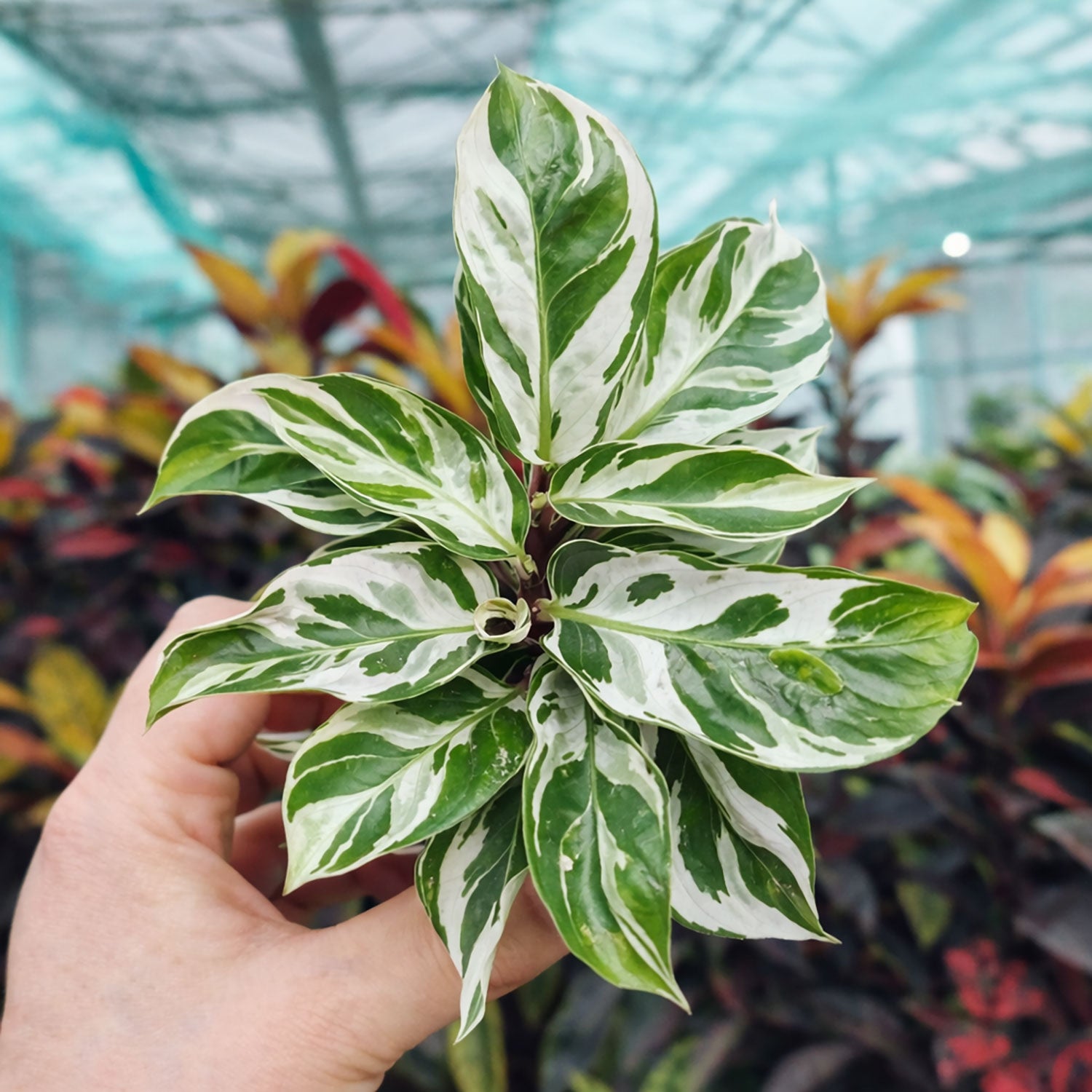
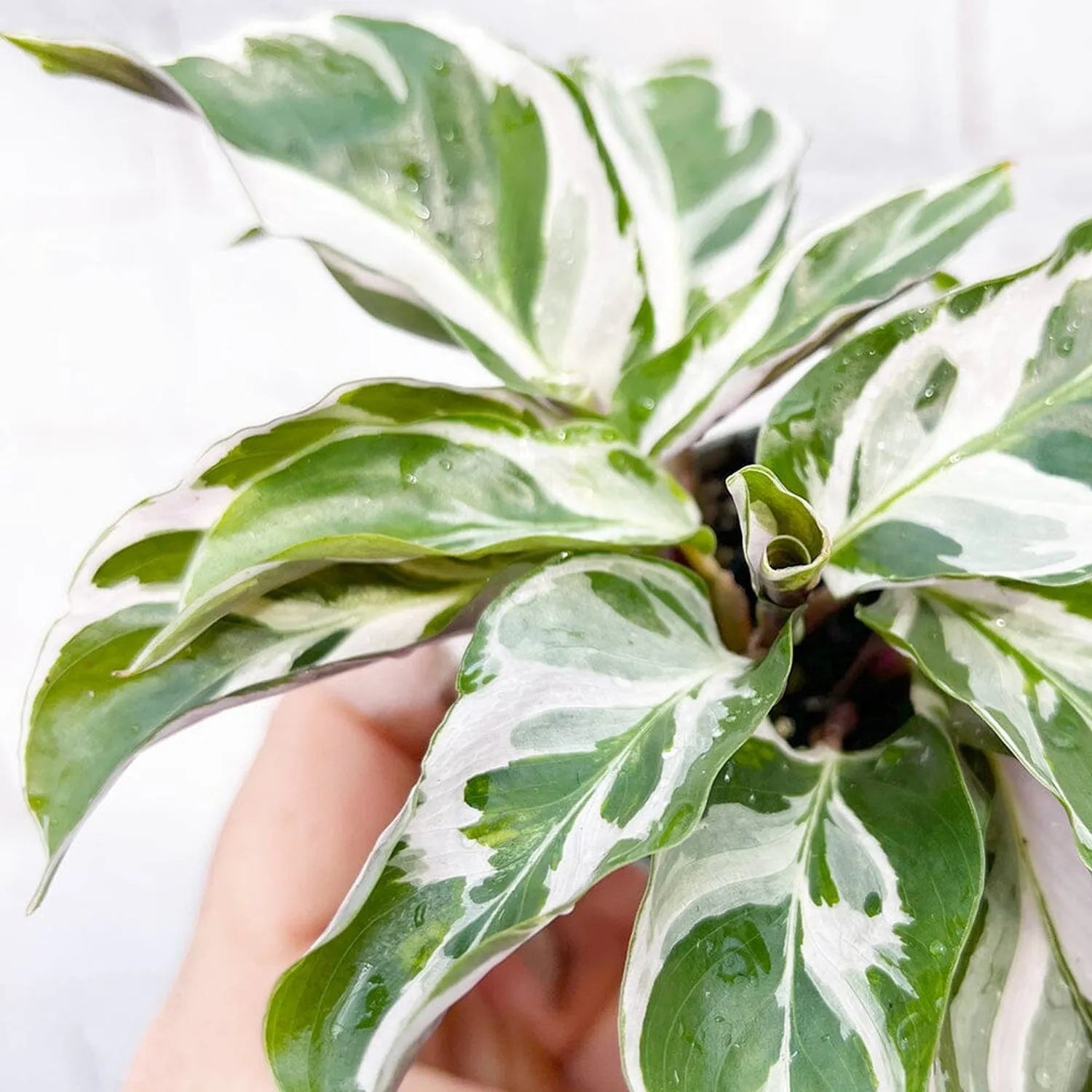
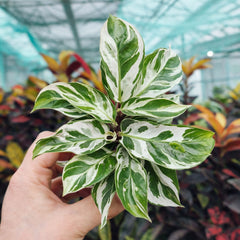
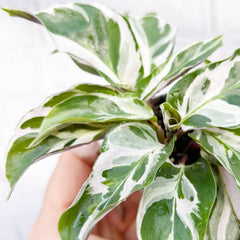
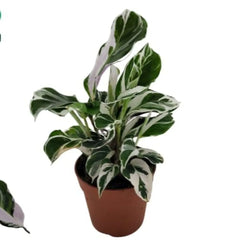
Calathea ‘White Fusion’ is one of the most striking variegated prayer plants available. A cultivar of Calathea lietzei (often reclassified within Goeppertia), it features dramatic swirls of white, cream and soft green across elongated leaves, with a rich purple underside.
Each leaf looks hand-painted, blending cool tones into an elegant marbled pattern. Like other Calatheas, it gently raises and lowers its leaves throughout the day in response to light — a movement known as nyctinasty, which gives rise to the name “prayer plant”.
While undeniably beautiful, ‘White Fusion’ prefers consistent conditions and slightly more attentive care.
🌿 White and cream marbled variegation
🌿 Soft green patterning
🌿 Deep purple leaf undersides
🌿 Elegant elongated foliage
🌿 Prayer plant leaf movement
Bright, indirect light is essential.
East-facing windows are ideal
Avoid direct sun — white areas scorch easily
Too little light may dull variegation
Filtered light keeps colours crisp and balanced.
Calathea ‘White Fusion’ prefers consistently moist (but not soggy) soil.
Water when the top 2–3cm feels slightly dry
Do not allow the soil to completely dry out
Reduce watering in winter
Important:
Use room-temperature water
Rainwater or filtered water is best (sensitive to tap water minerals)
Ensure good drainage
Overwatering can cause root rot; underwatering causes leaf curl and browning.
High humidity is crucial.
Ideal range: 60–80%
Highly benefits from a humidifier
Excellent choice for plant cabinets or bathrooms
Low humidity commonly causes:
Brown crispy edges
Curling leaves
Splitting on pale areas
Ideal: 18–26°C
Avoid temperatures below 16°C
Keep away from draughts and heating vents
Calatheas dislike sudden environmental changes.
Use a moisture-retentive yet well-draining mix:
Peat-free houseplant compost
Perlite
Coco coir or fine bark
The goal is lightly moist soil with good aeration.
Feed during spring and summer:
Balanced liquid fertiliser every 4 weeks
Use half-strength dilution
Do not feed during winter dormancy
Overfeeding can cause leaf tip burn.
Compact, bushy form
Typically grows 30–50cm tall
New leaves emerge rolled from the centre
Leaves naturally move throughout the day, folding slightly at night.
Brown leaf edges
Low humidity
Tap water sensitivity
Leaf curling
Underwatering
Dry air
Yellowing leaves
Overwatering
Fading variegation
Insufficient light
Calathea ‘White Fusion’ is sometimes considered “high maintenance”, but stable warmth, humidity and consistent watering usually keep it thriving.
Beautiful in minimalist or Scandinavian interiors
Pair with darker foliage plants for contrast
Ideal for bright bathrooms or humid rooms
Looks elegant in neutral ceramic planters
Calatheas are generally considered non-toxic to pets, making them a safer option for households with cats and dogs.
Overall rating: 2.5 / 5 from 2 reviews.
Review topics: [].
"My parcel was stolen from my doorstep as it was just left despite the sign asking them not too. I reached out to you days ago about this and have received absolutely no response."
"The plants I received were well packaged and healthy. The white fusion had a little more browning than I would have liked but I things look that are inescapable when ordering plants online and I'm also very picky about plants. For the price I payed (everything is great value here!) I have no complaints whatsoever and would recommend plants for all seasons to anyone who is thinking about buying plants online."
ONLY
7
LEFT
🌱 FREE WITH ORDERS OVER £50

By Plants for all Seasons
A plant care expert that gives clear, friendly advice for all your houseplants and garden plants – tailored to UK conditions. Perfect for beginners and seasoned growers alike.
Terms of Use